Reading Time: 3 minutes

Alaia Wooden Surfboard project: Post 1 | Post 2 | Post 3 | Post 4 | Post 5 | Post 6 | Post 6b | Post 7 | Post 8 Finis

In an attempt to experience a spiritual awakening like an ancient Hawaii commoner, I decided to try and build and surf a wooden Alaia surfboard (OK, well at least build one). Traditionally a 10-12 foot fin-less board that in ancient times were made from Ula and Koa trees, my Alaia will be about 7 feet and is shaped from a blank made from light and sustainable Paulownia wood that doesn’t absorb salt water.
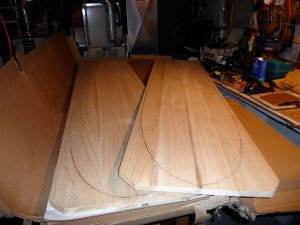
I purchased two ‘Finley’ blanks (one for a friend) from Jon Wegner at Wegener Surfboards in California. Jon and his brother Tom, Surfing Magazine’s 2009 Shaper of the Year are selling the blanks here in America, but they are made in Australia where Tom lives. Purchasing the boards from the Wegner’s was a pleasure and if this project inspires you, I highly recommend you contact Jon for your blank.

Before the blanks arrived by UPS ground, I prepared my workshop with padded saw horses, jigsaw, belt sander, palm sander, hand planes, and sandpaper in assorted grits. I’m not sure I have every tool I need or is recommended, but I’ll cautiously remove material, especially the concave, which I’ll likely do in stages after sessions (assuming I have a feel for the board). Classic case of ‘you can always take off but you can’t put back on.’

When I unpacked the Alaia’s I was pleased to see the blanks arrived in perfect shape. I’m eager to begin the project, which entails cutting the blank to shape, shaping the rails and concave and finishing the board. There are a number of resources available on the web I’ll refer to, including Olosurfer.com and woodworking forums such as woodworkforums.com.
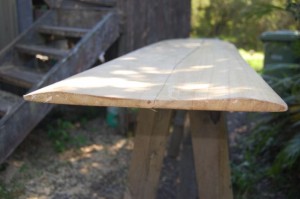
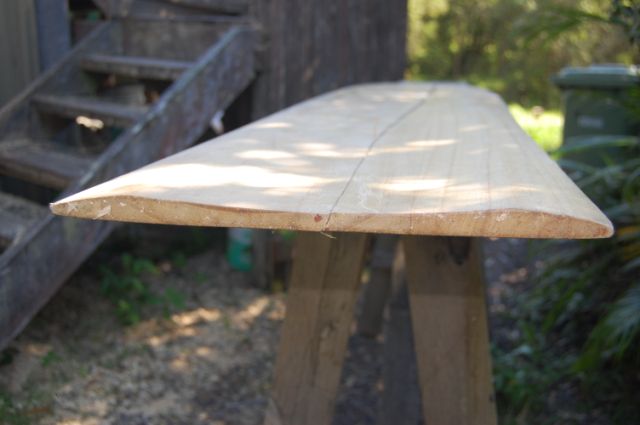
When completed, the Finley should have, according to Wegener Surfboard’s model description, “a light roll on the deck and a concave running from the nose all the way to the tail. The concave is 3/8” deep.” (Note: Jon recommended I keep more material on the board and stay within 1/4″) “This really helps keep the board from sliding sideways too much and gives the board more traction in the face.

The goal of the board is to give it just the right amount of flex. With good flex, catching the wave is easier and the board more responsive to turning.” Tom was kind enough to share the photo on the above-left of Dave ‘Rasta’ Rastovich’s board. This board has far more concave than I’ll need, but it gives an exaggerated idea of the curves.

Over the next several weeks, time permitting, I’ll be working on the Alaia and posting my experience and sharing photos on Bitness. If anyone has built an Alaia or is an experienced woodworker and can offer sage advice, I welcome your comments here, both for my benefit and anyone else interested in the Alaia.

Posted by: Lawrence

Reading Time: 2 minutes

For the past week or so I’ve been hosting back-to-back canine cabin crashers. First I watched my parent’s Wheaten Terrier and now I have my sister-in-law’s black lab (side note – the gassiest dog in the universe). Being a dog lover and not having a dog since my yellow lab Magic passed on St. Pats a few years back, I missed the walks. Even with the extremely cold weather (and now heavy snows), it’s great to have a companion to go outside with, hike and get some exercise.

After a dark walk in the woods this evening I started thinking some people may not fancy what I find as a fun and relaxing thing. I don’t mind the weather and I would always rather be outside than in when it comes to exercise. My dislike for treadmills has been well documented, but I know some demented people are twisted or lazy enough to think this a good idea for dogs as well (especially in 1° F temps which feels like -20° F).

Feets don't fail me now
My hunt lead me to one very disturbing company in Japan. Just what exactly happens when this dog loses it’s footing or simply can’t go on? I imagine Mr. Yakumora coming home to a little rump roast attached to a leash and thinking the small treadmill a curious place for his wife to leave supper.

Then there is the Pawwws Pet Treadmill who, on their product information page, answer a series of questions with some disturbing logic, such as…

Q: Is this product difficult to use?
A. Absolutely not! In fact, many of our customers say it actually saves them time by not having to take their pet out of doors, braving inclement weather, and allowing them to focus on more of their day-to-day activities.

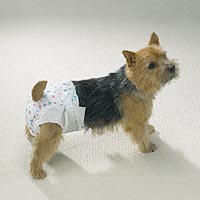
Why would someone have a dog if they didn’t have time for it? Dogs need time to be outside, smell stuff, pee on stuff, roll around on stuff – it’s called being a dog. Can’t people put on a coat and put their “day-to-day activities” on hold for 30 minutes? Who wants to diaper a dog and shut themselves in for only the most agreeable conditions?
Price: Your dignity, your dogs dignity, self respect and dirty diapers.

Posted by: Lawrence

Reading Time: < 1 minute

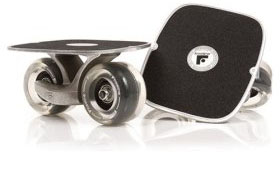
Apprently FreeLine Skates have been around for years, but I just discovered this new way to hospitalize myself. A kind of intersection of skateboarding, rollerblading and RipStick, the $149 FreeLine skates look like they have plenty to offer in the way of building balance, performing flat-land tricks and of course transportation.

Comprised of 2 independent aluminum skates, FreeLine skates are stood on, not strapped on, using traditional skateboard grip tape to help hold you to a set of ~6 square inch plates. Two 72M custom grade polyurethane wheels are in vertical alignment under each plate and acceleration is obtained using the same motion you would on a RipStick.

https://youtube.com/watch?v=eo7rr3AKyC4%26hl

Posted by: Frank

Reading Time: 2 minutes

With temperatures well below freezing and finding myself miles away from any mountains, I’ve decided to post another indoor, off-season workout entry. For Surfing there isn’t an off-season unless, like me, you can’t afford a winter suit and find yourself bound to the shore watching the cool kids get all the waves to themselves.

To pass the time and stay in shape there are plenty of exercises that focus on strength, power, balance and endurance that don’t require any equipment, but as geeks we naturally want gadgets. Sometimes brilliant, sometimes a total waste of money, gadgets are the only thing that can get me stoked for weekend nights in my basement erasing the stress of the day.

http://multimedia.thestar.com/images/assets/179149_3.JPG

Source: http://multimedia.thestar.com/images/assets/179149_3.JPG

In the past, I’ve written about balance boards and a skateboard deck with Softrucks that helps build balance and let’s you practice tricks. Both solid low-tech gadgets I enjoy all year round – they never get old.

Two more balance trainers have surfaced and I’d like to get my hands on both to test. World-class surfers Dave Kalama and Laird Hamilton seemed to feel the SurfBall is where it’s at. Essentially a basketball under a shortboard (how is there a patent pending on this ‘technology’?), the SurfBall “…allows all users from the novice to the professional to work on developing fine motor skills and a keen sense of balance…” The SurfBall comes in three models; SurfBall Surfboard $399, SurfBall Stub $299 and the SurfBall Skate $159. The decks for the later two models resemble a wakeboard and skateboard (respectively).

The NoHo is another kind of balance trainer that uses a series of curve shaped pods which are easily attached to the bottom your surfboard. There is a well choreographed video on the NoHo Web site worth checking out. Longboard phenom Joe Aaron performs the same mind-blowing, practiced maneuvers on land that he does on the waves. I’m fairly certain Joe’s remarkable skills, which as a teenager leads me to believe he was born to surf. But you can’t totally discount the NoHo, it looks simple enough to set-up and using the same stick I surf appeals to me. The NoHo sells for $159 for boards up to 11 feet and $99 for boards up to 7 feet.

Check out both Web sites if you’re considering a balance trainer and let me know what you think.

Posted by: Lawrence

Reading Time: 2 minutes

For years Chuck Norris and Christie Brinkley have been selling a machine called the Total Gym, a machine that uses gravity and your body weight to deliver over 80 exercises. It seems to be working miracles for them, so why not another gravity-based trainer?

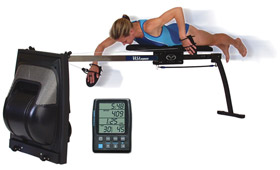
Vasa offers the Vasa Trainer, which, like the Total Gym, works by lifting your body weight up an inclined monorail and then lowering it back down. Vasa also offers a wind resistance unit called the Vasa Ergometer. Both devices are marketed towards swimmers, paddlers and surfers and have adapter kits to serve those respective users.

There are a lot of immediate and obvious benefits to a Vasa Trainer. Firstly, training anytime, anywhere is not always easy for swimmers, surfers, triathletes or paddlers who don’t live in San Diego. You need unfrozen water and I for one seem to be running out of that resource where I live in the North East. Vasa trainers also allow coaches to talk to their swimmers and see mechanics that would otherwise be hidden underwater and by churn. It’s also reported that the Vasa units require less time to train and can develop power and endurance in about half the time than in the water.

Dryland Swim Trainer

The Vasa Trainer sells for $899 and workouts are tracked manually. The $1899 Vasa Ergometer, which uses variable airflow resistance to emulate fast/slow currents, tracks your workouts and measures…

  • Watts
  • Force (both arms)
  • Stroke length
  • Distance
  • Pace

If you’re serious about swimming, paddling or staying in shape for long surfing sessions, then have a look at the Vasa web site and consider getting one of these trainers.

Posted by: Lawrence