Reading Time: 2 minutes

Hookah dive systems have been around for a very long time. Typically these systems were powered by gasoline engines on deck with a compressor attached and airlines fastened to regulators. More recently we’ve seen portable systems come to market that offer versatility and affordability not seen before. There are lighter-weight gasoline and battery powered units that float along with you on the surface as you explore the depths below, letting you travel much further than a traditional system might allow.

Brownie – VS Sea Lion
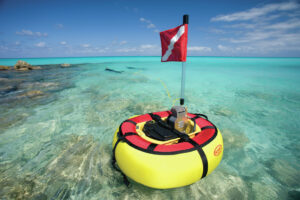
Brownie offers a number of gas powered models and recently introduced a battery powered model. Considered more professional-grade, the Brownie systems can often accommodate multiple divers at once and allow for deeper and longer dives.

Brownie – VS Sea Lion Specs

  • Run time: Up to 3+ hours available
  • Depth: 2 divers to 65 ft / 3 divers to 35 ft / 4* dives to 15ft-20ft *With the purchase of an Add-A-Diver kit
  • Weight:  Unit only 33lbs, battery 22lbs, gear bag 35lbs
  • Dimensions in Storage Case: 17 L x 24 W x 14 H (inches)

COST: $5,995.00
PROS: Deeper dives, multiple divers, longer dive times
CONS: High cost, heavier weight, can not bring on an airplane


BLU3 Nemo Tankless Dive System
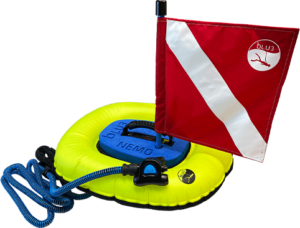
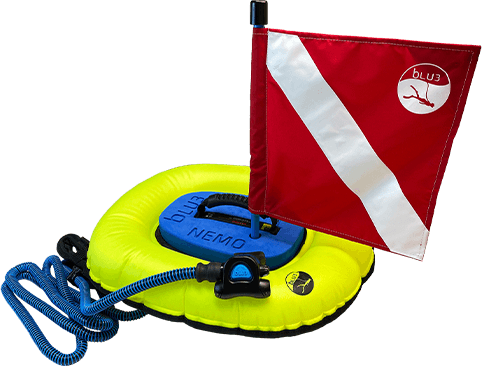
Blu3-Nemo-1The BLU3 Nemo Tankless Dive System by BLU3 is another battery-powered hookah dive system that is more affordable and geared towards the hobbyist. While it doesn’t allow a diver to go as deep and lasts about third of the time as the Brownie battery-powered VS Sea Lion, it comes at a fraction of the cost. It also has Smart Reg™ technology, which monitors your breathing and can extend the life of your batteries by drawing power only while taking a breath.

BLU3 Nemo Specs

  • Run time: 60-90 minutes
  • Depth: 1 diver up to 10′
  • Weight: less than 10 pounds
  • Dimensions: measures less than 12″ on all sides

COST: $799.00
PROS: Lower cost, light weight, only hookah dive system you can bring on an airplane at the moment
CONS: Shallower dives, single diver, shorter dive times (you can bring multiple, reasonably priced batteries to extend dive time)

Posted by: Lawrence
Reading Time: < 1 minute

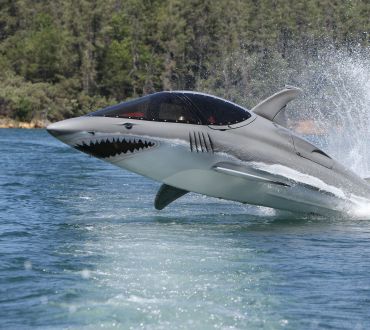
There have been many instances where I’ve fantasized about clearing the lineup, but in none of those fantasies did I ever imagine I’d be a breaching killer whale or a shark. Whenever you can have fun, doing something fun, to have more fun – you’re winning at life. The Seabreacher is an underwater mashup of a Jetski®, an F-15 fighter jet and a mini submarine created by Innespace Productions.

Bitness first wrote about these in 2007 (Down Periscope) and they seem to have come along in their design, differentiating themselves from other mini submarines, ones designed to dive deeper and typically launched from a yacht.

Cost: $80-110K
Source: Seabreacher

Reading Time: 2 minutes

https://www.youtube.com/watch?v=helKtdl9N6U

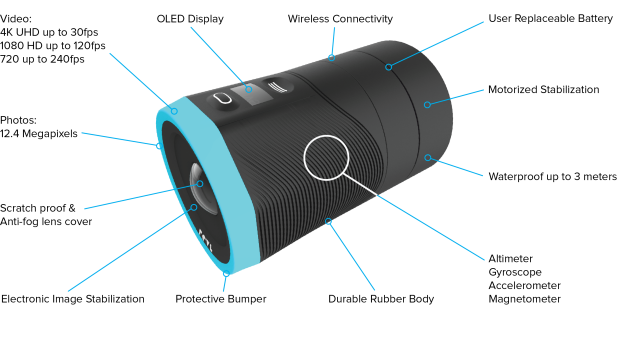
Another interesting prospect has arrived in the already crowded action camera market. The Revl Arc stabilizing 4K action cam differentiates itself from the competition primarily with their image stabilization, which uses a built-in gyroscope, barometer, accelerometer and magnetometer. It also has built in connectivity, assisted editing (see the Bitness article on Trace for another take on this) and an app that allows you to track what friends are up to – all look promising and there is significant innovation here worth getting excited about.

I was less excited when I started the video and saw bungee jumping… how extreme. But watched in disbelief bordering on horror when the action progressed to car surfing, hanging out of car windows, taking narrow shoots in a speedboat full of people at nearly 40MPH and editing your footage while driving.

While we don’t condone any of those activities, we can recommend you take a look at the Indiegogo page for the Revl Arc and consider investing in it.

Other features include…

  • Records 4K at 30fps, 1080p at 120, 60, 30fps and 720p at 240, 120, 60fps
  • Live-stream at 1080p
  • Shockproof and waterproof to 10 feet (3 meters) without a housing
  • Stores to microSD cards (up to 128GB supported)
  • User replaceable battery
  • Up to 90 minutes recording time at 4K (without Wi-Fi)
  • Standard tripod mount as well as specialized mounts created for the camera
  • One-button recording
  • Revl mobile app for live preview and controlling the camera and its settings
  • Apple Watch support
  • 802.11n Wi-Fi and Bluetooth 4.0

revl arc 4k action cam

Availability: December 2016

Posted by: Jason

Reading Time: 2 minutes

A new study by the Consumer Electronics Association (CEA)® “Getting Fit With Consumer Electronics” reveals that approximately half of U.S. online consumers used a fitness technology in the past year, and 37 percent anticipate purchasing a fitness technology in the next 12 months.

That fitness technologies help keep us motivated probably isn’t news to many of my Bitness.com brethren, but according to the study, 76 percent exercise alone (without the guidance of exercise professionals), and 74 percent of consumers exercise at home. Those are both good reasons to use technology to help assess fitness levels, set realistic and achievable goals as well as track the amount of daily physical activity. Our gadgets also help us to monitor calorie intake, track progress on fitness goals and ultimately help make the journey more fun and engaging.

“Fitness technologies can play a significant role in motivating consumers,” said Rhonda Daniel, manager of market research at CEA. “Compared to consumers who are not using fitness technologies, consumers who use these devices view exercise more positively, and are more likely to enjoy exercising and to view it as important to their health.”

CEA’s “Getting Fit With Consumer Electronics” presents the findings of an Internet survey administered to an online national sample of 1,303 U.S. adults between July 26 and August 5, 2010. The study was designed and formulated by CEA Market Research, the most comprehensive source of sales data, forecasts, consumer research and historical trends for the consumer electronics industry.

Source: Full release

Reading Time: < 1 minute

Over the years bitness.com has run a series of articles on gadget recycling and greener gadgets.

Since many of you likely received new and improved heart rate monitors, phones and other gadgets this holiday season, you might be faced with the dilemma of what to do with older electronics you no longer need?

The US Environmental Protection Agency (EPA)* provides information on where to donate or recycle old computer and other electronic products in your area. So if you can’t sell it on eBay or pass it down to a friend/family member, do the right thing and find a local donation or recycling center in your area through the EPA.

Happy Holidays!

* UK readers can look into programs such as MirrorGoGreen, or Google ‘gadget recycling.’ Readers in other countries are encouraged to do the same!