Swimming

Reading Time: 1 minute

Surfing in the Summer is quick and easy; boardies, rash guard and off you go. The only problem is there’s nowhere to stash a key (which in wetsuit season goes behind my calf). Surfers, runners, bikers, anyone who drives somewhere to get a workout has to hide their keys in the wheel well or under a rock and hope both the key and the car are there when they return.

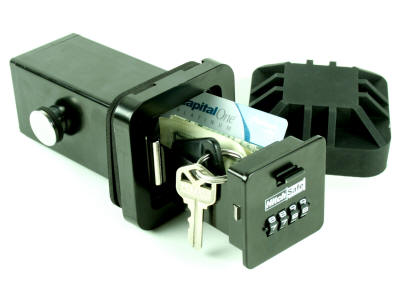
A product called HitchSafe is a 4 digit combination safe that goes in your trailer hitch. It has a drawer that slides out to put your key and other valuables. Some trucks, including those with sliding rear windows can be easy to break into and the HitchSafe provides a safe alternative. The HitchSafe is also a clever place to keep a spare key in the event you lock your keys in the car.

The HitchSafe fits standard 2″ hitch receivers, with the exception of the Toyota Tacoma 2005-07 and 2007 Tundra, both have an extra band of metal around the receiver and require longer bolts. Also some 2005 Toyota Forerunner’s have OEM factory hitches with rounded corners ans require filing off each corner on the HitchSafe for it to fit. A rubber cover goes over the end of the safe to provide a level of protection from the elements and also makes the trailer hitch looks like any other.

The HitchSafe is available on Amazon for $69.95.

Posted by: Lawrence

Reading Time: 3 minutes

Brick training is a concept that is popular in triathlon circles where you combine two different disciplines in one continuous training session. It is a good way of working different muscle groups (e.g. going from a swim straight onto the bike) or preparing yourself for some of the weird physiological sensations you might expect to experience in a race (e.g. going from the bike straight onto the run and your legs might feel quite rubbery).  It is also a really good way to feel like a proper triathlete, walk around muttering to people about “the importance of brick sessions”, and hope they are suitably impressed. In case you were looking for that.

For me, summer is the best time to do this kind of training, because (a) it’s warmer, so it’s not as big a deal to get onto the bike dripping wet; (b) brick training is good, race-specific training that should be done as you get closer to doing your races, usually held in the summer; (c) it can require a lot more time to do such a long session, and so it’s good to have lots of  daylight hours to fit it all in safely.

My big brick sessions this year have involved open water swimming with Swim for Tri, 7:00 – 8:30am on Saturdays (but, I have to admit that I am one of the coaches and rarely swim a full session at anything resembling race pace), then hopping on the bike after the session and riding with a few like-minded folks for 2-4 hours (again, allow me to confess that I religiously stop for hot chocolate and cookies offered up by the fine people at SFT, before getting on the bike).

Over these past few months, I have found a few really simple bits of equipment that have helped me tremendously during these sessions:

– The first one is probably familiar to lots of sports people, the Under Armor long-sleeve crew-neck top, which I have taken to wearing with my cycling bib shorts underneath my wetsuit.  I wear it under the wet suit, because I figure it would be impossible to put on a compression top like that if I were wet. And, incredibly, I have found that the top dries very, very quickly (10-15 minutes) and keeps me warm, wet or dry, the whole time. Given that we have been doing these open water sessions since April, and given that we have not had the balmiest summer weather here in London, this has been a life-saving piece of equipment.

– The second one is perhaps familiar to swimmers out there, the Speedo microfiber towel. It is tiny enough to carry in the back pocket of a cycling jacket or top, but powerful enough to dry off your whole body in a few quick swipes. Then, when you’re dry, squeeze out as much water as you can, fold it up, stick it in your back pocket, and you’re a lot drier and more ready to cycle off into the Essex countryside (past the Secret Nuclear Bunker).

– Finally, I have become a big fan of taking on calories while on the move. These Saturday morning sessions may appear to some of you to be relaxed, undemanding training sessions, what with my cups of hot chocolate and pieces of bread pudding (thank you, again, Mrs. Bullock!). But, when you get up at 4:30am to lead a group who want to ride out for 75 minutes to the swim session at a leisurely 18 mph pace, you learn a lot about getting your nutrition on the bike.  In addition to the bananas and granola bars that I eat on the way out the swim session, I have found that Clif Shot Bloks on the longer rides back give me the perfect combination of carbs, electrolytes, and tasty chewy candy texture that make them soooooo much nicer than gels.

And then we stop for more hot chocolate and cake in Epping Forest (well, I say “we”, but so far, it’s always been my idea, so… you get the idea). So, that’s important, too.

Reading Time: < 1 minute

In the past week I’ve had 4 people tell me how grateful they were that I turned them on to Steepandcheap.com. Steep and Cheap sells gear (I’d describe it as general outdoorsy gear) one item at a time until it’s either sold out or times-out, at which point it’s on to the next item.

Steep and Cheap mostly sells-out because the deals are good – usually in the 60% off or more range. Act fast if you see something you like! With back-to-back deals all day long it can get addicting and there’s a number of ways to stay tuned-in to deals that are poppin’ (RSS, sidebar gadgets, plug-ins, email, IM and soon an iPhone app).

I’ve been a Steep and Cheap customer since they started and have seen the concept grow wildly. Sister sites now include…

  • Chain Love for biking gear, including BMX and Mountain biking
  • Bonktown is more for the road cycling enthusiast
  • Tramdock for you two-plankers and especially good deals off-season
  • Brociety caters to snowboarders mostly, again… good off season loot to be had
  • Whiskey Militia is so aggro you probably already know they sell skate and surfing gear. Get some.

Check them out let me know what you think. I’ve only had great experiences with them, even returning gear I decided I didn’t need – they make it easy.

Posted by: Franz

Reading Time: 2 minutes

Growing up, I was always a fan of The Hulk cartoons and TV show. My cousin Joe Harnell wrote the theme song for the TV show (song title: ‘The Lonely Man‘) and was kind enough to send me an autographed picture of himself, as well as Bill Bixby and an enraged Lou Ferrigno as the Hulk right behind him.

In The Incredible Hulk movie, Bruce would try to keep his rage under control using breathing exercises and checking his Polar HRM to make sure he didn’t exceed the heart rate that would trigger the gamma reaction. Despite his best efforts, Bruce lost control and flew-off the handle more than once (the movie would have sucked if he didn’t right?) and after raging for untold hours, he’d wake-up somewhere unfamiliar, miraculously still wearing pants.

Had Bruce been wearing the relatively new Polar RS300X he’d benefit not only from a foot pod to know how far he’d strayed (in one scene I think he ended up in Guatemala), but also GPS to get all the essential information an inquisitive scientist yearns for (speed, distance, max heart rate, etc). The Polar RS300X is compatible with S1 foot pod™ and G1 GPS sensor and the data you collect can be transferred to polarpersonaltrainer.com with optional Polar FlowLink™

However, to equip the RS300X with both the GPS and foot pod options you’ll spend about $440 (RS300X – $170, G1 GPS – $140 and S1 Footpod – $130). This is more expensive than the $170 Garmin 305, which has GPS built-in and can be used with a $75 footpod. Not only does the Garmin offer the same functionality for about $200 less, but you’ll also have less gear strapped to your body.

Suunto also has solutions to consider, but for my money I like the Garmin. Let me know what you think, but don’t make me angry. You wouldn’t like me when I’m angry…

Posted by: Lawrence

Reading Time: < 1 minute

  1. Siesta Beach in Sarasota, Fla.
  2. Coopers Beach in Southampton, N.Y. (Long Island)
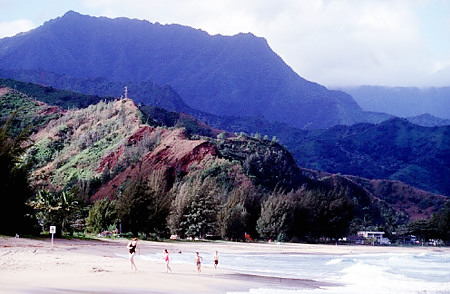
  3. Hanalei Bay in Kauai, Hawaii
  4. Coronado Beach in San Diego
  5. Hamoa Beach in Maui, Hawaii
  6. Main Beach in East Hampton, N.Y. (Long Island)
  7. Cape Hatteras in Outer Banks, N.C.
  8. Cape Florida State Park in Key Biscayne, Fla.
  9. Coast Guard Beach on Cape Cod, Mass.
  10. Beachwalker Park on Kiawah Island, S.C.

What about your favorite beaches? I know Coast Guard Beach and think it compares to a few other New England beaches I frequent.

Source: NY Daily News

Reading Time: 2 minutes

Triathlon Credit Crunch Series: Swimming | Cycling | Running

I’m a big fan of looking for simple, cheap ways of training and racing better. For example, train well in your old wetsuit that has a few tears in it (and bring it to the pool with you occasionally during the winter, show it a good time) rather than go out and buy a new one at the first chance. NOT that I would turn down a Vasa Trainer if someone wants me to road-test one for a few months, but until then, here are some less expensive things to consider:

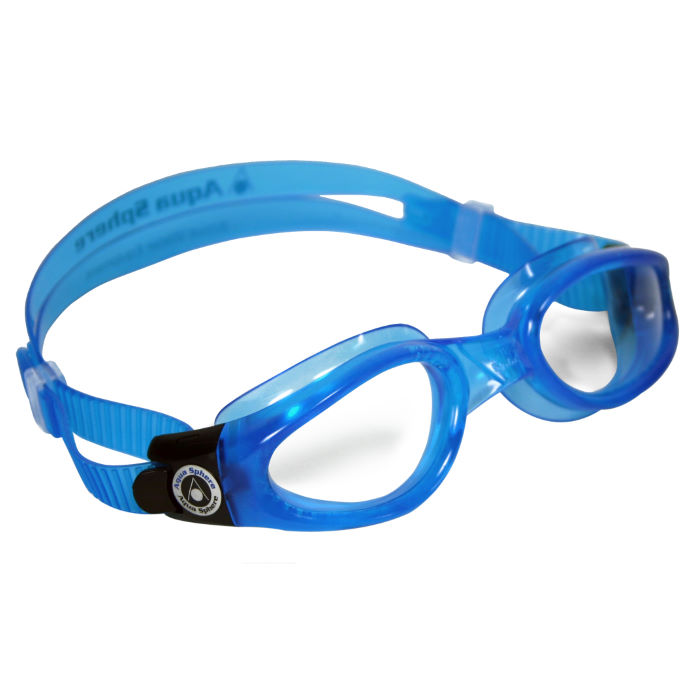
Aquasphere Goggles
Kaimans are probably my favorite. I mean, I have about 7 different pairs of goggles and they all work fine, keep out the water and all that, so I don’t care THAT much which pair I’m wearing on any given day as long as they don’t leak or hurt my eye sockets. But, the Kaimans are that little bit more comfortable on longer swims and provide the extra peripheral vision that you need in open water swimming. So, when I’m being fussy those are the ones I reach for.

I also have a pair of Seal XPs, which are very comfortable and have an even wider range of vision. They’re a little bulky and large on the face, but also very good for longer swims in open water.

Being able to swim straight in open water is probably the best and quickest way to ensure you get faster swim times in your open water races. Surely, being comfortable and being able to see a little more clearly will help you achieve that, right?

Silicone Swim Cap
This one comes in a wide range of colors.

I like these swim caps more than the ordinary, latex ones, because I find them easier to get on and off, and they keep my head a little warmer in the cold, British waters I’ve been swimming in (we usually wear two caps, anyway).

I see very hard-core guys wearing neoprene swim caps, and they look even warmer and much harder to have knocked off your head in the mass-start-feeding-frenzy at the beginning of a race.

Basically, if you wear something that is more comfortable, easier to use, and encourages you to train more, then it’s GOT to be making you a better athlete.

But, remember, train as you mean to race. Most races will require you (men and women) to wear a swim cap, so get lots of practice wearing a swim cap when you train. Don’t leave it until race day to try putting on a swim cap quickly and comfortably for the first time. Do that with all your equipment, train with it well in advance of any races you place to use it in, and don’t change your equipment at the last minute or try something new in a race.

Now, get out there and do some drills, work on your technique, swim more often and get some good coaching. Swimming is perhaps the toughest of the triathlon disciplines to see dramatic improvements, not least because you never really get to see yourself doing it. When running, sometimes we can see our shadows or our reflections. The same with biking, so it is a little easier to check our form and technique in those disciplines. But, unless you have access to an Endless Pool or someone to video you underwater, swimming is about feeling the difference, and that can be much harder to achieve.

Posted by: Robert