Triathlon

Reading Time: 3 minutes

Every car I’ve owned has had a roof rack. Even my old pick-up truck had a bed rack to hold and lock my mountain bike (which cost more than the truck). For my latest rack I switched to a Yakima rack system and I’m happy I did.

landingpad

Assuming I’d need a few hours for installation on my SUV, I skimmed the directions and dove right in. To start, I had some kind of brainchild and pre-assembled the Landing Pads by loosely fitting the nuts before sliding them into position in the the factory rails. This saved me any potential difficulty trying to line-up the bolts.

Next, I snapped the Control Towers into the Landing Pads, installed the Crossbars and tightened it all down – simple! Finally, I inserted the SKS Lock Cores and had the whole thing installed in under 30 minutes! My wife thought I gave up when I went back inside, so suffice it to say it was far easier to install than I expected (I worked at a ski shop for years and installed numerous square bar systems).

Two friends of mine have square bar racks from a competing manufacturer and recently asked me to help install them. The first rack we couldn’t figure out at all (to be fair we didn’t have directions, but I feel with the Yakima I could have figured it out). Eventually we caved and had a local bike shop do the install for $50. The other rack took ages to install (in a frigid driveway), but it was essential we got it done since we were all staying at his ski house in Vermont!

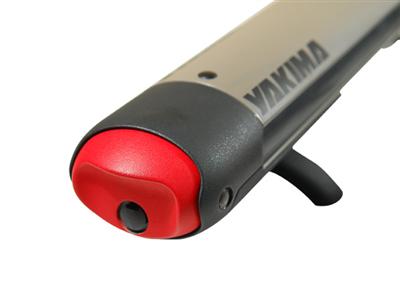
Large Push Button

As far as attachments, I’ve been using the Yakima StrapThang for surfing and love it. This past holiday weekend we headed up North and I easily installed the FatCat 4 which comes with universal mounting hardware to fit most applications. I also liked the large button to open the rack – easy even in clunky mittens.

Unfortunately, I have to remove the StrapThang to accommodate the FatCat 4 (a combination of the shorter 48″ crossbar and to have room for a wider surfboard), but attachments install and remove easily so no biggie there. Yakima sells crossbars in 48″, 58″, 66″ and 78″ lengths and the general rule-of-thumb is a crossbar can go as wide as the side-view mirrors.

I had to forgo the cargo box I own for another rack system. I think newer cargo boxes can go on either system, but mine is old and cracking so it’s just as well. It was more than a little cramped in the SUV with the wife, kids and all the gear, but the skis and snowboard were up top, so only soft projectiles were possible!

If you’re looking for a rack system you’ll find two camps – round and square. Both are priced competitively, have long track records and offer a variety of options (fittings and attachments). I read somewhere round structures are stronger than square, but I’d recommend the Yakima system for ease-of-installation alone.

Posted by: Lawrence

Reading Time: 10 minutes

Alright, for those of us in the northern hemisphere, or who are not doing much racing until May/June/July, etc., this is probably what you would call our Base period of training. Now is the time to focus on technique, endurance and conditioning work.  In other words, going back to basics, polishing things up, learning from last year’s mistakes and vowing to get it right this year. So, start off slow and easy, get some expert advice, maybe some coaching or tuition and build your fitness on a solid foundation that will be broader, stronger and allow later fitness gains to go higher than before. [That’s why it’s good to think of it as Base period, by the way.  Get it? A base to build on… a foundation…good.]

In the world of swimming, that means swimming drills, and swimming drills mean swimming toys.  Here is a list of things I already have in my swim bag, and how they help my training. Swimming can be technical and complicated, many splendored thing. It’s more than just flailing up and down the lanes at the local pool – drop me a line at robert.popper@sky.com for advice.
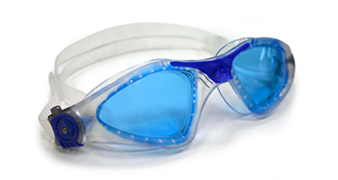
Aquasphere Kayenne goggles

Goggles
Okay, duh!  You already knew you needed goggles to go swimming in the pool, but how many different makes and models have you tried?  Do you go for the cheapest ones they sell at the pool? Do you go for the most expensive ones?  Always try on different makes and models to see which ones suit your face and eye-sockets best. A swimming coach friend told me that a good way to gauge goggle fit is to press them into position over your eyes without the straps to see if they stay on your face.

I have tried dozens and dozens of pairs of goggles (and, yes, I have some that were the cheapest ones sold at the swimming pool!) and my favorites are the ones shown above, Aquasphere Kayenne with blue tinted lenses (because, quite frankly, the whole world just looks so much cooler when it’s all blue-tinted). I like a wider frame, but not too wide or mask-like and these offer a 180-degree view (considering that most of my swimming in Spring and Summer will be open water swimming), and I like the overall feel of the material (hypoallergenic Softeril®, so they tell me). I have also tried others that I like, such as the Aquasphere Seal XP (however it’s mask-like profile makes it better for open water than for swimming pools) and the Speedo Pacific Storm (one of my favorites at the less expensive end of the market for day-to-day swimming pool practice. Don’t discount the notion that putting something called Pacific Storm on your face might just make you the coolest kid in the pool) and remember, always carry an extra pair of goggles with you whenever you go swimming.

Water bottle
Yes, a water bottle. If you are going to be swimming for more than 20 minutes, you will probably get thirsty and should take little sips frequently during rest periods in between drills or intervals at the end of the lane. Even better than drinking water is a sports drink with some sugar and electrolytes to replace minerals and salts lost when you sweat. Yes, you sweat when you swim, you just don’t notice it as much.  Any water bottle will do, as long as it is plastic and water-tight.

Swim cap
Wait a minute! I thought that this was supposed to be a cutting-edge, state-of-the-art web site about all the coolest sports gadgets and stuff! What’s all this about goggles, water bottles, swim caps, and low-tech, obvious nonsense? When do we get to the cool shit?  Swim caps are just for girls, anyway, aren’t they?

Okay, why wear a swim cap when you’re swimming in the swimming pool? Hygiene? Sure, keep those loose hairs from clogging up the filters. Speed/hydrodynamics? Sure, shave 0.5 seconds off your next 50m sprint with a swim cap.  How about the old adage that you should train as you mean to race?

Consider this scenario: It’s race day and you’re given a bright colored swim cap so the organizers can tell what wave you’re in and so the kayakers can see you from a distance (and fish your drowning ass out of the water if they need to, because you didn’t train well, positioned yourself too close to the front like a total macho idiot, went off too fast like a total newbie, and cramped up). You’re hot, sweaty and nervous in the transition area, just squeezed into your wetsuit on and have Body Glide or Palmer’s Cocoa Butter Body Oil (sooo much better than Body Glide in my opinion, as it’s affordable, smells nice and is made from vegetable oil and therefor totally wetsuit-friendly) all over your hands. You struggle to put on your swim cap which keeps slipping off, it feels uncomfortable and your head is hot. Because your not used to it! Had you spent the past several months swimming with a swim cap on every single time, then fitting the cap on your head would be second nature. You would get it positioned just right, be used to the feel and not think twice about it. Eliminate distractions, so when you look at the cold, dark water your prepared to deal with all those horror stories you’ve heard about open water mass swim starts.

Swim caps come in latex (the basic, normal ones), polyester (god-awful, ugly ones that are, apparently, easier to put on and take off and make you look like you are an Australian lifeguard who never finished high school), silicone (easier to get on and off, thicker and warmer than latex), and neoprene (even thicker, warmer and often have a chin strap to keep them firmly in place). I can’t possibly recommend any one manufacturer or model in any of those styles, but remember to always carry a spare whenever you go swimming.
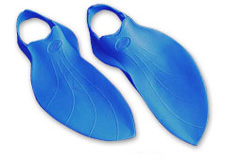
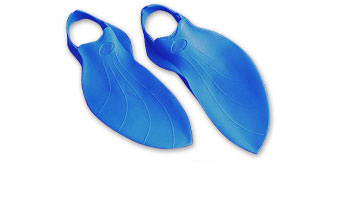
Aquasphere Alphafins totally rock

Fins
Why use fins for swim training?  Increased speed? Yes, but why is that important (other than being really cool when you motor up and down the lane, like, twice as fast as people swimming without fins on)?  Three reasons:

  • fins increase pressure on your lower legs and so help develop and strengthen those muscles more effectively than swimming without fins (which is also why you need to be careful about cramps and aches in your legs and feet if you are new to using fins)
  • fins are more likely to force your feet into a streamlined and hydrodynamic position when you are kicking, which is especially useful for triathletes (whose feet don’t often get very extended when cycling and running, and are often likely to be inflexible down there)
  • fins give you the extra speed and forward thrust you need to do slower technical drills, so that you are concentrating on the drill and not on the fact that you are sinking to the bottom of the pool.

Personally, I always swim drills with and without fins on, because I don’t want to get too reliant on the fins for extra propulsion, or the giddy feeling of speed you get when swimming with fins.

Sadly, I have no excuse to go out and buy a new pair of Aquasphere Alphafins, since I already have a perfectly serviceable pair and they will probably last me for years and years (honestly, what is going to wear out or break down on a pair of fins?). However, should my current fins get lost, stolen, or by some chance left behind in a foreign country, then I would go right out and get me another pair of Alphafins.  They are made of foam so they float in the water (which is handy when putting them on in the pool) and they are much lighter than other types of fins (which is great for guys like me who sometimes end up carrying fins around in my back-pack all day long).

Kick board
Kick boards primarily help with kicking, especially for front crawl (although it has its uses with back stroke, as well). Take your arms out of the equation and kick from the hips and not from your knees (kicking from the knees just increases drag and resistance, slows you down and just tires you out faster). Use a shallow kick that is in line with the profile of your body in the water. Keep your body aligned, as if you were swimming through a tube in the water and you don’t want to kick outside that tube.

Using a kick board in front crawl training also helps ensure that one hand always stays at the front of the stroke, like when doing “catch-up” drills. Some people recommend using kick boards for any of the single-arm drills. I do all of the kick board-based drills with and without a kick board, because (like when swimming with fins) it can become a bit of a crutch and I always like to see what it feels like to swim drills with no toys whatsoever.

Sometimes you’ll find a kick board sitting around the side of the pool and sometimes you need to bring one of your own if you want to be sure you have one for your drills. They are all similar, but the best one I’ve tried is the Speedo Pullkick, which doubles up as a pull buoy and a kick board.
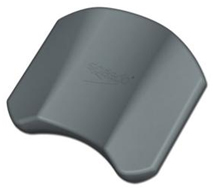
Speedo Pullkick doubles up as a kick board and pull buoy

Pull buoy
Pull buoys help take your legs out of the equation, typically when swimming front crawl or back stroke.  You should do this for a few different reasons:

  • to put more emphasis on the arms, back and upper body movement in your stroke
  • to see how your kick impacts the rest of your stroke (believe it or not, some triathletes I coach swim a little bit faster when they use a pull buoy and stop kicking, so that tells us right away what they need to work on) and especially in your upper body rotation
  • to see how effectively you are using your core muscles in your swimming (one tell-tale sign of poor core engagement is when someone starts to “fish-tail” – legs swinging from side-to-side when using a pull buoy).

Another really useful drill to do with a larger pull buoy, a kick board, or something like the Pullkick mentioned above, is to tap the pull buoy with every stroke when swimming front crawl. This helps ensure that you have a good follow-through on each stroke and your hand finishes past your hips, rather than coming out of the water early. When you do this, though, make sure you rotate your shoulders and upper body to effect the extra reach you need to tap the pull buoy, rather than collapse in your mid-section or arch your back to reach down to touch the pull buoy.
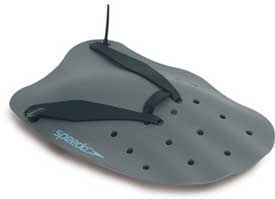
Speedo Tech paddle, comes in small, medium and large

Paddles
Paddles are typically used for increasing power and upper body strength when swimming, sort of like fins do for the lower body. People new to paddles should start with the smallest size and work their way up to larger sizes. Be careful to avoid strains or shoulder injuries, stop if you feel any acute pain and take the paddles off.

Paddles are very useful for improving technique in a few different ways:

  • Strap just your middle finger into the paddle and not your wrist or other fingers (depending on which paddle you use, they have different strap configurations on them) when doing front crawl. This encourages you to keep your hand straight as it comes out of the water at the end of the stroke, as well as finish the stroke all the way through past your hips instead of coming out of the water too early (similar to the touch-the-pull-buoy drill mentioned above), otherwise you’ll feel the paddle pull away from your hand and might even lose it in the water if it is not straight.
  • Do some sculling and catch drills with paddles on to increase the resistance to the water. Then take the paddles off and see how much more sensitive your hands are in feeling the water at the front of the stroke!
  • Do some sculling drills with paddles on, but not strapped to your hands. See if you can keep the paddles on your hands using the pressure of the water and a smooth, continuous hand movement.
  • Do single-arm drills with paddles on to heighten your awareness of how each individual hand moves through the water, and how that effects your catch, pull and upper body rotation.

Some pools may not allow you to use paddles, because it’s supposedly too dangerous when swimming close to other people (apparently it’s not too dangerous when a drowning-coughing-spluttering man does his impossibly slow breast stroke then slaps and kicks you whenever swimming past). So alternatively, consider swimming gloves, which are made of soft neoprene and provide similar resistance to paddles (but not the fun versatility to do some of the drills recommended above).

So, these are the basic toys that a swimmer will need to do a good range of swimming drills and build a solid foundation. You don’t need to use all the toys every time you go swimming or do drills, but they will all come in handy at some point.

A few other toys that I don’t have in my bag, but have been recommended to me as being useful and/or fun:

Snorkel: A center-line snorkel, rather than one that goes to either side, which allows you to keep your head in the water the whole time and focus on things like arm movement, upper body rotation, hip movement, leg movement, or pretty much anything other than turning your head to breathe.

Hip rotation devices: There are a few different toys out there that will put more emphasis on getting good hip rotation, which is an extension of good upper body rotation, good core strength and engagement, and good overall streamlining in the water. Finis’ Tech Toc sounds like the coolest of the bunch with these devices.

PowerBreathers: There are other brands out there, other than PowerBreathe, but these guys pretty much dominate the swimming scene. They make a bunch of different types of products, but the idea is that they help you expand and strengthen the capacity of your diaphragm (not, as many believe, strengthen your lungs, which you do through aerobic exercise, not through breathing into one of these things). Developing your diaphragm improves your ability to inhale and exhale with greater power and efficiency.  Some of my friends swear by them and have seen dramatic results with regular practice in a matter of weeks.

Swim-specific Heart Rate Monitor: Most heart rate monitors will not give accurate readings under water, since the contact with the chest strap or the wrist pulse can be unreliable (some say that they work pretty well under wetsuits in open water, but personally I have never had reliable readings). Finis is one of the first companies I know of that offer a swim-specific HRM.

Posted by: Robert

Reading Time: 1 minute

Surfing in the Summer is quick and easy; boardies, rash guard and off you go. The only problem is there’s nowhere to stash a key (which in wetsuit season goes behind my calf). Surfers, runners, bikers, anyone who drives somewhere to get a workout has to hide their keys in the wheel well or under a rock and hope both the key and the car are there when they return.

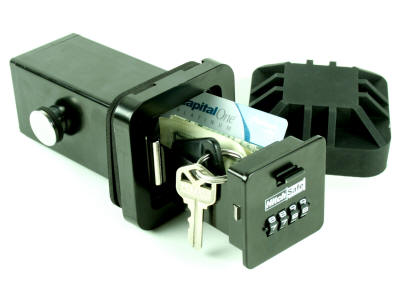
A product called HitchSafe is a 4 digit combination safe that goes in your trailer hitch. It has a drawer that slides out to put your key and other valuables. Some trucks, including those with sliding rear windows can be easy to break into and the HitchSafe provides a safe alternative. The HitchSafe is also a clever place to keep a spare key in the event you lock your keys in the car.

The HitchSafe fits standard 2″ hitch receivers, with the exception of the Toyota Tacoma 2005-07 and 2007 Tundra, both have an extra band of metal around the receiver and require longer bolts. Also some 2005 Toyota Forerunner’s have OEM factory hitches with rounded corners ans require filing off each corner on the HitchSafe for it to fit. A rubber cover goes over the end of the safe to provide a level of protection from the elements and also makes the trailer hitch looks like any other.

The HitchSafe is available on Amazon for $69.95.

Posted by: Lawrence

Reading Time: 3 minutes

In the run-up to the London Triathlon, I had a miserable couple of weeks doing some really crappy work (teaching photography to a bunch of aggressive, violent teenagers) for which I was completely unprepared, getting stressed out, losing sleep, not eating enough, not training much, and generally giving my buddy, Crohn’s Disease, several good reasons to flare up on me. So, dear reader, I must admit that I got to a point, 2 days before the race, where I was ready to drop out, cut my losses, and save my strength for a more important race in September.

But, then I got a good night’s sleep and woke up the next day feeling much better and decided to do the race, but … get this … just for the fun of it.  Yes, I woke up the day before the race and thought, “why don’t you throw away your gadgets and stop-watches and HRMs and forget about the times and Personal Bests – just do the race for the fun of it?”  I know it wasn’t very bitness of me, but deciding to go out there without my stop-watch/HRM and just race for fun lifted a load off my shoulders and turned a race that I had been dreading into a fun day out.

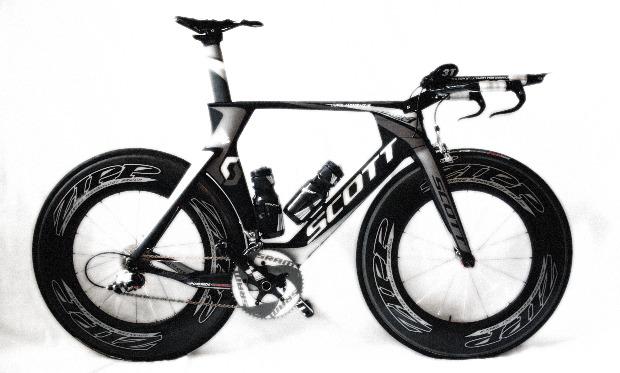
To add to the anti-technology spirit of the day, I realized at the end of the swim section that I had also forgotten to pick up a timing chip at registration (Doh! Major newbie mistake!) and so I wasn’t even going to be listed on the race results when they came out. This fuelled my desire just to go as fast and as hard as I could for as long as I possibly could, until I couldn’t go any more. I broke some rules – I drafted on the bike section (my unimpressive but wonderful TT bike kept up with a much blingier cousin and even gave another guy on a super-fast bike a chance to get on my back wheel for a while). And I rode much, much more aggressively than I had ever ridden in a triathlon before.

As I got back to the transition area for the bike-to-run transition, I had a moment of weakness and picked up my Garmin Forerunner 305 (a gift from an amazing client) and decided that maybe I could just take this wonderful little gadget on the run, just to … you know … gauge my progress, and see how things were going on the run.  I had used the 305 in my previous race and fell in love with the fact that it displayed up-to-the-minute pacing information that is really helpful (e.g. 4:30 per km means you are on target for a 45-minute 10k).  I felt that I had pushed myself so hard on the bike, I wasn’t sure if I would have anything left in my legs for a fast run, and so I turned to the GPS-enabled 305 for a little last-minute guidance in the darker moments of the bike-to-run transition.

Well, I ran my heart out. I just ran as fast and as hard as I thought I could maintain for the full 10k and then I ran a little bit harder than that, for good measure. I felt like I was flying, literally, with a fast cadence and light feet, no aches or pains. Admittedly, the 305 was not always helpful, as there were several parts of the run inside the Excel Centre where there was no satellite signal, but I did get my most transcendent moment of the race from the 305. After one lap, I passed the 5k marker and looked down at the stopwatch and it said 20:00. 20 minutes! I have never run a 20-minute 5k in my entire life and never thought that I would, but on Sunday, the 2nd of August 2009, I did!  And I was so buoyed, so enthused, so amazed, that I just kept on going like the wind and did the full 10k in 39 minutes and 49 seconds (nice little negative split there, too, see that?)!

So, I don’t know how well I did that day (I’m guessing I did better than previous PBs across all 3 disciplines), what my official time was (I’m guessing it was around 2 hours 20 minutes) or where I ranked in my age group. But, thanks to the 305, I know that I ran my best 10k ever, by at least 8 minutes.  And, now the Garmin Forerunner 305 is my favorite gadget.

Posted by: Robert

Reading Time: 3 minutes

Brick training is a concept that is popular in triathlon circles where you combine two different disciplines in one continuous training session. It is a good way of working different muscle groups (e.g. going from a swim straight onto the bike) or preparing yourself for some of the weird physiological sensations you might expect to experience in a race (e.g. going from the bike straight onto the run and your legs might feel quite rubbery).  It is also a really good way to feel like a proper triathlete, walk around muttering to people about “the importance of brick sessions”, and hope they are suitably impressed. In case you were looking for that.

For me, summer is the best time to do this kind of training, because (a) it’s warmer, so it’s not as big a deal to get onto the bike dripping wet; (b) brick training is good, race-specific training that should be done as you get closer to doing your races, usually held in the summer; (c) it can require a lot more time to do such a long session, and so it’s good to have lots of  daylight hours to fit it all in safely.

My big brick sessions this year have involved open water swimming with Swim for Tri, 7:00 – 8:30am on Saturdays (but, I have to admit that I am one of the coaches and rarely swim a full session at anything resembling race pace), then hopping on the bike after the session and riding with a few like-minded folks for 2-4 hours (again, allow me to confess that I religiously stop for hot chocolate and cookies offered up by the fine people at SFT, before getting on the bike).

Over these past few months, I have found a few really simple bits of equipment that have helped me tremendously during these sessions:

– The first one is probably familiar to lots of sports people, the Under Armor long-sleeve crew-neck top, which I have taken to wearing with my cycling bib shorts underneath my wetsuit.  I wear it under the wet suit, because I figure it would be impossible to put on a compression top like that if I were wet. And, incredibly, I have found that the top dries very, very quickly (10-15 minutes) and keeps me warm, wet or dry, the whole time. Given that we have been doing these open water sessions since April, and given that we have not had the balmiest summer weather here in London, this has been a life-saving piece of equipment.

– The second one is perhaps familiar to swimmers out there, the Speedo microfiber towel. It is tiny enough to carry in the back pocket of a cycling jacket or top, but powerful enough to dry off your whole body in a few quick swipes. Then, when you’re dry, squeeze out as much water as you can, fold it up, stick it in your back pocket, and you’re a lot drier and more ready to cycle off into the Essex countryside (past the Secret Nuclear Bunker).

– Finally, I have become a big fan of taking on calories while on the move. These Saturday morning sessions may appear to some of you to be relaxed, undemanding training sessions, what with my cups of hot chocolate and pieces of bread pudding (thank you, again, Mrs. Bullock!). But, when you get up at 4:30am to lead a group who want to ride out for 75 minutes to the swim session at a leisurely 18 mph pace, you learn a lot about getting your nutrition on the bike.  In addition to the bananas and granola bars that I eat on the way out the swim session, I have found that Clif Shot Bloks on the longer rides back give me the perfect combination of carbs, electrolytes, and tasty chewy candy texture that make them soooooo much nicer than gels.

And then we stop for more hot chocolate and cake in Epping Forest (well, I say “we”, but so far, it’s always been my idea, so… you get the idea). So, that’s important, too.

Reading Time: 2 minutes

Motorists and cyclists are supposed to share the road and obey the same laws. All too often however, we see cyclists riding against a one way, blowing through red lights or failing to signal. Meanwhile motorists tailgate cyclists, open car doors without looking and crowd cyclists to the curb with seemingly little regard for their safety.

LightLane

LightLane

In 2007, 136 cyclists were killed and 16,000 injuredand that’s just in Britain! Cyclists have to be visible, aware of who they’re sharing the road with and ride under control in straight lines to survive.

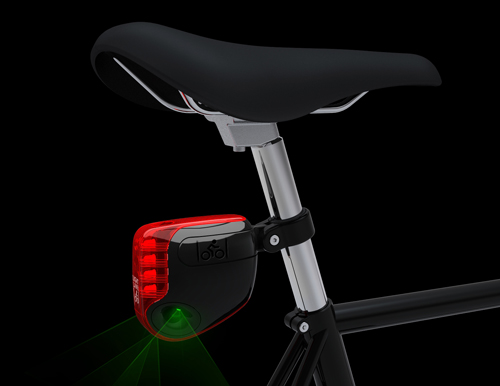
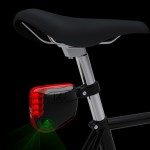
A company called LightLane hopes to provide that visibility with a seat post mounted device that projects two stripes on either side of the rider, creating a kind of virtual bike lane. Using DPSS Green Lasers, a laser reputed to be highly reliable, stable and efficient, the LightLane is best used in poor light conditions when cyclists perhaps need it most.

Equipped with a rechargeable Li-Ion battery, the LightLane lasts only 3 hours and is compatible with universal mobile-phone chargers. Ideally the LightLane would draw it’s power from the bike itself, something I suspect we’ll see down the road.

LightLane started out as a concept in a design competition (which it did not win), but the inventors were enthused by on overwhelming response and set-out to make it a reality. It’s currently a proof-of-concept prototype with an unknown release date or price, but we’ll keep you posted.

Posted by: Lawrence

Reading Time: < 1 minute

In the past week I’ve had 4 people tell me how grateful they were that I turned them on to Steepandcheap.com. Steep and Cheap sells gear (I’d describe it as general outdoorsy gear) one item at a time until it’s either sold out or times-out, at which point it’s on to the next item.

Steep and Cheap mostly sells-out because the deals are good – usually in the 60% off or more range. Act fast if you see something you like! With back-to-back deals all day long it can get addicting and there’s a number of ways to stay tuned-in to deals that are poppin’ (RSS, sidebar gadgets, plug-ins, email, IM and soon an iPhone app).

I’ve been a Steep and Cheap customer since they started and have seen the concept grow wildly. Sister sites now include…

  • Chain Love for biking gear, including BMX and Mountain biking
  • Bonktown is more for the road cycling enthusiast
  • Tramdock for you two-plankers and especially good deals off-season
  • Brociety caters to snowboarders mostly, again… good off season loot to be had
  • Whiskey Militia is so aggro you probably already know they sell skate and surfing gear. Get some.

Check them out let me know what you think. I’ve only had great experiences with them, even returning gear I decided I didn’t need – they make it easy.

Posted by: Franz

Reading Time: 2 minutes

Growing up, I was always a fan of The Hulk cartoons and TV show. My cousin Joe Harnell wrote the theme song for the TV show (song title: ‘The Lonely Man‘) and was kind enough to send me an autographed picture of himself, as well as Bill Bixby and an enraged Lou Ferrigno as the Hulk right behind him.

In The Incredible Hulk movie, Bruce would try to keep his rage under control using breathing exercises and checking his Polar HRM to make sure he didn’t exceed the heart rate that would trigger the gamma reaction. Despite his best efforts, Bruce lost control and flew-off the handle more than once (the movie would have sucked if he didn’t right?) and after raging for untold hours, he’d wake-up somewhere unfamiliar, miraculously still wearing pants.

Had Bruce been wearing the relatively new Polar RS300X he’d benefit not only from a foot pod to know how far he’d strayed (in one scene I think he ended up in Guatemala), but also GPS to get all the essential information an inquisitive scientist yearns for (speed, distance, max heart rate, etc). The Polar RS300X is compatible with S1 foot pod™ and G1 GPS sensor and the data you collect can be transferred to polarpersonaltrainer.com with optional Polar FlowLink™

However, to equip the RS300X with both the GPS and foot pod options you’ll spend about $440 (RS300X – $170, G1 GPS – $140 and S1 Footpod – $130). This is more expensive than the $170 Garmin 305, which has GPS built-in and can be used with a $75 footpod. Not only does the Garmin offer the same functionality for about $200 less, but you’ll also have less gear strapped to your body.

Suunto also has solutions to consider, but for my money I like the Garmin. Let me know what you think, but don’t make me angry. You wouldn’t like me when I’m angry…

Posted by: Lawrence

Reading Time: 2 minutes

I always thought it would be cool to roll around in my red Kenworth Semi with my best pal Bear the chimp. Fantasies of BJ McKay aside, having a primate for a best friend maybe isn’t as cool as I imagined. Not only is hurling feces around uncool, but ever since Travis the chimp attacked a woman in Connecticut last February, the government banned owning primates in the USA.

powermonkey eXplorer

Recognizing a void whereby American’s can not own a Gorilla, a Chimp or a Monkey, Powertraveller aptly named their product line so you could not only lay claim to owning a monkey, you can even carry one around in your pocket.

Powertraveller’s portable power products are available as standard chargers which you pre-charge and take with you and solar chargers used to charge devices anywhere there is at least moderate sunlight. The full line in a nut shell…

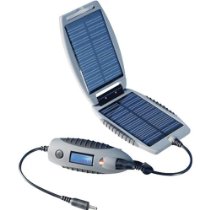
For my needs, the powermonkey and the powermonkey eXplorer fit the bill. Consisting of a small charger and solar slave, the powermonkey eXplorer has an LED on the charger that shows when it’s charging as well as how much charge is left. When kept in just 6 hours of full sunlight, the solar slave will charge the battery/charger pack enough to refuel an iPhone three times. Adapters for power sockets around the world are included in a carry bag. Also provided are adapters for iPod, PSP, mini-USB, standard Nokia and Sony-Ericsson phone charger attachments and many more.

Posted by: Lawrence

Reading Time: 2 minutes

Triathlon Credit Crunch Series: Swimming | Cycling | Running

Running is a pretty inexpensive discipline anyway, once you get past the shoes. My advice: don’t skimp on the shoes. Find a good running shop that looks at your running stride (maybe even videos you for a few minutes) and makes recommendations based on what they see and discuss with you. Try on a few different pairs, and make sure you get the right shoes.

Elastic Running Laces
Available in a variety of bright, neon colors or some classic colors, put these on your shoes and you have just shaved 30 seconds or so off your next race time in T2 without having to know anything about Lactate Thresholds or heart rates! These are also ideal for doing brick sessions and practicing transitions in your training. And, elastic laces make it much easier for me to change my shoes quickly, for example, when I cycle to work with cycling shoes, but I don’t want to walk around in my cycling shoes and ruin my cleats when I get there.

Race Belt
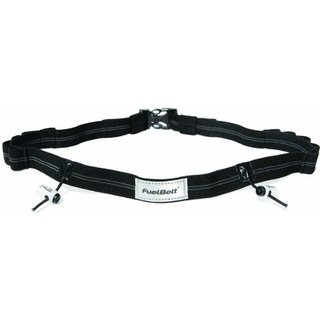
For classic black or a choice of red and pink (hey, Team TBB races in pink, so don’t tell me that pink isn’t tough or cool or hard-core).

It just makes life so much easier to be able to slide your number around to your back on the bike, and then slide it around to the front on the run, rather than pinning numbers to your top. And ease of use it what it’s all about on race day, thinking about setting new PBs and not the safety pins you’ll need for your race number.

Fuel Belt
The Nathan Triangle Insulated Angled Holster Waist Pack is my favorite of the fuel belts for taking on longer runs. It has a good-sized water bottle holder (which is compatible with standard-sized water bottles for the bike), a zippered pocket to hold a house key or whatever you need to take with you, and is more adjustable than other products I have tried. Generally, Nathan seems to make a lot of different products that are well-thought out and comfortable.

Don’t neglect the importance of hydration and fueling on those longer sessions (for me, anything longer than 60 minutes) or higher intensity sessions, so get into the habit of carrying something with you on the run. You might even find yourself out on a race course where they don’t have any water stations, so you might want/need to wear a fuel belt in a race.

Final pointer on inexpensive ways to run better: run barefoot. It’s an area full of controversy and disagreement, and I for one am not advocating that you never put on running shoes again. But, find a nice grassy field (even better a not-very-steep grassy hill) or a beach, and run without any shoes on for a few sets of strides or short drills. You will use more of the small muscles in your feet and lower leg, and develop better sensitivity in your feet.

Posted by: Robert

Reading Time: 2 minutes

Triathlon Credit Crunch Series: Swimming | Cycling | Running

I’m a big fan of looking for simple, cheap ways of training and racing better. For example, train well all winter on a heavy, old bike so that you get stronger and faster, instead of thinking that buying a new P4 is going to make you a faster, stronger rider instantly. NOT that I would turn down a P4 (or anything with the name Cervelo on it) if it showed up on my doorstep. But, my doorstep isn’t holding its breath and, until Santa answers my letters, I will stay focused on the great little bits of gear that help me train better, get faster, stay focused and not break the bank:

Aero Water Bottle
The bottle and you’ll need the mounting system.

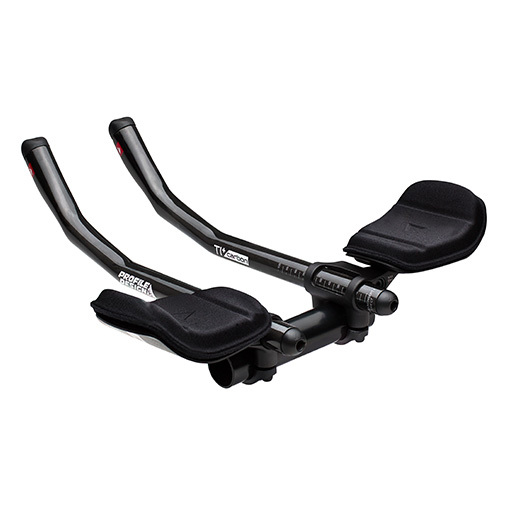
If you’ve got Aero bars or a TT set-up on your bike, then I highly recommend an Aero bottle. Some people hate them and say they get in the way, others say they looks funny on the front of your bike, but I love them. You stay tucked in your aero position, you just lean forward a little and grab the plastic straw with your teeth and take a sip whenever you need it. Yes, you sometimes get a face-full of water (or sports drink, yuck!) if you hit a bump (the plastic yellow scrunchy is supposed to prevent that, but it doesn’t stop it completely). But I think the benefits of staying hydrated on the bike without breaking your aerodynamically streamlined position or fumbling around for your water bottle are worth the drawbacks.

Cycle Computer with Cadence 
This is the one I have been using on four of my bikes (TT, road bike, hybrid, mountain bike) for the past couple of years.

I like it because, (a) I’ve GOT to have something that measures cadence, (b) I had a wireless one and the battery was always dying or there were problems with the unit reading the sensor and it was more hassle than it was worth, (c) the cadence and speed sensors are mounted on the rear wheel which means I can use everything on my turbo trainer. I also have found these very easy to use and pretty reliable (tested for hours and hours in the rain, for three English winters now). Sometimes you have to fiddle around with them to make sure the contact points are connecting on the handlebar mount, but I usually just click through all the settings (about 8 clicks until it comes back to Cadence) and then it’s fine.

Yes, I definitely want to train with a power meter and some day I will upgrade, but that’s another topic. But, for now, train with cadence and an inexpensive heart rate monitor (you may have to splash out on a reliable VO2max test for this to be useful, though) and you’ll be on your way to massive improvements.

Posted by: Robert

Reading Time: 2 minutes

Triathlon Credit Crunch Series: Swimming | Cycling | Running

I’m a big fan of looking for simple, cheap ways of training and racing better. For example, train well in your old wetsuit that has a few tears in it (and bring it to the pool with you occasionally during the winter, show it a good time) rather than go out and buy a new one at the first chance. NOT that I would turn down a Vasa Trainer if someone wants me to road-test one for a few months, but until then, here are some less expensive things to consider:

Aquasphere Goggles
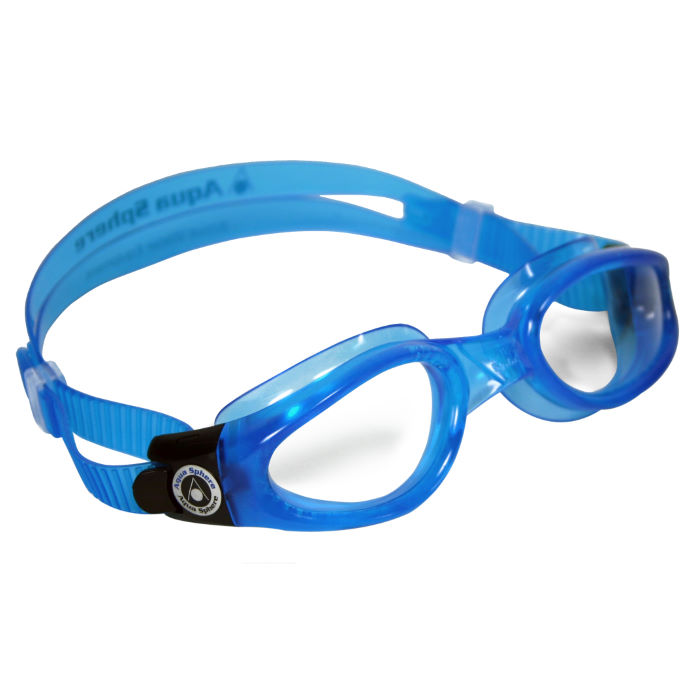
Kaimans are probably my favorite. I mean, I have about 7 different pairs of goggles and they all work fine, keep out the water and all that, so I don’t care THAT much which pair I’m wearing on any given day as long as they don’t leak or hurt my eye sockets. But, the Kaimans are that little bit more comfortable on longer swims and provide the extra peripheral vision that you need in open water swimming. So, when I’m being fussy those are the ones I reach for.

I also have a pair of Seal XPs, which are very comfortable and have an even wider range of vision. They’re a little bulky and large on the face, but also very good for longer swims in open water.

Being able to swim straight in open water is probably the best and quickest way to ensure you get faster swim times in your open water races. Surely, being comfortable and being able to see a little more clearly will help you achieve that, right?

Silicone Swim Cap
This one comes in a wide range of colors.

I like these swim caps more than the ordinary, latex ones, because I find them easier to get on and off, and they keep my head a little warmer in the cold, British waters I’ve been swimming in (we usually wear two caps, anyway).

I see very hard-core guys wearing neoprene swim caps, and they look even warmer and much harder to have knocked off your head in the mass-start-feeding-frenzy at the beginning of a race.

Basically, if you wear something that is more comfortable, easier to use, and encourages you to train more, then it’s GOT to be making you a better athlete.

But, remember, train as you mean to race. Most races will require you (men and women) to wear a swim cap, so get lots of practice wearing a swim cap when you train. Don’t leave it until race day to try putting on a swim cap quickly and comfortably for the first time. Do that with all your equipment, train with it well in advance of any races you place to use it in, and don’t change your equipment at the last minute or try something new in a race.

Now, get out there and do some drills, work on your technique, swim more often and get some good coaching. Swimming is perhaps the toughest of the triathlon disciplines to see dramatic improvements, not least because you never really get to see yourself doing it. When running, sometimes we can see our shadows or our reflections. The same with biking, so it is a little easier to check our form and technique in those disciplines. But, unless you have access to an Endless Pool or someone to video you underwater, swimming is about feeling the difference, and that can be much harder to achieve.

Posted by: Robert