Road, Mountain, BMX, etc

Reading Time: 2 minutes

Typically I’m an early adopter, but for fat tire bikes I admit to playing catch-up. I’ve been mountain biking now for over 30 years and don’t even like a front suspension forks, let alone mid or rear suspension. I’ve been rigid in more ways than one, through and through.

But since a growing number of my friends have started riding fat bikes, I’ve been feeling left out of the cold – stuck inside on snowy winter days while they’re hammering powdery single track on their fat tire bikes. Or on warmer days while they’re riding sand on the outer beaches, I’m stuck with the masses on hard-pack.


The-House.com
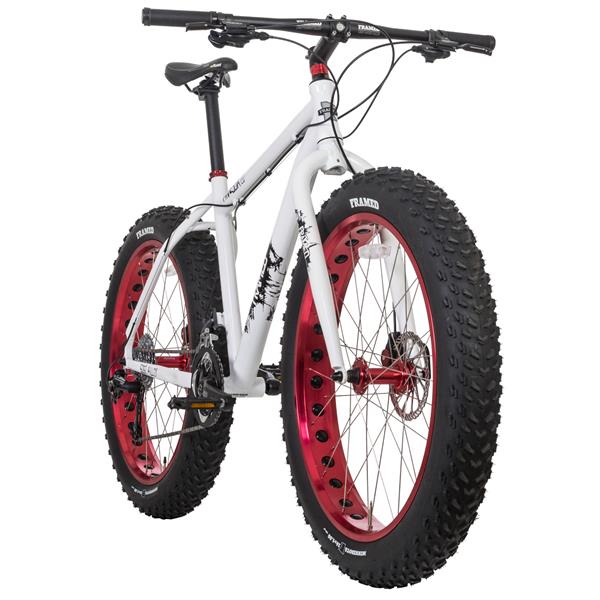
Late as I am to the game and still somewhat apprehensive, I decided to go fat myself. But I wasn’t prepared to drop $1,700+ on another toy, so I asked around, did a little research, rode a few bikes and found a great bike at an unbeatable price from The House, an online retailer where I’ve bought snowboard gear in the past.

The entry point for a fat bike doesn’t get much lower and the value seems unbeatable – plus no suspension! One of the guys I ride with just stepped-up from the bike I just purchased to another bike from The House and swears by them. If you’re looking to get fat yourself check out The House and the great deals they have on offer.

Price: $649.95 USD

Posted by: Lawrence

Reading Time: 2 minutes

https://www.youtube.com/watch?v=helKtdl9N6U

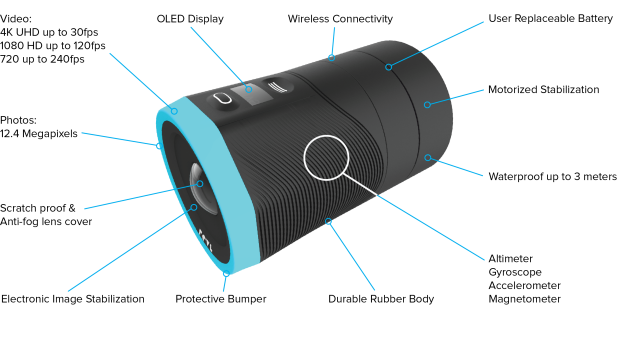
Another interesting prospect has arrived in the already crowded action camera market. The Revl Arc stabilizing 4K action cam differentiates itself from the competition primarily with their image stabilization, which uses a built-in gyroscope, barometer, accelerometer and magnetometer. It also has built in connectivity, assisted editing (see the Bitness article on Trace for another take on this) and an app that allows you to track what friends are up to – all look promising and there is significant innovation here worth getting excited about.

I was less excited when I started the video and saw bungee jumping… how extreme. But watched in disbelief bordering on horror when the action progressed to car surfing, hanging out of car windows, taking narrow shoots in a speedboat full of people at nearly 40MPH and editing your footage while driving.

While we don’t condone any of those activities, we can recommend you take a look at the Indiegogo page for the Revl Arc and consider investing in it.

Other features include…

  • Records 4K at 30fps, 1080p at 120, 60, 30fps and 720p at 240, 120, 60fps
  • Live-stream at 1080p
  • Shockproof and waterproof to 10 feet (3 meters) without a housing
  • Stores to microSD cards (up to 128GB supported)
  • User replaceable battery
  • Up to 90 minutes recording time at 4K (without Wi-Fi)
  • Standard tripod mount as well as specialized mounts created for the camera
  • One-button recording
  • Revl mobile app for live preview and controlling the camera and its settings
  • Apple Watch support
  • 802.11n Wi-Fi and Bluetooth 4.0

revl arc 4k action cam

Availability: December 2016

Posted by: Jason

Reading Time: < 1 minute

https://vimeo.com/130314832

As the father of two girls that have gone through wagons, tricycles, rip sticks, razors, BXM bikes, mountain bikes and other forms of transportation, something like the Infento would have been welcome news… 15 years ago. Described as “Bigger than Meccano and Lego. Much bigger. With just one kit and one tool you can build unlimited real rides together with your child.”

Infento kits allow you and your kids to build different rides together for pedaling or using on snow – all with a provided Alan wrench! You can build one for each phase of their lives, or experiment with whatever ride you dream up with their Creator and Master kits.

“We offer 3 Kits and 2 Add-ons. In total you can build 18 (!) incredibly cool rides. But as always with Infento, the possibilities are endless and you can also create your own awesome rides. This is all up to you. So, 18 is just the number of rides we created for you and your kids. See them all below!”

Maybe it’s not too late to jump on board!

Source: Kickstarter

Reading Time: < 1 minute

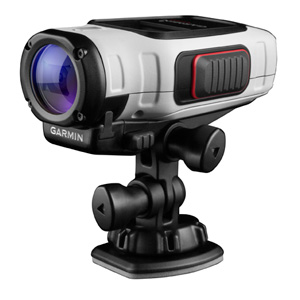
The Garmin VIRB, is touted as a “go-anywhere-endure-anything 1080p action camera with: built-in color ChromaTM display for setup and playback, 2000mAh battery (up to 3 hours of HD recording), and a 16 MP image sensor.”

Enclosed in a ‘rugged’ waterproof enclosure, the VIRB also provides heart rate, altitude and velocity to help set it apart.

https://www.youtube.com/watch?v=F6CGI3XkAiQ&feature=youtu.be

Cost: $299.99 USD

Posted by: Lawrence

Reading Time: < 1 minute

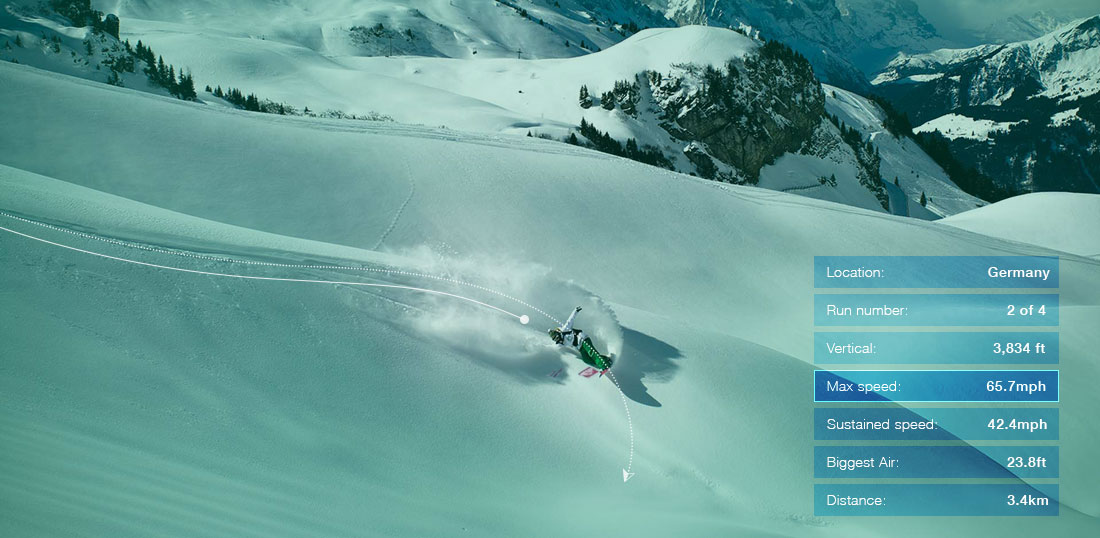
Trace makes action sports measurable, sharable, and comparable. Using advanced inertial sensors and GPS technology, Trace gives you detailed information about every session you have.

Trace can identify a tre-flip down 10 stairs, detail every turn on a 100-yard Rincon right, and measure a backflip off a 20-foot kicker at Mammoth.

https://www.youtube.com/watch?v=5wvDRO7jPx8

Donate to Trace on Kickstarter

Posted by: Franz

Reading Time: < 1 minute

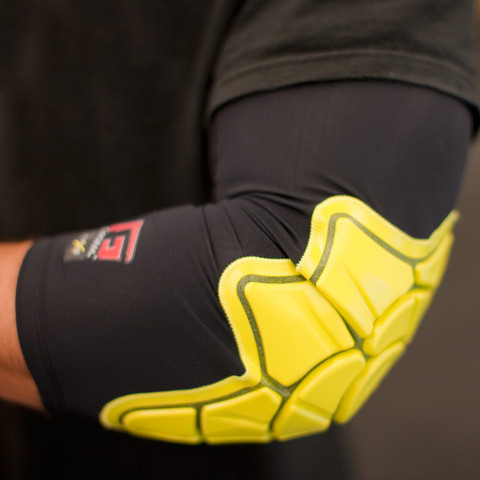
I’m a big fan of G-Form products and not so long ago we reviewed the G-Form Elbow Pads which I now wear religiously for snowboarding.

G-Form announced during CES 2013 that in June of 2013, they will sell the G90 waterproof phone case with a 90° angled lens/mirror with up to an impressive 140° field of view (your existing smartphones lens will determine the exact field-of-view you’ll get). Because smartphones are so narrow, the G-Form set-up is more aerodynamic and poised to give GoPro, Vholdr, Drift and others a run for their money.

Posted by: Lawrence

Source: Gizmodo

Reading Time: < 1 minute

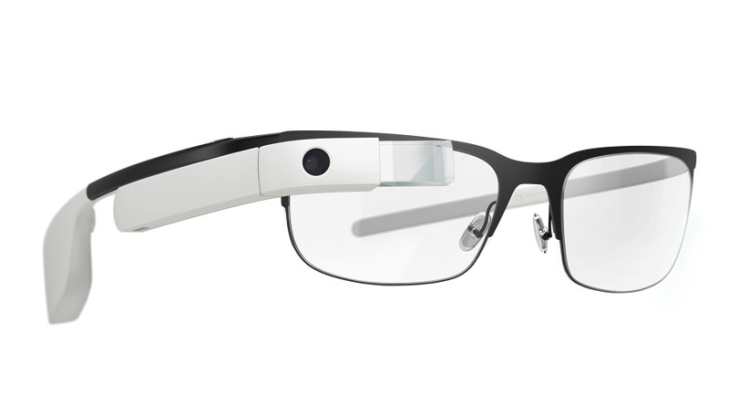
That’s a quote from the late, great comedian George Carlin – but these new glasses from Google might change your mind.

I wouldn’t recommend them and the distraction they introduce for core sports, but to live the core lifestyle you sometimes have to rock-it like a cyborg…

Posted by: Lawrence

Reading Time: 2 minutes

Protect your body from falls without looking like the Michelin Man

There are a lot of options for protecting your body from the impact of a hard or awkward fall, but not many options to do it with a minimal amount of bulk (which can hinder performance). G-Form allows you to protect yourself and your gadgets with something called RPT™ (Reactive Protection Technology), a soft, flexible technology that stiffens to absorb over 90% of the energy from high-speed impact.

G-Form can add a little more confidence when kick-flipping a 20-stair or dropping into steep singletrack. Or in my case, snowboarding in thin-cover conditions at Snowbird in early December.

I wore the G-Form elbow pads, described as a “flexible, molded, exoskeleton rate-dependent impact pad worn on the outside of the sleeve.” The ridges and hinges of the pad are specifically designed to flex with the elbow and arm to ensure complete protection.

G-Form elbow, shin and knee pads have a thin rubberized edge that allow it to grab on to your skin to prevent slipping. I found that flipping these edges inside-out allow you to pull the pad on more easily and then, once in place, flip the edges back down so the rubber contacts your skin. There was very little movement of the pads over the course of the day and I only made minor adjustments during a quick lunch break. The G-Form elbow pads did there job on more than a handful of falls and will be a regular part of my gear for snowboarding, mountain biking and downhill skateboarding.

I’ve written about d3o in the past and this product is similar, but G-From simply does more with less. G-Form’s RPT is a proprietary composite construction made-up of durable layered materials. This allows G-Form to be directly exposed, whereas d3o is almost always inside of a pocket or under a layer of fabric or foam. With a lighter weight base material and special co-molded construction, G-Form RPT can “outperform d30 in many ways,” according to G-Form VP of Innovations Thomas Cafaro. “Compared to d3o, G-Form RPT has better abrasion properties, a higher tear strength and can handle laundering much better.” G-Form’s impact test results claim to reduce force transfer better than d3o and does so with less weight, less thickness and at a lower retail price.

If your looking to boost your confidence, protect yourself from bodily harm and want to cut-down on the bulk of traditional pads, consider G-Force. They’re light, affordable and offer great protection using state-of-the-art technology.

Note: I’ve also been testing the G-Force Extreme Portfolio™ for iPad 1 or 2/10″ Tablet and while I haven’t dropped any bowling balls on it (or from an airplane), the case gives me peace-of-mind and it looks badass!

Posted by: Lawrence

Reading Time: < 1 minute

When you or one of your friends drops in a halfpipe, wave, downhill single-track or chute you pull for them to make something special happen. It’s called spreading the stoke and for a little over a year Stokelab has done just that and done it beautifully with incredible imagery and digestible stokey nuggets of editorial.

Stokelab.com

Issue N° 5 does not disappoint, capturing images of athletes at the pique of their sport, whether it be kayaking, surfing, climbing, mountain biking, snowboarding, skiing or other core sports.

This issue features an interview with Geoff MacDonald and Chris James of Meathead Films. The two discuss their 11th film project, Prime Cuts and also their working dynamic, what it takes to make it as a filmmaker and what it means to be ‘core’ and not controlled.

Check out Stokelab Issue N° 5 and other back issues for all the core sports porn your eyes can handle. If the pictures and articles don’t get you amped out of your skin, you might want to try methlab.com – just kidding… Don’t do drugs.

Posted by: Lawrence

Reading Time: < 1 minute

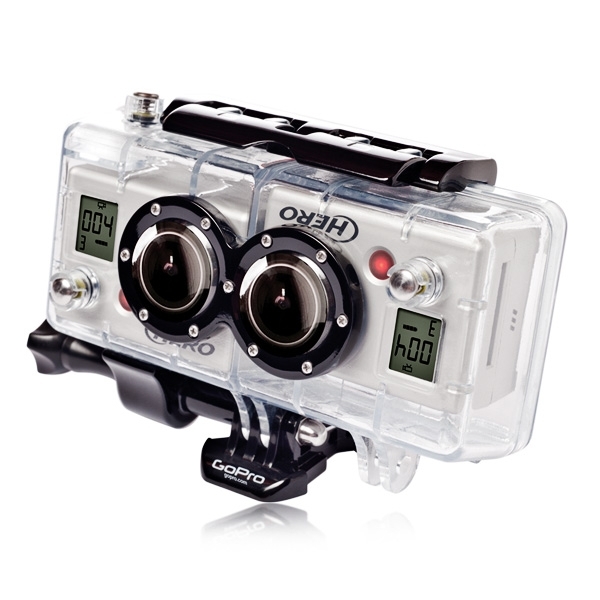
GoPro just announced the release of the 3D Hero System, which allows you to combine two 1080p HD HERO cameras into a single housing to record 3D video and photos while simultaneously recording in 2D. A synchronization cable plugs into the rear HERO Port on both cameras to join them together, enabling both cameras to record video and photos in perfect synchronization. This is a requirement for professional quality 3D and is available only from GoPro.

© GoPro "How the GoPro 3D Works"

The included 3D editing software – GoPro Cineform Studio – (recently acquired by GoPro) makes it easy to convert your 3D HERO System footage into viewable 3D files you can watch on your computer, online at sites like YouTube, and on your 2D or 3DTV at home.

Luckily I had my trusty Hannah Montana Best of Both Worlds Red/Blue 3D glasses to check out this 3D video that provides a good sense of just how cool this set-up is!

Features:

  • Mounting System is compatible with all GoPro accessories
  • 3D waterproof housing is rated 180’/60m deep
  • Record 3D and 2D video and photo files simultaneously
  • Includes FREE easy-to-use 3D editing software—GoPro CineForm Studio

Source: GoPro

Reading Time: 2 minutes

For a geek like me, running gadgets are hard to resist. GPS watches, heart rate monitors, running belts, iPhone in armband, earbuds… I own them all and not surprisingly, I’ve run with them all… at the same time.

iPod Nano and Nike+

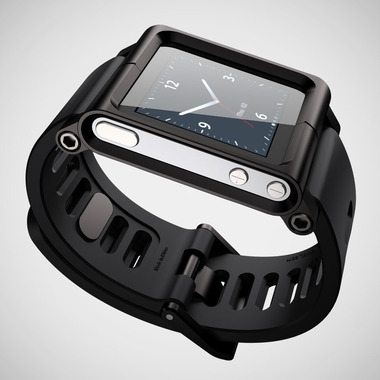
TikTok LunaTik band, multi-touch iPod Nano 6G & Nike+

Maybe it’s the barefoot craze and the notion of going lighter, I’ve talked about going lighter in the past, but never did anything about it. Well this season I put my robo-cop runs behind me and the only gadget I need is my Nike+ and iPod Nano 6G.

I’ve been running with my wrist-mounted Apple Nano for about a month now and can only find a few drawbacks. First, I like to overlay my runs on maps from time-to-time (especially when I travel) and without a GPS (or an iPhone equipped with GPS and an application like NaviGadget) I’m not sure if it’s possible. If anyone knows of a way to do this please leave a comment! The second drawback is that I’m forced to wear headphones when I run. With my iPhone I can put it in my armband upside down so the speakers face upwards. With the volume turned-up, it’s perfectly loud enough to hear without the need for headphones. There are very small speakers out there, but the current designs are not ideal and anything smaller would probably not be able to generate the volume needed.

For my purposes, the good outweighs the bad and there are plenty of features the Nano and Nike+ offer that replaces the need for multiple gadgets. For instance…

  • The Nano has a built-in FM radio that works remarkably well
  • The Nano has a built in Pedometer to track your movement all day long
  • The Nano allows you to listen to Podcasts (which I love for longer drives)
  • The Nano has a very simple interface that makes it easy to retrieve run data at the push of a single button

Beyond the benefits of the Nano as a running device, coupled with the stylish LunaTik watch band (starting at $79.95 USD*), it also makes a great everyday watch. I’ve received numerous compliments and have persuaded more than a handful to buy their own. The TikTok bands are nice enough to wear when you’re dressed up and they have recently introduced new models like the Black version (which I totally want). Speaking of colors, the Nano allows you to alternate between a black or white watch face to match your outfit – hopefully one day they’ll add more colors!

* The TikTok models are also very sporty and start as low as $39.95

If you’re looking for a reasonably priced running watch, look no further than the iPod Nano 6G with a TikTok + LunaTik band and the Nike+ system. It’s a light, easy-to-use and stylish set-up that will track all your runs and more.

Reading Time: 3 minutes

I’m a big fan of capturing moments on film and reliving them just after the fact and years down the road. I have the whole saga of getting married on tape starting with the proposal and on through to the honeymoon (easy, I’m talking about the snorkeling in Maui and the helicopter ride in Kauii).

This December a couple of friends and I hit Snowbird for some early season pow and caught it on tape using the Vholdr CountourHD and a GoPro (link). It was a good way to capture some side-by-side comparisons and left us wanting more (powder and side-by-side comparisons). From these tests, one of the most obvious differences was how important field of view is. With a smaller field of view you have to do a much better job of staying focused on the subject your recording (less margin for error). The GoPro did a better job here than the Vholdr.

Bitness reviewed the GoPro as far back as 2007 and a few years ago the Vholdr CountourHD. After carrying around a full-sized camera for so many years, unpacking it to shoot, worrying about falling with it or changing the way I rode to accommodate a good shot, well… the helmet cams were an epiphany.

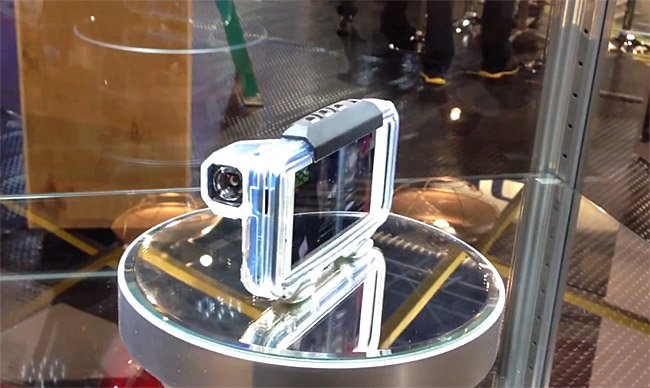
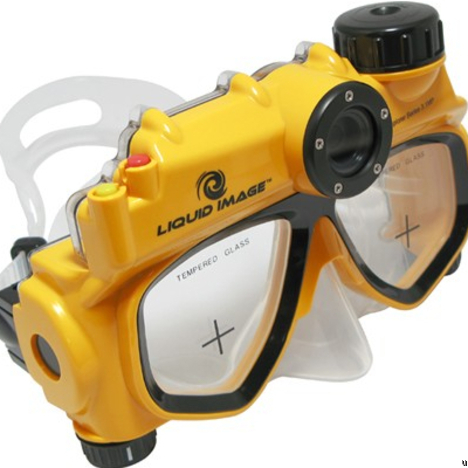
Both Vholdr and GoPro have made improvements since our first tests. Vholdr has introduced a GPS version of it’s camera and GoPro greatly improved resolution and introduced myriad mounts and adapters. There are also two new cameras on the market I’m keen to test, the Drift HD170 and the Liquid Image Summit Series. Both are vastly different in appearance than the Vholdr and GoPro and both offer some unique characteristics. For example, Liquid Image creates a series of cameras in different form factors, for different sports. Rather than adapting the camera to your sport with special mounts, it comes ready-to-go for snow sports (Summit Series), motor sports (Impact Series) and water sports (Scuba, VideoMask, Explorer Series and Freedom Series).

The Drift is a durable looking camera and the only one in the lot to include a built-in LCD (GoPro has recently announced their LCD BacPac). The Drift also includes a remote control you can wear on your wrist – very cool since my friend is always asking if his GoPro is on (with the Vholdr it’s easy to know if you’re on or off since the mechanism slides forward for on and back for off).

Below is a quick look at what we felt were some of the more important metrics to consider when looking for a ‘helmet’ camera. Bitness is coordinating on a hands-on review of all 4 cameras tested under similar circumstances. Video quality, sound quality, picture quality and ease-of-use will be the focus of those tests.

Camera Specifications
Make Model Field of View Megapixels Memory Battery Performance Weight
Liquid Image Summit Series 136° 12* 4GB Micro SDHC 1.5hrs .24kg
GoPro Hero 127° 5 0 2.5hrs 167g
Vholdr CountourHD 110° 5 2GB MicroSD 2hrs 116g
Drift HD170 127° 5 32GB 2-4hrs 157g

* interpolated

Notes:
All cameras provide audio
All cameras are expandable to 32GB
Vholdr, GoPro and Drift cameras support multiple resolutions up to 1080p
Liquid Image model is currently 720p with a 1080p model planned for Fall 2011
Field of view (FoV) for 1080p, expect wider FoV for lower resolutions
Battery life depends upon recording resolution, use of LCD and other configurable options

Camera Accessories/Other
Make Model Mounts Waterproof USB LCD Other
Liquid Image Summit Series N/A No** Yes No specilty models
GoPro Hero handlebar, surf, wrist, suction cup, roll bar, chest, helmet, head, tripod To 60m Yes Optional widest array of mounts
Vholdr CountourHD handlebar, goggle, helmet, rollbar, surf, suction cup, tripod To 10m Yes No  
Drift HD170 handlebar, goggle, helmet, head strap To 0.5m Yes Yes remote control can be work on wrist

** Liquid Image waterproof models such as the Scuba Series are waterproof to 40m

Notes:
Waterproof measurements are performed with cases on the GoPro and Vholdr. The Drift needs no case

Posted by: Lawrence

Reading Time: 4 minutes

I was lucky enough to enjoy 3 early powder days last week in Snowbird, Utah. The conditions were not only amazing for early December, they were amazing for any day of any month. But more than fresh lines, blue skies and incredible terrain, what got me stoked the most was sharing it with two friends.

Copyright Justin Cash www.justincash.com

That’s the thing about about Stoke – it’s way better when shared with friends. Two friends that clearly understand this concept are Justin Cash (Woodstock, VT) and Mike Horn (Crested Butte, CO). After several years working together as photographer and writer in the outdoor industry, these stoke enthusiasts decided to launch their own media company to share the stoke and StokeLab.com was born.

In this interview, Justin and Mike share what get’s them stoked, how to capture those moments and what StokeLab does to evangelize the masses by spreading the stoke.

What gets you [StokeLab] stoked?
Spreading stoke far and wide, interacting with our readers/viewers, and putting out a kick-ass product with blood, sweat and tears – okay, nobody’s cried yet, but stoke never sleeps so it’s a lot of work. It’s really gratifying for us to create an alternative stoke-filled universe, and add at least a few positive, inspiring minutes to peoples’ lives.

With two issues under your belt you wowed us with photography and insightful stories. What’s the response been like?
Well, if we’re “wowing” people as you say, than that kind of response is all we could hope for. We’ve received a lot of compliments from a diverse group of readers, and feel we’re accomplishing our mission, or at least are on our way there.

How long does it take to produce a single issue and how often can we expect to see new issues?
New issue every two months, and each issue always takes longer than we plan for – the ideas come first, then we have to convert those ideas into stories, which requires shooting/requesting photos, assigning and editing stories, layout and design, and so on.

Can we ever expect to see Stokelab in print? Is that even a goal of yours?
“Never say never, but print is not our focus right now. Our goal is to continue refining the digital media experience, to make it more interactive and aesthetic. That said, Stokelab will evolve with its readership, and if our readers demand a print magazine down the line than it’s something we’d have to at least consider. But for now we’re capitalizing on the advantages of digital distribution and production, namely, delivering the magazine and all our content for free.

Bitness founder Lawrence Zevon gets methodical 25 years ago. Stokelab founder Justin Cash (seated on right with cap) clearly stoked! Photo by Jason Gould

With Stokelab it’s evident you practice what you preach. What are some of your favorite adventure sports and how did you come to discover them?
Justin – “I’d say my longest running passion would have to be snowboarding. I might even credit you, Larry (bitness.com founder), with turning me on to snowboarding back in ’85-’86. You showed it to Jason Gould and I, when I saw his red and black Burton Elite 140, I knew right then and there I needed one. More recently I’ve been enjoying fly fishing quite a bit in the summer (not so extreme). This winter I am planning on getting into SnoBlading, the sport has kinda died out a little, but I’m on a one-man mission to bring it back to the slopes.”

Mike – “Snowboarding is at the top of my list as well, with mountain biking a close second. I love surfing also but am not very good—at all. Being landlocked in Colorado doesn’t get you much wave time. My first snowboard was a Craig Kelly Air I bought at a thrift store for $15, with bindings. Still got it.

Is there any user-generated content at Stokelab, or do you generally work with select contributors?
We’re just getting started, and are very fortunate to have a bunch of contributors delivering top-level stories, imagery and video content. With two issues out, we’re also receiving more queries from writers and photographers looking to get involved. As for user-generated content, that is on our radar and we are always making efforts to interact with our readers as much as possible. We recently gave away a season pass to Jay Peak Resort, and asked our viewers to submit their stories of stoke, for example.

What are some tips for the amateur photographer to capture great adventure pics like we see on Stokelab.com and justincash.com?
Thanks for the compliment. Technically, I would suggest searching for cool and interesting angles, try to get real close to the action, or climb a tree to get a different perspective. Also, I would add, don’t be afraid to direct the athletes, tell them exactly what you are trying to create and exactly where the peak action needs to be. This will greaten your chances of nailing a banger image. In the end, I’d say shoot as much as you can and make sure you are enjoying what you are shooting – if you are your stoke will show through in your work.

Reading Time: 6 minutes

Okay, let’s just see a quick show of hands… How many of you already own a heart rate monitor of some description? Okay, quite a few of you. Alright, keep your hands up if you know how to use your HRM?  Hmmm, okay, a few hands went down. Quizzical looks on a lot of faces are telling me that a lot of you sort of know how to use your HRM, but are not sure.
Okay, one more round of questions, then: How may of you know about heart rate training zones? Okay, quite a few of put your hands up. Now, keep your hands up if you know about your heart rate training zones, as in your Max HR, your Aerobic Endurance zone, your Tempo zone, and so forth.  A few hands went down, but some more quizzical looks on faces.

You see, the problem is that, before I go and recommend which heart rate monitor you should buy for your training, I have to acknowledge that there is a lot of confusion and margin for error in this whole area of training with heart rate zones, which is why most of us buy an HRM.  So, I am afraid I feel the need to bore you with some explanations, in an attempt to clear up some of that confusion and reduce some of that margin for error. Then, we’ll get to the gadget stuff in a few minutes.

Heart rate training zones
If you read some of the web sites, magazine articles, books or HRM owner’s manuals, it sounds like heart rate training zones can be calculated fairly quickly and then you can head off to do your exercise, confident that you are targeting a specific type of fitness. But, they’re not so easy to calculate accurately and most calculations that don’t involve a scientific test (usually something like a VO2max test) are going to be prone to a lot of error. Problem is that a VO2max test can be expensive ($100-200 or more), can be time consuming (about an hour in total), and require specialists to conduct them. It is sooooo much easier just to follow the “typical guidelines” and then get started than it is to find the time, money and appropriate specialist to do a VO2max test.

But, let me give you an example of how badly you can get it wrong if you follow some of the “typical guidelines”. Many will tell you to take the number 220 and subtract your age if you want to estimate your Maximum Heart Rate for running. So, a 45 year-old guy like myself should have a maximum heart rate of 175 beats per minute (bpm). Except, my Max HR was tested on a treadmill last year (need to get another test done this year, sorry for the old numbers) at 188 bpm. So, if I follow the “typical guideline” and decide I want to target a tougher training zone for intervals on the track, they tell me I should train at 80-85% of my Max HR, or a Tempo training zone of 140-149 bpm. Which would be completely wrong for me, because I found out last year that my Tempo training zone is 151-161 bpm (80-86% of Max HR). The 140-149 bpm zone would be totally counter-productive for me – not hard enough to be improving my speed or power, but too hard to develop aerobic endurance, and I would not see the kinds of fitness gains I had hoped for if I followed the “typical guidelines”.
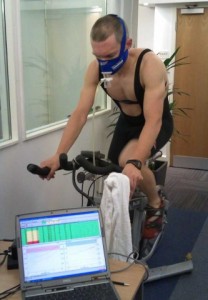
So, if you want to take this stuff seriously, then get a VO2max test done by an experienced professional and get more out of your training and your HRM.

The other approach you could take would be much less expensive, much more time-consuming, require you to listen to your body, and won’t give you any useful numbers for a while. You could use a heart rate monitor and write down your heart rates at key points in your work-outs (you’ll have to talk to your coach about this for more specific details), and then after several months of regular recording of your numbers, alongside your pacing and Rates of Perceived Exertion, then it might be possible to estimate your personal heart rate training zones.

Heart Rate Monitors
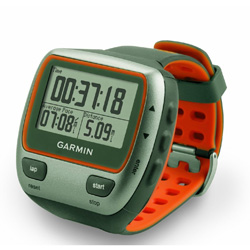
Well, the good news is that you don’t need to go out and buy the latest and most expensive HRM on the market. Of course, the latest and most expensive HRM on the market might have all the features you’d really like to have in an HRM (GPS mapping for speed, distance and route maps, downloadable to your computer, totally waterproof, extended battery life up to 20 hours, perfect for iron-distance triathletes…), like the Garmin Forerunner 310xt pictured to the right there ($300-400). But, there are also plenty of lower priced heart rate monitors that do a great job and cost about 1/4 the price.
So, what would I say are the most useful minimum set of features that an HRM needs to have?

  • Measuring heart rate reliably (well, duh!)
  • Stopwatch with lap counter (total number of laps depends on what you’re doing, really, but the more the better for long-distance people who might want to know their mile splits on a marathon, or perhaps their lap splits for a long track session)
  • Interval or count-down timer (useful if I say, want to do some fartlek with a burst of speed for 100 strides every 4 minutes, or something)
  • Waterproof to 50m (for those of us who also like to time our swims in the pool, not necessarily with HR, but still handy to be able to use the stopwatch with lap counter fully submerged in the water)

My favorite heart rate monitor in the “entry-level” category, that fits all the criteria mentioned above, sadly, is not made any more. It is a Nike Triax C8, it cost me about $80 five years ago, and it still works brilliantly to this day. Sadly, Nike seems to be more focused on footwear and watches that make fashion statements and I could not find any new HRMs currently available that I would recommend.

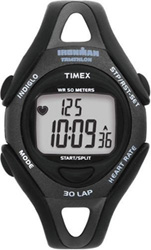
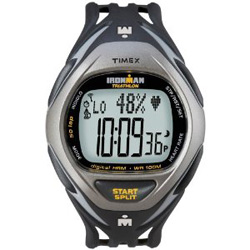
However, Timex do make some HRMs that are very reasonably priced and seem to have all the features mentioned above. I owned an Ironman-branded Timex watch before I had the Nike Triax HRM and it was very good value for money (but it was not an HRM) and lasted through my first 3 years of triathlon training in all kinds of water, weather and conditions. The Ironman Race Trainer model, pictured to the left, seems to be a very good one with all the features you might need to get started (and it can cost a lot less if you buy it on Amazon).
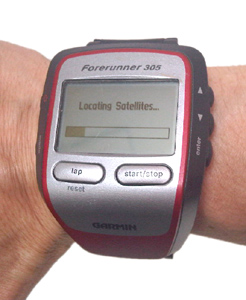
Garmin also do some very good models that are not as expensive as the 310xt. For example, I own a Forerunner 305 (the one pictured at the top of the article on my wrist) that costs about half of what the 310xt costs and is great for long runs. It is not water-proof, so I can’t wear it when I swim, and the battery life is only estimated for 8 hours, so I can’t use it for iron-distance training or racing situations. But, it has been so useful to have GPS distance and speed measurements available for the lower price.

More information, advice and selection
There are still a lot of other factors you may want to consider when buying and HRM. Is the heart rate strap compatible with your turbo trainer? Your treadmill? Your cycle computer? Will it work with Nike+ and iPod accessories? Other gadgets you might use in your training?  How does it feel when you are wearing it (the Garmin HRMs shown here in this article are very bulky and uncomfortable)?  These are also important questions to think about, and don’t make your purchasing decision any quicker or easier, but can make your usage of the HRM a lot more beneficial in your training.

HeartRateMonitor.co.uk is an excellent resource for people in the UK, and HeartRateMonitorsUSA.com for people in the US, who want to learn more about heart rate monitors, features, and objective product reviews, alongside an impressive range of products for sale on their web sites.  So, check them out, too, and get as much information as you can handle before making your purchase.

Reading Time: 2 minutes

I’ve always marveled at how small retired NBA basketball and now actor John Salley’s ears are. Truth is I have small ears too – not as disproportionate as Mr. Salley’s who at 6’11” has ears the size of nickels, but small nonetheless.

Having small ears was never a big deal back when headphones were worn over the ear, but most headphones today (and Bluetooth headesets) are of the earbud variety and for people like me and JS, keeping earbuds in your ears, particularly when sweaty from working out, is damn near impossible.

Yurbuds™ have an earbud system that caters to people of all ear types and is specifically designed to keep the earbuds in your ear even through intense physical activity. Yurbuds are two soft rubber ‘boots’ that fit over the provided ‘Apple-style’ earbuds, but can be used with other earbuds or headsets as well. The Yurbud has a small funnel of sorts that fits into your ear canal and the outer-ridge of the Yurbud is grooved, helping them stay in place – even when sweating heavily.

When you order your Yurbuds you submit a picture of quarter placed just below your earlobe. This helps them determine the size of your ear and fit you correctly to Yurbud for your ears. In all my tests of the Yurbuds – running in near 80F+ degree heat for an hour, the Yurbuds never moved and never bothered me. I also got caught in a thundershower on a run (never fun) and again, the Yurbuds hung in there and Mishka kept signing me up the hills and back to my home.

Because Yurbuds are comfortable over long periods of time and stay in place even while sweating, they’re perfect for runners, bikers, and amateur athletes who are looking for a headphone solution you barely even notice.

Priced a very reasonable $29.99, Yurbuds are the perfect solution for anyone looking for headphones that stay in your ears regardless of how much you sweat or for anyone just looking for a more comfortable earbud from prolonged use.

Posted by: Lawrence