Rock (sport, trad, bouldering), Ice, Mixed, Indoor, etc

Reading Time: 2 minutes

https://www.youtube.com/watch?v=helKtdl9N6U

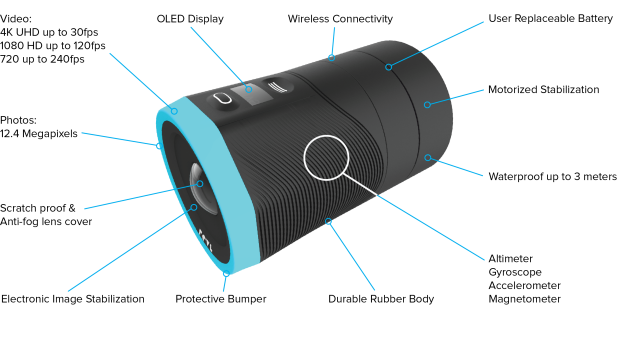
Another interesting prospect has arrived in the already crowded action camera market. The Revl Arc stabilizing 4K action cam differentiates itself from the competition primarily with their image stabilization, which uses a built-in gyroscope, barometer, accelerometer and magnetometer. It also has built in connectivity, assisted editing (see the Bitness article on Trace for another take on this) and an app that allows you to track what friends are up to – all look promising and there is significant innovation here worth getting excited about.

I was less excited when I started the video and saw bungee jumping… how extreme. But watched in disbelief bordering on horror when the action progressed to car surfing, hanging out of car windows, taking narrow shoots in a speedboat full of people at nearly 40MPH and editing your footage while driving.

While we don’t condone any of those activities, we can recommend you take a look at the Indiegogo page for the Revl Arc and consider investing in it.

Other features include…

  • Records 4K at 30fps, 1080p at 120, 60, 30fps and 720p at 240, 120, 60fps
  • Live-stream at 1080p
  • Shockproof and waterproof to 10 feet (3 meters) without a housing
  • Stores to microSD cards (up to 128GB supported)
  • User replaceable battery
  • Up to 90 minutes recording time at 4K (without Wi-Fi)
  • Standard tripod mount as well as specialized mounts created for the camera
  • One-button recording
  • Revl mobile app for live preview and controlling the camera and its settings
  • Apple Watch support
  • 802.11n Wi-Fi and Bluetooth 4.0

revl arc 4k action cam

Availability: December 2016

Posted by: Jason

Reading Time: < 1 minute

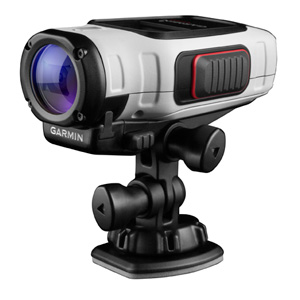
The Garmin VIRB, is touted as a “go-anywhere-endure-anything 1080p action camera with: built-in color ChromaTM display for setup and playback, 2000mAh battery (up to 3 hours of HD recording), and a 16 MP image sensor.”

Enclosed in a ‘rugged’ waterproof enclosure, the VIRB also provides heart rate, altitude and velocity to help set it apart.

https://www.youtube.com/watch?v=F6CGI3XkAiQ&feature=youtu.be

Cost: $299.99 USD

Posted by: Lawrence

Reading Time: 2 minutes

otterbox waterproof caseMost Sunday’s in the Summer I like to paddle up Narrow River to meet friends on the beach. We hang out with our kids, BBQ, swim, explore the estuaries for crabs and other wildlife, climb the rocks, hunt for tidal pools and surf. All of these activities have one common thread – water. Most of my free time is spent in the water and most of the time I like to keep my phone with me for emergencies or photo opportunities. Since phones and water don’t mix well, I needed a solution that was…

  • waterproof
  • durable
  • lightweight
  • easily thethered to me or a my board

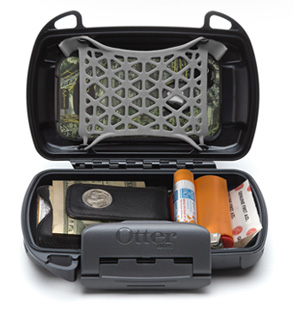
The OtterBox Pursuit Series fit all my requirements and had a lot of innovations that I hadn’t considered which help protect a phone from damage. This case also allows me to carry an ID, spare cash, my car key and more if I need it (e.g. a granola bar).

The OtterBox Pursuit 40 (the model I use) costs $34.95USD and is worth every penny. Here are the specifications for this model…

  • Exterior dimensions: 2.05” H x 4.75” W x 6.95” D
  • Approximate Interior space: 30 cubic inches
  • Holds: Phone, keys, sunglasses, wallet
  • Easy to open latch
  • Tether/belt loops
  • Lockable carabiner loop
  • Internal cushioning
  • Webbed partition

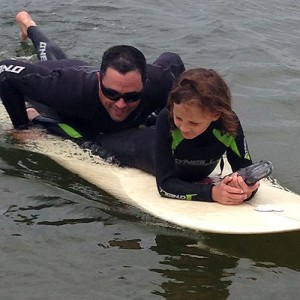
The author and his daughter (OtterBox in hand).

There is a smaller model called the OtterBox Pursuit 20 (Exterior dimensions: 1.65” H x 3.85” W x 5.60” D) which costs $19.95USD. This model, like the OtterBox Pursuit 40 are available in blue, grey or black.

OtterBox sells several other waterproof cases called Classic Cases and they are available in black, yellow, blue or grey.

If you’re looking for peace-of-mind on your next adventure for your phone, keys, money and other valuables, consider the reasonably priced and well engineered OtterBox Pursuit 20 and 40.

Posted by: Lawrence

Reading Time: < 1 minute

I’m a big fan of G-Form products and not so long ago we reviewed the G-Form Elbow Pads which I now wear religiously for snowboarding.

G-Form announced during CES 2013 that in June of 2013, they will sell the G90 waterproof phone case with a 90° angled lens/mirror with up to an impressive 140° field of view (your existing smartphones lens will determine the exact field-of-view you’ll get). Because smartphones are so narrow, the G-Form set-up is more aerodynamic and poised to give GoPro, Vholdr, Drift and others a run for their money.

Posted by: Lawrence

Source: Gizmodo

Reading Time: < 1 minute

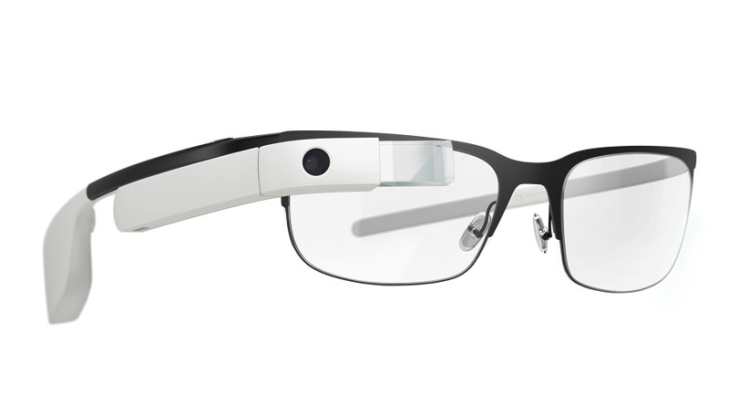
That’s a quote from the late, great comedian George Carlin – but these new glasses from Google might change your mind.

I wouldn’t recommend them and the distraction they introduce for core sports, but to live the core lifestyle you sometimes have to rock-it like a cyborg…

Posted by: Lawrence

Reading Time: 2 minutes

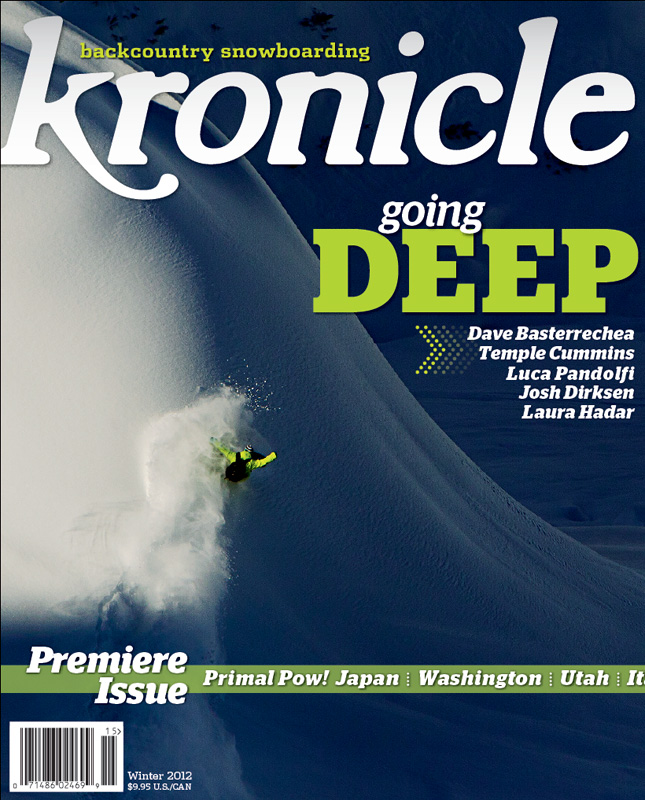
I was stoked to learn there would be a magazine dedicated to backcountry snowboarding. To find out I was IN the Winter 2012 premiere issue made it all the more sweeter! Kronicle is published by Height of Land Publications, the same folks who bring us Alpinist, Telemark Skier and Backcountry magazine.

OK, so they made me an ‘After Thought’ – the last page of editorial in the magazine. In the shot I’m doing a Method Air, which was still sorta cool in 1985 (I suppose a reverse rocket would’ve been cooler). Fellow bitness writer, photog and best bud Jason snapped the picture when we were kids on a back-hill in our home town of White Plains, New York. The point of the article is that local hills are where backcountry snowboarding began.

The contents of this premiere issue of Kronicle, both the editorial and the imagery, are top notch. Kronicle covers two topics in this issue that were both on the table for future bitness.com articles – split boards and ‘No-boarding’ (snowboarding without bindings) and frankly, they just made our research a little easier.

Hit your local Barnes & Noble, EMS, REI or local board shop to see if they carry Kronicle, or order it online and subscribe. If you enjoy snowboarding and don’t do backcountry (but maybe like to hit the glades) it’s well worth the read and the images are guaranteed to get you amped for the coming season – I’m already booked for Utah in 2 weeks!

Posted by: Lawrence

Reading Time: < 1 minute

When you or one of your friends drops in a halfpipe, wave, downhill single-track or chute you pull for them to make something special happen. It’s called spreading the stoke and for a little over a year Stokelab has done just that and done it beautifully with incredible imagery and digestible stokey nuggets of editorial.

Stokelab.com

Issue N° 5 does not disappoint, capturing images of athletes at the pique of their sport, whether it be kayaking, surfing, climbing, mountain biking, snowboarding, skiing or other core sports.

This issue features an interview with Geoff MacDonald and Chris James of Meathead Films. The two discuss their 11th film project, Prime Cuts and also their working dynamic, what it takes to make it as a filmmaker and what it means to be ‘core’ and not controlled.

Check out Stokelab Issue N° 5 and other back issues for all the core sports porn your eyes can handle. If the pictures and articles don’t get you amped out of your skin, you might want to try methlab.com – just kidding… Don’t do drugs.

Posted by: Lawrence

Reading Time: < 1 minute

As of November 2011, Bitness has been bringing you their fresh take on fitness gadgets and gear for the past 5 years. We’ve tested products for runners, swimmers, snowboarders, cyclists and survivalists alike. Starting in November 2011,  we’ll switch focus to what many call action sports or adventure sports. These sports include surfing, snowboarding, skateboarding, climbing, kayaking and other pursuits such as BASE jumping, diving, survivalism and more.

Franz Circa 1987

Because the sports that generally fall under the action or adventure moniker are our true passion (we’ve been either racing BMX or skating ramps and snowboarding for 30 years – not collectively – 30 years for each of us!), we’re calling them core sports. Deal with it.

We’re pumped to share some of the products we’ve been testing and look forward to hearing your thoughts and having you share your experiences as well. We’re leaving all the old posts in there for archival purposes, so if you like reading about a heart rate monitor from 2007, go for it.

Also, to commemorate our 5 year anniversary this November, we’re finally unveiling a logo – we’ve never had one of those and we found a cool design firm to create it for us.

Finally, in addition to changes you will see on the pages of Bitness, we’ve moved hosts and have a whole bunch of crap to sort-out on the back-end – thanks for your patience!

Posted by: Lawrence

Reading Time: < 1 minute

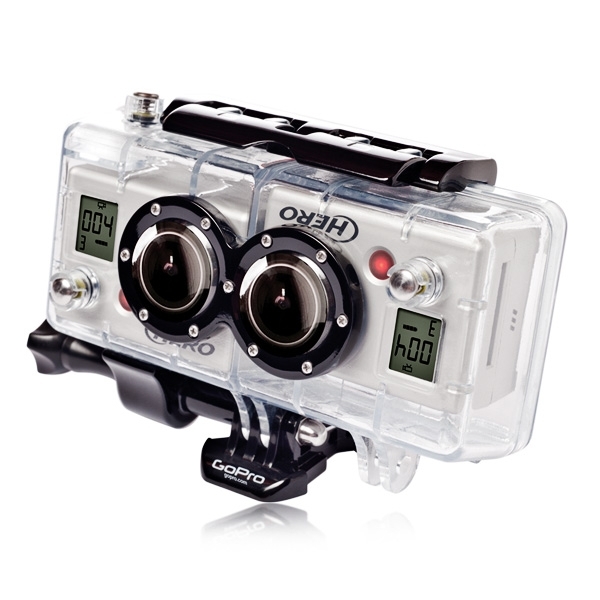
GoPro just announced the release of the 3D Hero System, which allows you to combine two 1080p HD HERO cameras into a single housing to record 3D video and photos while simultaneously recording in 2D. A synchronization cable plugs into the rear HERO Port on both cameras to join them together, enabling both cameras to record video and photos in perfect synchronization. This is a requirement for professional quality 3D and is available only from GoPro.

© GoPro "How the GoPro 3D Works"

The included 3D editing software – GoPro Cineform Studio – (recently acquired by GoPro) makes it easy to convert your 3D HERO System footage into viewable 3D files you can watch on your computer, online at sites like YouTube, and on your 2D or 3DTV at home.

Luckily I had my trusty Hannah Montana Best of Both Worlds Red/Blue 3D glasses to check out this 3D video that provides a good sense of just how cool this set-up is!

Features:

  • Mounting System is compatible with all GoPro accessories
  • 3D waterproof housing is rated 180’/60m deep
  • Record 3D and 2D video and photo files simultaneously
  • Includes FREE easy-to-use 3D editing software—GoPro CineForm Studio

Source: GoPro

Reading Time: 3 minutes

I’m a big fan of capturing moments on film and reliving them just after the fact and years down the road. I have the whole saga of getting married on tape starting with the proposal and on through to the honeymoon (easy, I’m talking about the snorkeling in Maui and the helicopter ride in Kauii).

This December a couple of friends and I hit Snowbird for some early season pow and caught it on tape using the Vholdr CountourHD and a GoPro (link). It was a good way to capture some side-by-side comparisons and left us wanting more (powder and side-by-side comparisons). From these tests, one of the most obvious differences was how important field of view is. With a smaller field of view you have to do a much better job of staying focused on the subject your recording (less margin for error). The GoPro did a better job here than the Vholdr.

Bitness reviewed the GoPro as far back as 2007 and a few years ago the Vholdr CountourHD. After carrying around a full-sized camera for so many years, unpacking it to shoot, worrying about falling with it or changing the way I rode to accommodate a good shot, well… the helmet cams were an epiphany.

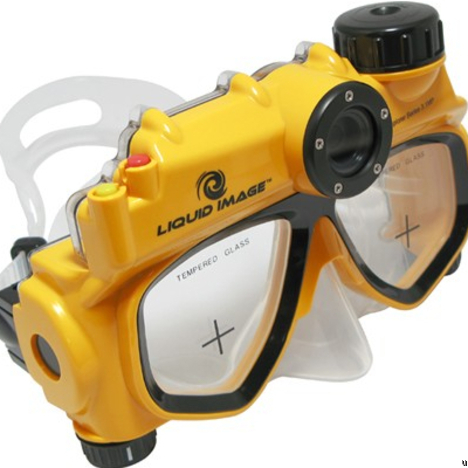
Both Vholdr and GoPro have made improvements since our first tests. Vholdr has introduced a GPS version of it’s camera and GoPro greatly improved resolution and introduced myriad mounts and adapters. There are also two new cameras on the market I’m keen to test, the Drift HD170 and the Liquid Image Summit Series. Both are vastly different in appearance than the Vholdr and GoPro and both offer some unique characteristics. For example, Liquid Image creates a series of cameras in different form factors, for different sports. Rather than adapting the camera to your sport with special mounts, it comes ready-to-go for snow sports (Summit Series), motor sports (Impact Series) and water sports (Scuba, VideoMask, Explorer Series and Freedom Series).

The Drift is a durable looking camera and the only one in the lot to include a built-in LCD (GoPro has recently announced their LCD BacPac). The Drift also includes a remote control you can wear on your wrist – very cool since my friend is always asking if his GoPro is on (with the Vholdr it’s easy to know if you’re on or off since the mechanism slides forward for on and back for off).

Below is a quick look at what we felt were some of the more important metrics to consider when looking for a ‘helmet’ camera. Bitness is coordinating on a hands-on review of all 4 cameras tested under similar circumstances. Video quality, sound quality, picture quality and ease-of-use will be the focus of those tests.

Camera Specifications
Make Model Field of View Megapixels Memory Battery Performance Weight
Liquid Image Summit Series 136° 12* 4GB Micro SDHC 1.5hrs .24kg
GoPro Hero 127° 5 0 2.5hrs 167g
Vholdr CountourHD 110° 5 2GB MicroSD 2hrs 116g
Drift HD170 127° 5 32GB 2-4hrs 157g

* interpolated

Notes:
All cameras provide audio
All cameras are expandable to 32GB
Vholdr, GoPro and Drift cameras support multiple resolutions up to 1080p
Liquid Image model is currently 720p with a 1080p model planned for Fall 2011
Field of view (FoV) for 1080p, expect wider FoV for lower resolutions
Battery life depends upon recording resolution, use of LCD and other configurable options

Camera Accessories/Other
Make Model Mounts Waterproof USB LCD Other
Liquid Image Summit Series N/A No** Yes No specilty models
GoPro Hero handlebar, surf, wrist, suction cup, roll bar, chest, helmet, head, tripod To 60m Yes Optional widest array of mounts
Vholdr CountourHD handlebar, goggle, helmet, rollbar, surf, suction cup, tripod To 10m Yes No  
Drift HD170 handlebar, goggle, helmet, head strap To 0.5m Yes Yes remote control can be work on wrist

** Liquid Image waterproof models such as the Scuba Series are waterproof to 40m

Notes:
Waterproof measurements are performed with cases on the GoPro and Vholdr. The Drift needs no case

Posted by: Lawrence

Reading Time: 4 minutes

I was lucky enough to enjoy 3 early powder days last week in Snowbird, Utah. The conditions were not only amazing for early December, they were amazing for any day of any month. But more than fresh lines, blue skies and incredible terrain, what got me stoked the most was sharing it with two friends.
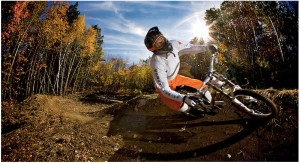
Copyright Justin Cash www.justincash.com

That’s the thing about about Stoke – it’s way better when shared with friends. Two friends that clearly understand this concept are Justin Cash (Woodstock, VT) and Mike Horn (Crested Butte, CO). After several years working together as photographer and writer in the outdoor industry, these stoke enthusiasts decided to launch their own media company to share the stoke and StokeLab.com was born.

In this interview, Justin and Mike share what get’s them stoked, how to capture those moments and what StokeLab does to evangelize the masses by spreading the stoke.

What gets you [StokeLab] stoked?
Spreading stoke far and wide, interacting with our readers/viewers, and putting out a kick-ass product with blood, sweat and tears – okay, nobody’s cried yet, but stoke never sleeps so it’s a lot of work. It’s really gratifying for us to create an alternative stoke-filled universe, and add at least a few positive, inspiring minutes to peoples’ lives.

With two issues under your belt you wowed us with photography and insightful stories. What’s the response been like?
Well, if we’re “wowing” people as you say, than that kind of response is all we could hope for. We’ve received a lot of compliments from a diverse group of readers, and feel we’re accomplishing our mission, or at least are on our way there.

How long does it take to produce a single issue and how often can we expect to see new issues?
New issue every two months, and each issue always takes longer than we plan for – the ideas come first, then we have to convert those ideas into stories, which requires shooting/requesting photos, assigning and editing stories, layout and design, and so on.

Can we ever expect to see Stokelab in print? Is that even a goal of yours?
“Never say never, but print is not our focus right now. Our goal is to continue refining the digital media experience, to make it more interactive and aesthetic. That said, Stokelab will evolve with its readership, and if our readers demand a print magazine down the line than it’s something we’d have to at least consider. But for now we’re capitalizing on the advantages of digital distribution and production, namely, delivering the magazine and all our content for free.
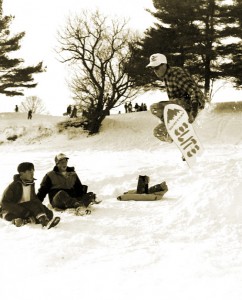
Bitness founder Lawrence Zevon gets methodical 25 years ago. Stokelab founder Justin Cash (seated on right with cap) clearly stoked! Photo by Jason Gould

With Stokelab it’s evident you practice what you preach. What are some of your favorite adventure sports and how did you come to discover them?
Justin – “I’d say my longest running passion would have to be snowboarding. I might even credit you, Larry (bitness.com founder), with turning me on to snowboarding back in ’85-’86. You showed it to Jason Gould and I, when I saw his red and black Burton Elite 140, I knew right then and there I needed one. More recently I’ve been enjoying fly fishing quite a bit in the summer (not so extreme). This winter I am planning on getting into SnoBlading, the sport has kinda died out a little, but I’m on a one-man mission to bring it back to the slopes.”

Mike – “Snowboarding is at the top of my list as well, with mountain biking a close second. I love surfing also but am not very good—at all. Being landlocked in Colorado doesn’t get you much wave time. My first snowboard was a Craig Kelly Air I bought at a thrift store for $15, with bindings. Still got it.

Is there any user-generated content at Stokelab, or do you generally work with select contributors?
We’re just getting started, and are very fortunate to have a bunch of contributors delivering top-level stories, imagery and video content. With two issues out, we’re also receiving more queries from writers and photographers looking to get involved. As for user-generated content, that is on our radar and we are always making efforts to interact with our readers as much as possible. We recently gave away a season pass to Jay Peak Resort, and asked our viewers to submit their stories of stoke, for example.

What are some tips for the amateur photographer to capture great adventure pics like we see on Stokelab.com and justincash.com?
Thanks for the compliment. Technically, I would suggest searching for cool and interesting angles, try to get real close to the action, or climb a tree to get a different perspective. Also, I would add, don’t be afraid to direct the athletes, tell them exactly what you are trying to create and exactly where the peak action needs to be. This will greaten your chances of nailing a banger image. In the end, I’d say shoot as much as you can and make sure you are enjoying what you are shooting – if you are your stoke will show through in your work.

Reading Time: 2 minutes

Interval training is increased intensity for a given activity (lifting, running, rowing, cycling) for a measured amount of time, followed by a reduced level activity for a measured amount of time. Typically done in sets, interval training can be anaerobic – fat burning high intensity interval training (HIIT) typically focused on starving larger muscle groups of oxygen – or aerobic, where low to moderate intensity is used for a longer period of time, allowing muscles to ‘breathe’ and build stamina.

Both anaerobic and aerobic exercise are beneficial and interval training is a great tool to realize those benefits, while at the same time adding a new dimension to workouts to keep them interesting.

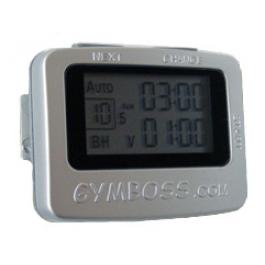
Measuring intervals is easy, but too often it distracts you from your chosen exercise. I’ve been in all-out sprints with my left arm unnaturally poised in front of me so I could read my watch (with difficulty and added risk). Others rely on a partner’s shouts to let them know when to speed up, slow down or stop. A small device called the GymBoss (1 3/4 x 2 1/4 inches) is a lightweight, inexpensive ($20USD) and eliminates the need to focus on anything else but your workout. Clip it to your belt, stick it in your pocket or place it on a shelf for indoors workouts – it’s barely noticeable until a shrill beep, strong vibration or both effectively alert you (to be honest the first time it beeped it startled the hell out of me).

The GymBoss easily satisfies what I would consider my basic need for measuring intervals while running. Others use it to time rounds (up to 99 can be programmed) on the heavy bag or for cycling, weight lifting and other pursuits. Other GymBoss features include…

  • One or two different time intervals from 2 seconds to 99 minutes
  • Auto mode / repeat through intervals
  • Manual mode / countdown timer
  • Stopwatch

The manual is a small double-sided slip of paper they package under the belt clip. If you’re just getting started with interval training and want more information, check out some of these sites so the directions make more sense and you can program the GymBoss accordingly…

http://www.intervaltraining.net/
http://en.wikipedia.org/wiki/Interval_training
http://sportsmedicine.about.com/od/tipsandtricks/a/Intervals.htm

For $20USD you really can’t beat the GymBoss, it does everything it says it does and does it well.

Posted by: Lawrence

Reading Time: 2 minutes

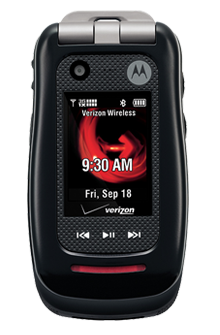
Not everyone needs an iPhone or even a smartphone for that matter. For many, the only functionality needed is good voice quality and the only feature required is reliability. Enter the Motorola Barrage, both uniquely feature-rich as well as durable and providing what I perceived to be above-average voice quality.

Ideally suited for those who work or play outdoors, the Barrage meets or exceeds military specifications for dust, shock and weather. In fact, the Barrage is waterproof in up to one meter of water and submerged for up to 30 minutes. I threw it in the snow, plopped it in a glass of water, took it to the beach and – the test of all tests – let my 6-year-old play with it. Beyond the tested toughness, the Barrage feels like a solid piece of tech, weighing 4.2 ounces and handsomely constructed using black textured rubber and plastic.

Offered by Verizon Wireless for $129.99 (with $50 online discount), the push-to-talk capable Barrage’s 383 minutes of talk-time competes for battery life with a host of features including a 2 megapixel camera (non-camera version also available), music player, bright external 120 x 160 display and TFT internal display (176 x 220).

VCAST and VZ Navigator service are available for additional monthly fees and the streaming in my area was admirable. In my opinion however, the screen size on flip phones in general renders services such as these to be more of a gimmick than useful.

If watching video on the go or you’re frequently going to use the navigation service, you’re better off with smartphone. If you’re the outdoorsy type, or even clumsy, the Motorola Barrage is your ideal phone. With quality construction, a host of features, Verizon’s unparalleled coverage and above-average voice quality, the Motorola Barrage is ready to go to work for you.

Reading Time: 2 minutes

If you enjoy the outdoors all year long, even when it’s wet and cold, you have to prepare properly. When dressing for the winter leave the cotton at home – once wet it’s like a death blanket. Keep your head and neck covered and make sure you have adequate protection for your hands and feet (while allowing for proper blood flow). Make sure you bring a lot of carbs to stay fueled and don’t forget your body needs to stay hydrated – especially in winter.

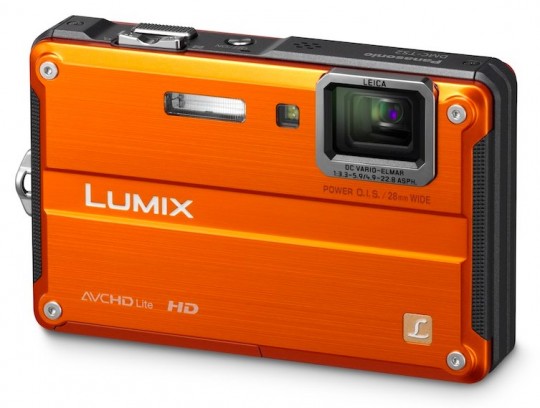
OK Nanook, so you’re ready for a good time in the outdoors with friends and you need a reliable camera to capture those moments where you’re huddled over a fire looking like a ragged group of post apocalyptic survivors. Enter the Panasonic LUMIX DMC-TS2, a waterproof, freeze-proof and shockproof 14.1-megapixel camera also capable of recording HD video.

The LUMIX TS2 is a camera built for action. It’s waterproof to 33 feet /10m (1 atmosphere for you divers), shockproof to 10 feet (2m), freeze-proof to 14° F (-10° C) and dust-proof. The airtight body protects it against water immersion, dust and sand and rubber padding, reinforced glass (protecting the 2.7-inch, 230,000-dot Intelligent LCD) and carbon construction inside the camera further ruggedize the LUMIX TS2 that is also as smart as it is tough.

The LUMIX TS2 is not only tough, it’s also full of features that make it an excellent choice for any occasion. Some features of the LUMIX TS2 include…

  • 28mm wide-angle LEICA DC VARIO ELMAR lens (4.6x optical zoom)
  • Built-in LED light for lighting-up dark areas (such as underwater)
  • Face detection (up to 15 faces)
  • iA (Intelligent Auto) features such as Intelligent auto Resolution,Zoom, AF Tracking, ISO Control and Exposure
  • Built-in Modes such as ‘Happy’ Mode (optimized color, saturation and brightness) for vivid photos or video and High Dynamic Mode for situations where a scene includes bright and dark areas
  • Compatible with SDXC Memory Cards up to 64GB
  • Rechargeable battery that takes up to 360 images on a single charge

Pricing and availability for the Panasonic LUMIX TS2 will be announced 30 days prior to shipping date (unannounced, but note that it’s predecessor, the LUMIX TS1 was priced around $380USD). The Panasonic LUMIX TS2 will be available in silver, blue, orange and yellow.

Posted by: Lawrence

Reading Time: 3 minutes

Last weekend I participated in the inaugural “Druid Challenge” ultramarathon, along the Ridgeway, a beautiful, tough trail, just to the northwest of London.  I did it because:

(a) I wanted to get motivated to do some long-distance running as I train to tackle my first Ironman this year

(b) I wanted do a small event that was likely to be filled with camaraderie and collegiality more than competitiveness and PBs

(c) It seemed like a really interesting, well organised event that was amazing value for money – £90 (around $150) for 3 days of running, transportation, food,  accommodation and support.

It satisfied on all 3 points. I learned a lot about long-distance running, my strengths, my weaknesses and how to be better prepare for similar challenges in the future.  I also learned some valuable lessons about running kit, such as:

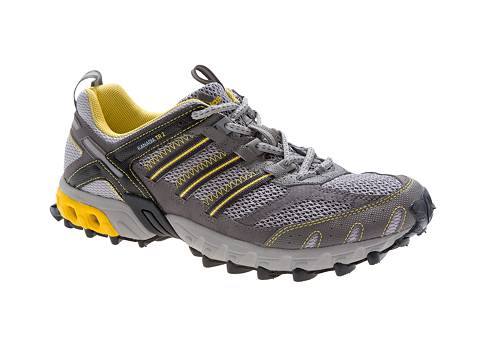
– Get the right shoes for the right conditions. I ran with Adidas Kanadia TR2 trail-running shoes and they were the right combination of lightweight shoes with some grip for the slippery trails.  And then wear them, train in them and get used to them. I probably should have gone more out of my way to run through puddles and clomp around the mud, running up and down hills than I did before the race.

– Get a good bag that fits you well and holds what you need. I ran with the Inov-8 Race Elite 15, which turned out to be just right for this event. I was tempted to go for a larger pack that could hold more, but it would have been too much for this race, which was well-supported with aid stations on average once every 8 miles. As it was, I probably carried way too much, but was also quite glad to have those extra Clif Shot Bloks and Torq gels to keep me going throughout the race.

Compeed blister patches are life-saving little packets of miraculous wonder. I couldn’t have finished the race without them, and without the generosity of Cyril, my motivator on Day 2 who gave me his large-sized ones when he saw the size of my blisters.

The camaraderie, the mutual support, the friendliness and general lack of ego of everyone I met was overwhelming. I mean, literally, overwhelming. I am still reeling from the kindness and inspiration of everyone I met. Examples:

– I had dinner on the second night with a guy in his late 50’s who has done over 200 marathons, more than half of which he does in around 3.5 hours. He’s at the point where he’s been doing an average of one marathon a week for the past 2 years (it took him about 15 years to reach his first 100, and then he just sort of decided to turn it up a notch).  He wasn’t bragging or boasting or saying any of this to impress me, but just because it came up in the conversation at dinner.

– Everyone, no matter how slow or fast, was totally ‘kin’ awesome. If faster people ran past you, they cheered you on for your efforts and got cheers from all of us slower folks. If you ran past slower people, then you did the same for them, cheering them on, joking about the weather or the mud or the hills or the rain or anything else you could think of.

– On the morning of the last day, a guy was hanging out in the breakfast area, asking a couple of us how we were doing and were we ready for the last big push today. He lamented that he wasn’t out there with us today as he had signed up to do this race, but he still wasn’t fully recovered from this year’s Marathon des Sables after he lost all the skin on his feet, but he wanted to be on support crew and cheer us on at the finish line. ‘Kin’ Awesome!

Indeed, it seemed like every other person at this event was either training for the next Marathon des Sables (or MDS as everyone shortened it to), had done one at some point, or was on the waiting list to do one.

It made me feel positively sloth-like. Training for an Ironman just doesn’t seem like such a big deal after this weekend.

Posted by: Robert