Road, Mountain, BMX, etc

Reading Time: 5 minutes

Swimming

The sound of zipping up your wetsuit early in the morning.

The small ripples you make in the water when you get in. The splashes other people make when they get in.

They squeal and make high-pitched noises, but you have done this so many times before in much colder conditions, you just sink into it quietly and don’t make much noise. Warm up slowly, get the blood moving gradually.

The even steady rhythm of hands entering the water, good catch at the front, full stroke all the way through, relaxed hand and high elbow recovers to the front.

There is a tiny drip-drop sound that droplets of water make as they drip off your hand when it recovers back to the front and then you smoothly, purposefully place your hand back in the water.

Your legs don’t make much noise when you kick steadily and smoothly. It’s more like a percussive beat in the background.

The sound of your breathing, quick strong inhale, slow steady exhale.

Your ears might be covered by your swim cap(s) and you are cut off from the rest of the world.

Consistent breathing every 3 strokes, sometimes every 4 or 5 or 6 or 7 strokes.  At the very beginning and at the very end, maybe every 2 strokes.

Your heart beating in your ears. The hands, legs, breathing, heart all fall into synch with each other.
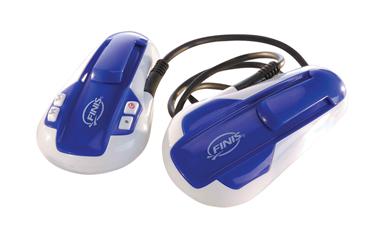
How is it that people get bored when they are swimming? How is it that they say they don’t have enough to occupy their minds and ears?  As cool a gadget as it seems, I can’t imagine wanting to get the Finis SwiMP3 player, myself.  There is more than enough for me to listen to. Maybe when I start swimming more than 5k I’ll think differently…

Cycling
Cycling shoes clicking into pedals. When you can do it without looking down, when you know the feel of the shoes and the pedals and you’ve done it 100 times before and all you need to do is listen for the right sort of click sound. (There is a wrong sort of click sound that sounds like the right sort of click, but isn’t exactly the same.)

The sound of fully inflated tires against smooth pavement. Whizzzzzzz along early in the morning, going off to meet some friends for a long ride, or maybe just head off on your own.

The clean, well-oiled chain as it zips around the rear cassette up towards the front chainring and back around through the rear derailleur.  Smooth and nearly silent. When the morning is quiet enough and the streets are empty enough, you can hear it.

The clacking-buzzing sound of the freewheel, when you stop pedaling and the back wheel keeps spinning and it makes that sound of freewheeling.

The steadier, slower rhythm of pedaling uphill. Move the bike, not the body, keep driving down and all the way around on the pedals. Steady, maybe slightly uneven rhythms. But it’s your rhythm, and when you feel good, you own that rhythm.

Up out of the seat and harder on the pedals, picking up the pace on the hills and pushing a little faster.

The sound of your breathing getting heavier on the hills. Most of the time you don’t notice the sound of your breathing, not like you do when swimming or running. But, on the hills you notice.

You don’t need to look at your heart rate monitor to know how hard you’re pushing, how much longer you can hold it like that. When you’ve done it 100 times before, you just know. And sometimes you push harder, sometimes you hold something back for later. It’s your rhythm, your choice.

When you go really fast downhill and stop pedaling, you probably can’t hear it any more. The wind is rushing through your ears, your helmet, your clothing so fast that all you hear is fast-moving air.

You take a drink on the downhill and re-fuel for whatever comes next. The sound of a bottle that is almost empty, liquid sloshing around audibly. Needs to be switched with another bottle you brought or one you’ll get at an aid station.

Brakes touching the rims. Slowing down slowly, steadily or abruptly.  Metal rims sound different than carbon rims.

You can hear when your brake pads are getting too worn out, feel when the cables need a little tightening.

You can hear when your wheels aren’t true and the spokes need tightening.

You can hear when the brakes aren’t in perfect alignment.

You can hear when the derailleur needs a little adjustment.

You can hear when cars are approaching from behind.

You can hear around corners, sometimes, approaching cars from the sides or up ahead.

Not always, but sometimes you can hear another cyclist come up behind you.
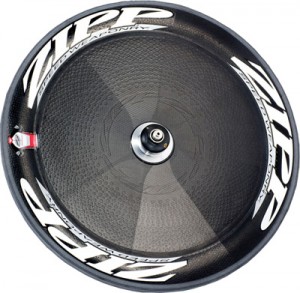
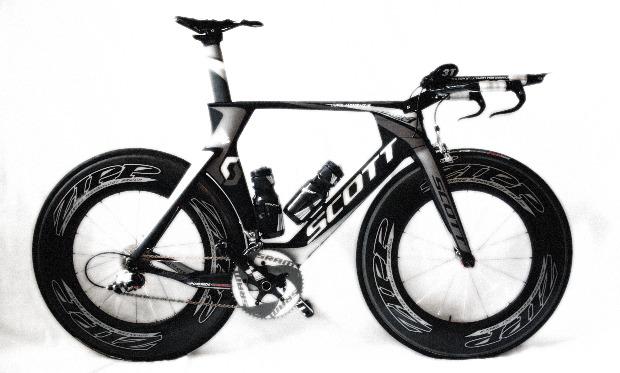
Those guys with the disk wheel on the back, you can hear them coming a mile away. It’s like a noise Darth Vader would make if he were riding a bike, like some hellish, basso profundo, voof-voof-voof sound that is coming to get you and you are helpless to escape.

Who on earth would want to listen to music on a bicycle?  There is so much to listen to, to listen out for.

Well, maybe on the turbo trainer. Yes, I will admit to making playlists and listening to music when stationary. But, never when I’m out on the road.

Running
Pulling on compression socks, for a longer run, strapping on a heart rate monitor or a GPS to tell you how far, how fast, how hard. Small sounds, maybe the occasional electronic beep to tell you something is activated or there’s an error message.

I can understand people wanting to listen to music while running. Most people seem to run because they feel they HAVE to run – maybe it’s the cheapest, easiest way they can think of to lose weight or stay in shape. But, if you LOVE running, then it’s different. There’s plenty to listen to without music in your ears.

The sound of your feet hitting the ground. You can tell a lot from the sound your feet make, if you listen out for it. Pronation, supination, heel strike, fore-foot strike, strong ankles, wobbly ankles, short stride, long stride.

The surface you run on makes a big difference, too. The relative flat sound of running on streets, up and down sidewalks. The gravelly sound of running on paths. The crinkling, crunching sound of leaves and twigs and grass on a trail.

Your breathing is much more pronounced when running. Your heart rate will probably be more elevated than in the other two sections.

You can hear it more in your ears, feel it more in your whole body, your breathing, your heart pounding.  It’s more like it was on the swim, but now the sounds from all around you are part of it, too.

Early in the morning, you can tell the changing of the seasons, predict the weather for the rest of the day by listening to the birds around you, even in the densest most crowded cities.

Need to listen out for cars, too. Hybrid cars have the unfortunate distinction of being the toughest to hear coming, so you need to be specially careful about them.

There’s always music playing in my head. Not full songs, but usually my favorite bits that I keep playing over and over again.

The bass intro to “Superstition” by Stevie Wonder, up until “Very superstitious writing’s on the wall.”

The intro to “Back To Life” by Soul II Soul, up to “Back to life, back to reality.”

The chorus of “Sex on Fire” by Kings of Leon, as well as the line “Hot as a fever, rattling bones.”

Who knows what will play in my head next time. Something I heard on the radio this morning, something I heard 25 years ago at Danceteria (“A E A E I O U U, and sometimes Y-ii”? oh, no!), something my daughter played over and over again last week (“promise I made, promise I made, started to fade, started to fade”? hmm, okay…). I know I can’t sing worth a damn. But it always sounds great in my head.
Reading Time: 3 minutes

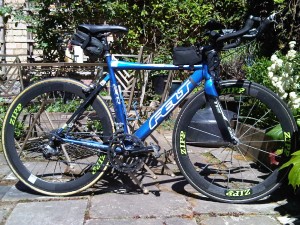
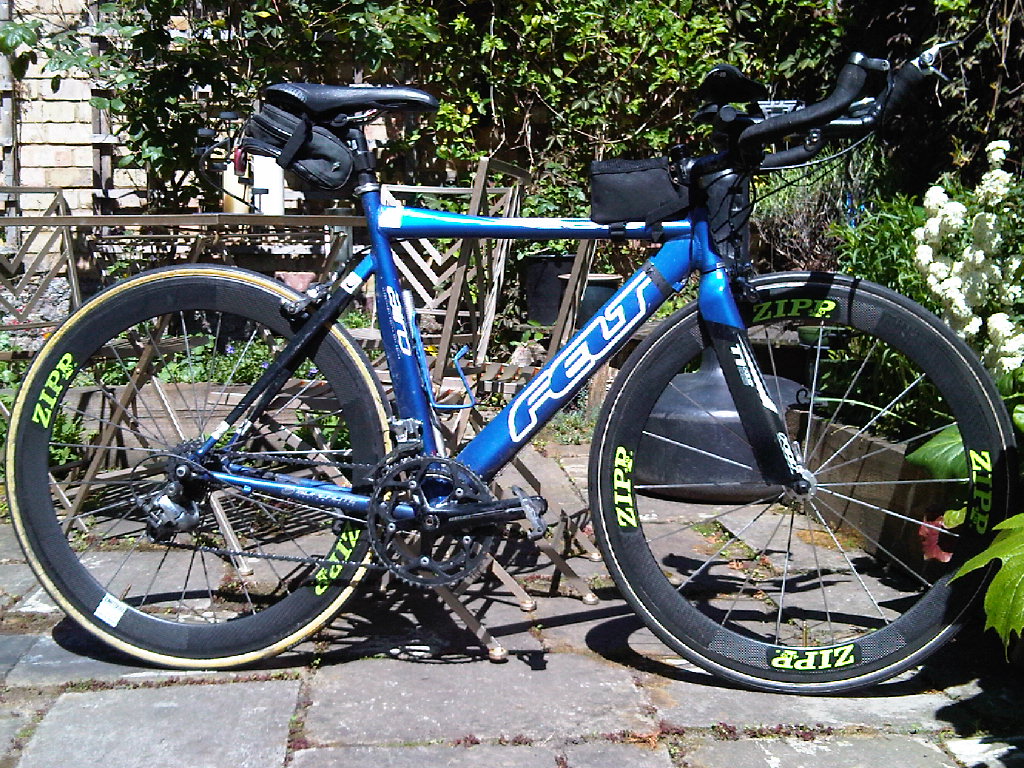
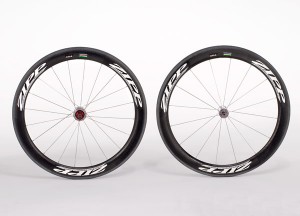
In a moment of weakness, I put in a bid on eBay for a set of Zipp 440 carbon fiber tubular tires a few months ago. A new set of those wheels, the Zipp 404 tubulars, cost at least $1,500 for the pair (and that’s without skewers, cassette, tape and tires), and there was a pair for sale at about $500, with tires and cassette.

zipp 440

As I got caught up in the heat of eBay bidding, I also undertook a crash course in tubular carbon fiber wheels to see what I was getting myself into. Here are the pluses I learned about:

  • obviously, carbon fiber wheels are lighter and stiffer than aluminum or alloy wheels, so they’re faster
  • tubular tires are glued to the rim, rather than held on by the metal “hooks” of clincher tires, so tubular wheels are lighter than clincher wheels
  • tubular tires are much higher pressure (150-200 psi versus 80-120 psi) and so can be much faster, thinner tires than clinchers
  • Zipp carbon fiber wheels like these make pretty much any bike look totally awesome

My baby, with aforementioned Zipp 44o's

Well, needless to say, I won the bidding war and became proud owner of a set of Zipp 440’s and then quickly learned some of the minuses of owning these wheels:

  • you need special, compressed-cork brake pads for carbon fiber wheels (unless they have an aluminim strip around the outside) because your regular rubber brake pads will damage the carbon fiber rims, so that’s an extra cost there of about $20
  • you may not be able to fit your normal accessories on your new wheels (speedometer sensors, etc) since the spokes and wheel shape will probably be very different on these wheels, so that’s a pain
  • flat tires with tubulars are VERY expensive and a major pain in the ass – you can’t just whip off the tire, stick in a new inner tube, pump it back up and then head off like you can with clinchers; you have to peel the tire off the rim, re-glue a new one on and work it back on by hand (DO NOT ever try to use tire levers on a carbon wheel, unless you want to destroy them)
  • you can’t use a hand-held portable pump to get enough air into tubular tires when you re-inflate them (maybe only for very short emergency purposes, but 80-90 psi from a hand-held pump just won’t cut it on 150-200 psi tires), so you end up carrying around lots of expensive little CO2 cartridges to inflate tires on the go
  • you can buy repair kits for tubular tires, if you want to spend an entire day unstitching the sewing, repairing and replacing the inner tube and then re-stitching the tires back together again – OR you can throw away the flat tire and replace it with a new one – new tubular tires cost about $40 to $120 … EACH
  • yup, that’s right! every time you get a flat you are talking about a minimum of $40 for a new tire, maybe $5 worth of rim tape and another $5 for a CO2 cartridge – compare that to fixing a flat on your clinchers with a new $7 inner tube

On my first 4 rides on these new wheels, I got 4 flat tires. The costs mounted up quickly and I started to panic. It was costing me about $60-70 every time I went out for a ride, and it was seriously taking the fun out of these sleek, fast, sexy new wheels.  I began to look at my old aluminum clincher wheels and think that maybe I had made a horrible mistake and needed to go back.

But, I didn’t. I stuck it out. I did several more long rides on the 440’s and didn’t get any more flats. I ride around now, with 2 spare tubular tires in my back pocket, a roll of tub tape, and about 4 CO2 cartridges, ready to deal with flat tires if and when they come along.  But, touch wood, it hasn’t happened for the past 5 rides.

And these wheels are awesome. I am noticeably faster on all gradients, sharper around the corners, and I am having significantly more fun than I was at this time last year.

So, my verdict: I love these wheels. I am going to keep them. I am having sooooo much fun with these wheels.  They are more expensive to own and maintain, they are more hassle to fix, they require more time and attention than my old wheels. But they are soooooo worth it.

Posted by: Robert

Reading Time: 5 minutes

Sorry for the long silence. Been away for a while, getting stuck into my big challenge this year: training for my first ironman triathlon (the Forestman).

For those of you who didn’t know (and if you already knew this, then please allow me to try and impress you once more with the sheer numbers), an ironman triathlon involves 3.8 km (2.4 mi) of swimming, 180 km (112 mi) of cycling, and 42.2 km (26.2 mi) of running, all in one continuous event, with the clock running the whole time.  A guy like me (45 years old, been doing triathlon for about 8 years now, training pretty regularly, but not winning any medals in any races) will do about 75-85 minutes of swimming, about 6-6.5 hours of cycling and 4-4.5 hours or running at the end of it all.  The top guys will routinely finish in under 10 hours, bless ’em. But, I’ll probably be looking at something closer to 13 hours (gotta include time in transition between events, since the clock is always running, and it makes sense to take 10-15 min to dry off and put some clean socks on before you set off for a 6-hour cycle ride, rather than rush through it and be uncomfortable or getting blisters for the next 6 hours). Most courses will have about a 17-hour cut-off point after which they have to clear the course of anyone who hasn’t finished by sun-down.

Tapering
My race is about 2 weeks away now, so I am officially in the “taper” phase of training, which means I am doing fewer and fewer hours of training each week (at my peak, I was doing about 15-20 hours each week, now I am down to about 10-12 hours a week), so that I get to race day feeling fresh and well-rested. But, at the same time, I am trying to keep the intensity of each session quite high, so that I keep my fitness levels and sharpness high for the day of the race. But, it has also given me more time to step back and reflect on what I have been doing this year, think about the training I have done so far, and what factors have contributed to getting me this far.

Milestones and motivation
Some ups, some downs, and some key milestones along the way. It helps to have some carefully targeted events to measure your progress and keep you motivated along the way, such as:

  • Back in early April, I did a 5k Swimathon for charity, which was an excellent exercise in settling into a good steady pace for 102 minutes of non-stop swimming. And it gave me a lot of confidence to know that I could swim way more than the 3.8k I’d need to swim in an Ironman. Of course, at the Swimathon, I swam next to Dan Bullock, one of Britain’s fastest veteran swimmers, which was simultaneously humbling and inspiring. He finished in about 62 minutes, or 40% faster than I did.
  • A few weeks later, I got offered a last-minute spot in the London Marathon, and I managed to get around in 3 hours and 28 minutes, which I was very pleased with.
  • Lots and lots of long cycle rides with fellow triathlon club members, including one super-gorgeous, super-tough day of about 130 miles trying to keep up with some incredibly fast, ridiculously tall guys 10 and 20 years younger than me.  Again, humbling and inspiring seems to be the theme to my training this year.
  • Joined a relay team to swim across the English Channel to raise money for charity, later on in September. That has given me something to look forward to once the Forestman is over (and lots of people tell me about the post-ironman blues, that anticlimactic feeling that sets in after achieving such a big goal as this).

And, I’ve learned a few valuable lessons along the way, about myself and about some of the people in the triathlon community around me…

  • Given half a chance, your typical triathlete who trains for ironman-distance races, will become obsessed.  I mean, if you are an amateur athlete then trying to find 15-20 hours a week in which to do all your training, you kind of have to be obsessed. It helps that I am a triathlon coach and so some of my training gets done in the course of working. But, family, friends, holidays, working schedules, sleeping routines, meal times, and your favorite TV shows will all end up taking a back seat to this all-consuming passion.  There’s no way to sugar-coat it: I have seen my fair share of marital strife, disappointed friends, and unhappy kids this year and some parts of my life are in worse shape than they were before I started this.  Has it been worth it? Ask me in a few weeks.
  • We also can be very boring companions, we iron-distance triathletes.  There are times that the only people who want to be around me are other triathletes, especially those who are also doing iron-distance training. I typically run out of small talk within 15-20 minutes and eventually resort to ironman-related conversation, pretty much wherever I go, whatever I do.  I have been known to recommend to 20-something fashion models that they eat sports gels and drink sports drinks, instead of resorting to their natural diet of coffee and cigarettes, in order to get through their rigorous schedules.  So “bored incomprehension” is the look I am getting used to seeing a lot more these days.
  • And, when we’re not training, we’re recovering from training, or we’re eating everything in sight, or we’re going to bed early to get ready for the next training session.  So, in the other hours of the day that we’re not training, it still is all about the training.
  • Once you give in to the obsession, get used to the unsociable hours, and accept the fact that all of your friends and family have given up on you, it really isn’t so bad. If you’re lucky enough to find some other people to train with, then you can all motivate each other and commiserate with each other. But, the actual training itself is really not that tough. You will go slower than you would normally go for shorter distance training, and you just have to stick it out for a lot longer. Boredom is probably the toughest part of an 8-hour training ride or a 4-hour training run.
  • You can probably eat anything you want while you are training for iron-distance races, and you will still probably lose weight. Not that you should subsist entirely on ice cream and coke, but you probably will have to consume a huge number of calories to get your body back in balance when you get back from an 8-hour training ride. If you choose to consume 2000 kcal of salad and whole grains, that is great! If you choose to consume 2000 kcal of  burgers, fries and ice cream, then that ain’t so bad, either.
  • It’s worth saying one more time that without the support and camaraderie of my friends at Tri London, I would not have made it through that tough, freezing winter with so many useful hours of training under my belt.  Whatever I do at the race on June 27 will be almost entirely due to the support of people like Kev, Roz, Lance, Guido, Andrew and Stephen, dragging me around Southern England at 6am almost every Saturday, and waiting for me at the end of every hilly climb.

Still feels like a long way to go, and maybe longer still once I sign up to do it all over again next year.

Posted by: Robert

Reading Time: 3 minutes

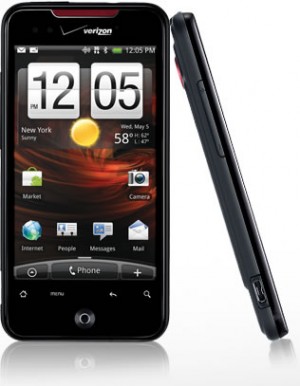
Android continues to mature in the smartphone market and the HTC Incredible on the Verizon network gives the Apple iPhone a whole host of reasons to take notice. First and foremost the HTC Incredible gets a signal, an increasingly difficult task at least for myself and fellow iPhone/AT&T users in our neck of the woods (from time-to-time my “neck of the woods” includes New York City).

A fast and fully-featured Smartphone, the HTC Incredible works extremely well for both voice and data. It’s a light, sleek phone you barely notice in your pocket, yet is packed with power and features that surpassed any preconceived notions I had going into the tests.

The iPhone continues to be the benchmark for Smartphones and happens to be the smartphone I pay dearly for month-after-month. While Apple prepares to roll-out the iPhone 4 on 24-June, 2010 with a number of new features, I may very well be a Verizon customer before then. The HTC Incredible on the Verizon network out-performed my iPhone in coverage, voice clarity and network speed (browsing) and already includes multi-tasking and folders (2 examples of what to expect in the new iPhone iOS 4). If the Incredible provided a wi-fi hotspot or tethering (something out-of-the-box and not rooting or installing anything), I would have already made the leap.

Interface
The HTC Incredible’s interface takes some getting used to. It wasn’t obvious to me how to quit an application and stop it running in the background. Not only does this tax the processor, but when I finished testing Skype (great sound quality over the 3G network in my tests by the way), I inadvertently left the app running and kept myself logged-in for the rest of the day.

HTC’s updated ‘Sense’ user interface, while polished (thanks in large part to a powerful 1GHz processor that can support it), is still not as natural as Apple’s interface in my opinion. I do like the ability to view the separate screens as cards and can quickly jump between with smooth transitions. But in terms of overall ease-of-use, or intuitiveness, the iPhone still has it.

Applications
The Android Marketplace is loaded with free and paid alternatives similar to what you can find in Apple’s App store. Apple boasts roughly four times the number of apps as android (reportedly somewhere around 50,000 apps). While many people don’t like that Apple controls what can and can’t appear in the App Store, it does add a layer quality control. Third party apps are probably the leading cause for Android crashes on what is otherwise a stable OS.

Smartphone Performance
Following are notes about the Incredible’s performance in key areas to consider for any smartphone…
Voice: High quality and with far less dropped calls and a greater service area than Im used to (on existing 3GS iPhone/AT&T)
Data: Fast web browsing. Gmail and Exchange support
Camera: 8-megapixel autofocus camera with video and LED flash
Music: Sounds OK through speaker and very good with headphones (headphones are also required to use the FM radio app)
Display: 3.7-inch AMOLED (800 x 480 pixels) is bright and very vivid
Interface: Sense; Improved over earlier Android units tested, but still not as intuitive as the iPhone
Storage: 8GB expandable to 16GB with microSD card (sold separately)
Speed: Fast processor (1-GHz SnapDragon processor)
Battery: Battery will get most users through the day, but for very active users (music, Facebook, talk, numerous Apps, etc) you will want to either bring along the cable, or balance-out your day better

Price: $199 purchased online with 2-year Verizon contract

Posted by: Lawrence

Reading Time: 3 minutes

I was an early iPhone adopter – before the App store and just stoked on the idea that I had a cool phone and a way to browse the web at decent speeds on a decent-sized screen. The initial gee-whiz of what could be done on the iPhone was soon overshadowed by what it couldn’t do and the lack of certain features continue to stick-out.

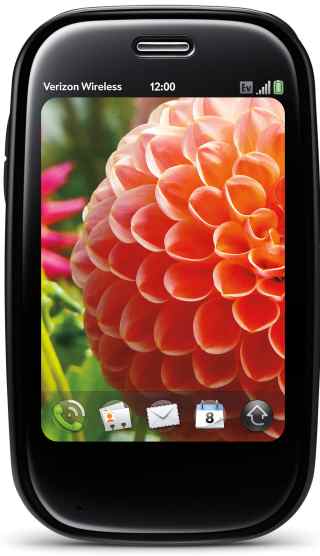
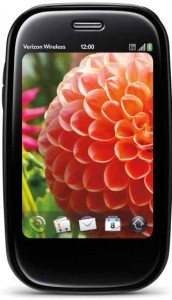
As fast as it looks, the Palm Pre Plus

By far the most glaring omission with the iPhone is the inability to tether it to a computer. While this isn’t a limitation of the iPhone itself (it’s more like a disabled feature) it leaves many, including myself, looking for alternative solutions. The Palm® Pre™ Plus not only let’s you tether (via Bluetooth), but Palm incorporated a mobile hotspot into the Pre which allows as many as 5 concurrent users to jump online.

The Pre is a sleek looking slider phone (keypad slides-out from the bottom) with a built-in camera and flash. It feels nice in your hand and slips easily into your front pocket. It’s so sleek in fact, that it took me a while to find the USB port to charge the phone! I also puzzled over how to close apps (you flick them upwards) and the small keypad gave me fits. When I first receive a gadget I purposely avoid the manual to see how intuitive it is and I have to say the Palm Pre Plus is miles from Apple in regards to ease-of-use.

Voice: In my tests the Palm® Pre™ Plus on the Verizon network performed well, with good sound clarity and clear voice transmission. To dial numbers you use the touchscreen and not the tiny keypad. The Pre worked everywhere I tried it, including spots my iPhone loses coverage. AT&T recently announced plans to spend $18 – $19 billion on network upgrades, but there is far less AT&T coverage in my area than Verizon.

Data: The Palm Pre takes advantage of Verizon EV-DO Rev. A and offers speeds equal or greater than speeds enjoyed on an iPhone 3GS. EV-DO Rev. A data can peak at 3000 kbps, but on average users get around 600Kbps-1400Kbps.

In Rhode Island I enjoyed, on average, 1.50Mb/s download and 0.52Mb/s upload. And in New York City the rates were 1.00Mb/s download and 0.21Mb/s upload. This means in RI I can expect to download a 5MB MP3 file in about 25 seconds, or a 35MB video in 3 minutes – not bad!

If you’re looking for a phone that is very slick looking, offers reliable voice and fast data (for you and up to 5 friends) and you have the patience to read the manual or play with it enough to learn how to use it, then the Palm Pre is a wise choice. Full retail price is listed at $599.99, but with 2yr contract the Palm Pre Plus can be yours for $49.99 (early termination fees do apply). This phone also requires a data package ($29.99 or higher per month). Visit Verizon Wireless for more information.

Specs:
Battery Usage: Up to 330 minutes talk time / Up to 350 hours standby
Dimensions: 3.9″ (H) x 2.3″ x (W) x 0.67″ (D)
Weight: 4.89 oz.
Display: 3.1″(HVGA 480 x 320), 24 bit TFT
Memory: 16GB Flash/512 RAM
Bluetooth® Wireless Technology–(V 2.1+EDR)
3 Megapixel camera with flash
Palm webOS™ platform
Wi–Fi Ready (802.11 b/g)
Music Player for MP3, AAC, AAC+, WAV, AMR, QCELP
Email: Exchange ActiveSync support

Posted by: Lawrence

Reading Time: < 1 minute

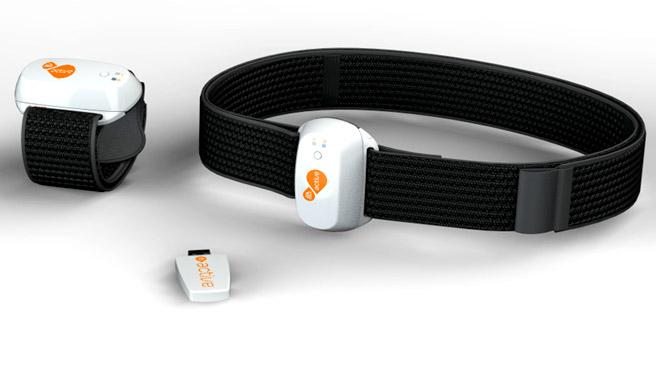
EA has announced EA SPORTS Active 2.0 (working title). Scheduled for release this fall, EA SPORTS Active 2.0 is expected to offer a wireless heart rate monitor, arm and leg accelerometers for use with PlayStation 3, Wii, iPhone and iPod touch.

Users can track exertion in real-time with an onscreen display and also share workouts with other EA SPORTS Active users online. Sharing fitness results, interacting with workout groups and sending messages to other users is expected to keep users inspired and engaged.

PlayStation 3 users will also benefit from the ability to download new workouts and exercises to their internet-connected consoles. Other online features include EA’s’ total body conditioning’ workouts, progressive exercises in a three-phase, nine-week program intended to help provide a fitness road-map while motivating users to stay on track with their fitness goals. An EA SPORTS Active personal trainer can help walk users through a workout and provide continued encouragement with feedback to ensure an optimal workout experience.

Posted by: Lawrence

Reading Time: 2 minutes

Interval training is increased intensity for a given activity (lifting, running, rowing, cycling) for a measured amount of time, followed by a reduced level activity for a measured amount of time. Typically done in sets, interval training can be anaerobic – fat burning high intensity interval training (HIIT) typically focused on starving larger muscle groups of oxygen – or aerobic, where low to moderate intensity is used for a longer period of time, allowing muscles to ‘breathe’ and build stamina.

Both anaerobic and aerobic exercise are beneficial and interval training is a great tool to realize those benefits, while at the same time adding a new dimension to workouts to keep them interesting.

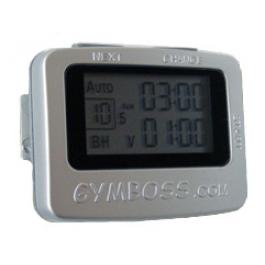
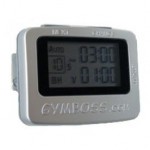
Measuring intervals is easy, but too often it distracts you from your chosen exercise. I’ve been in all-out sprints with my left arm unnaturally poised in front of me so I could read my watch (with difficulty and added risk). Others rely on a partner’s shouts to let them know when to speed up, slow down or stop. A small device called the GymBoss (1 3/4 x 2 1/4 inches) is a lightweight, inexpensive ($20USD) and eliminates the need to focus on anything else but your workout. Clip it to your belt, stick it in your pocket or place it on a shelf for indoors workouts – it’s barely noticeable until a shrill beep, strong vibration or both effectively alert you (to be honest the first time it beeped it startled the hell out of me).

The GymBoss easily satisfies what I would consider my basic need for measuring intervals while running. Others use it to time rounds (up to 99 can be programmed) on the heavy bag or for cycling, weight lifting and other pursuits. Other GymBoss features include…

  • One or two different time intervals from 2 seconds to 99 minutes
  • Auto mode / repeat through intervals
  • Manual mode / countdown timer
  • Stopwatch

The manual is a small double-sided slip of paper they package under the belt clip. If you’re just getting started with interval training and want more information, check out some of these sites so the directions make more sense and you can program the GymBoss accordingly…

http://www.intervaltraining.net/
http://en.wikipedia.org/wiki/Interval_training
http://sportsmedicine.about.com/od/tipsandtricks/a/Intervals.htm

For $20USD you really can’t beat the GymBoss, it does everything it says it does and does it well.

Posted by: Lawrence

Reading Time: 2 minutes

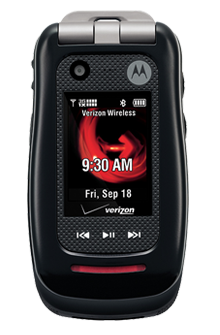
Not everyone needs an iPhone or even a smartphone for that matter. For many, the only functionality needed is good voice quality and the only feature required is reliability. Enter the Motorola Barrage, both uniquely feature-rich as well as durable and providing what I perceived to be above-average voice quality.

Ideally suited for those who work or play outdoors, the Barrage meets or exceeds military specifications for dust, shock and weather. In fact, the Barrage is waterproof in up to one meter of water and submerged for up to 30 minutes. I threw it in the snow, plopped it in a glass of water, took it to the beach and – the test of all tests – let my 6-year-old play with it. Beyond the tested toughness, the Barrage feels like a solid piece of tech, weighing 4.2 ounces and handsomely constructed using black textured rubber and plastic.

Offered by Verizon Wireless for $129.99 (with $50 online discount), the push-to-talk capable Barrage’s 383 minutes of talk-time competes for battery life with a host of features including a 2 megapixel camera (non-camera version also available), music player, bright external 120 x 160 display and TFT internal display (176 x 220).

VCAST and VZ Navigator service are available for additional monthly fees and the streaming in my area was admirable. In my opinion however, the screen size on flip phones in general renders services such as these to be more of a gimmick than useful.

If watching video on the go or you’re frequently going to use the navigation service, you’re better off with smartphone. If you’re the outdoorsy type, or even clumsy, the Motorola Barrage is your ideal phone. With quality construction, a host of features, Verizon’s unparalleled coverage and above-average voice quality, the Motorola Barrage is ready to go to work for you.

Reading Time: 9 minutes

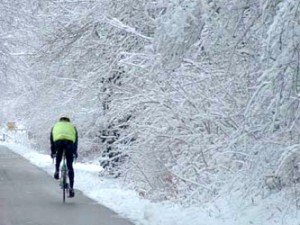
Okay, it’s cold and dark and wet out there, if you’re living in the northern hemisphere and it’s what we call Winter time (not that bullshit they complain about in Florida when they have to put on a sweater or something). You don’t want to ride your bike, you don’t think it’s safe out there, you don’t want to get up early in the morning before the sun is up, and you have a hundred excuses to stay warm and cozy in bed. I get it. That’s me, too, on most days.
This is the toughest and possibly the most dangerous time of the year to fit those long rides in. But this is also exactly the time of year when you most need to fit in those long rides. You need to build aerobic endurance right now, so you have that strong base to build on later. That means keeping the intensity low and steady while building up the miles gradually until you are over-achieving your target race distances (maybe not for running, though, because of the higher impact and greater risk of injury) in your aerobic endurance heart rate/intensity zone.

If you are a triathlete, then cycling is probably the most time-consuming discipline to train for of the three, since it tends to be the most time-consuming discipline in any race – unless, for example, you are a really, really fast cyclist and a really, really slow runner.   For your longer endurance sessions that probably form your key sessions each week, time spent on the bike can be as much as 2-3 times the time spent running and 5-6 times the time spent swimming. For example, if you are training for Iron-distance races, then you might want to build up to doing:

  • about a 90-minute endurance session each week, gradually getting to the point where you can swim 4000 meters continuously;
  • one long steady distance (LSD) run somewhere around 2-4 hours each week, where you can run about 20 miles steadily and continuously;
  • one long ride of 8-10 hours each week.  Yes, 8-10 hours. Build up to the point where you can cycle about 120 miles on a single ride. At aerobic endurance pace, that means you might not go much faster than 13-15mph.

Not starting right away, not proving how tough and macho you are, when yesterday you were doing 5-mile runs and 25-mile bike rides and tomorrow you’re going to tag along for a 20-mile run or a 100-mile ride. Building up to these steadily and gradually with about 10% increase in volume each week so that, come race season, you have slowly adapted to these longer distances and hopefully avoided injury or burn-out or both.  But, you can see how the cycling part of that picture is the toughest to fit into a schedule that may already include work, sleep, a social life, and a significant other in your life who likes to spend time with you when you’re not snoring or wolfing down food in between training sessions.

So, Winter tends to be a time you need to get creative, add some variety, and find every possible way to get in the training on the bike.  Here are a few tips that have been working for me, so far:

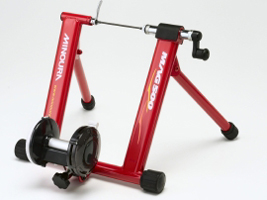
Minoura Mag 500 Turbo Trainer

Get a turbo trainer
There are a few great things about turbo trainers:

  • They don’t have to be outrageously expensive. The Minoura Mag 500, pictured left, is a very good entry-level trainer I bought on sale a few years ago, and I saw one on eBay the other day for less than $100.
  • You attach your bike, via the skewers on the rear wheel, and spin away indoors, in the warmth, safety and comfort of your own home (or in the relative safety and comfort of the back garden, in my case) as long as you want, any time of the day or night.
  • You get to spend more time on your own bike, adjusting and getting used to the set-up on your bike for optimum performance (e.g. so much easier to get the saddle position just right when you are using a turbo trainer). You can try new things out (like the first time you buy clipless pedals and need to practice clicking in and out, or the feeling of being on your new aero bars) on the turbo in relative safety before you take it out on the road.
  • You can do interval sessions with pretty precise control in a way that you can’t always get on the open road. For example, if you are on the road in the middle of a 3-minute higher-intensity interval and you reach a busy intersection with a stop sign, then you have to stop, whether you’ve finished the interval or not. You won’t have that problem on a turbo trainer.
  • You can do many technical exercises and drills on a turbo that you might not be able to do on your bike on the road, like single-leg exercises or hands-free exercises.
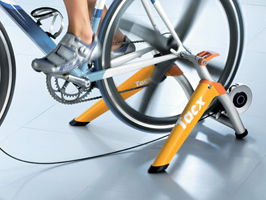
  • Some people love to sit and spin on their turbo trainer for hours and hours, watching TV or listening to music. You can even buy some DVDs that connect to your turbo trainer in a cool sort of virtual reality kind of way (if you buy a pretty high-end one, like the Tacx Satori pictured above, right).

The down-sides of having a turbo trainer, that I’ve seen so far:

  • I find them excruciatingly dull, in much the same way that I find running on a treadmill excruciatingly dull.  I enjoy cycling and running because I enjoy getting out and about and seeing things, exploring places, even familiar places, at different times of the year. I can’t, for the life of me, find a way to spend more than 60 minutes on a turbo trainer without feeling like a hamster on one of those exercise wheels, going absolutely nowhere in pointless repetition.
  • You won’t learn much in the way of bike handling skills on a turbo trainer. You may be getting very fit on the turbo and it may be a great way to tackle specific fitness development, but you won’t be learning anything about braking, cornering, ascending or descending on the bike. Triathletes already have enough handicaps in their bike-handling skills, especially if you are only doing non-drafting races or if you spend a lot of time on the aero-bars. We need to get out on the road and ride for real as much as we can to get those very important bike-handling skills.
  • You will sweat like a pig in a steam room on the turbo.  When you are cycling out on the road, the air rushing past you tends to dry you off as you sweat, most of the time. When you are cycling on the turbo, there is no air rushing past you since you are sitting still, and you are going to create an enormous pool of sweat beneath you very quickly. Even in the middle of January sitting out in your unheated back garden.  So, put something under your body to catch all that sweat.

Go off-road
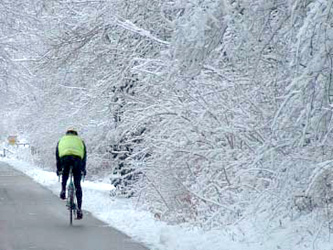
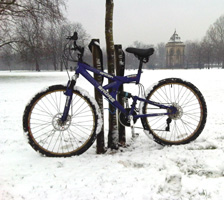
When snow and ice become an issue on the roads in the Winter, then think about going off-road. I bought that bike pictured above second-hand for less than $100, cleaned it up, changed all the cables and pads, plus a new chain and cassette, for a total of another $100 or so, and now I can ride all over the place, whatever the weather. London is not used to seeing much snow in the Winter-time and so it tends to freak people out here, but not me. For me, it means that the streets are less congested and I still get to cycle all over the place.

Here are the things that I like about riding my mountain bike at this time of year:

  • It’s much heavier, clunkier and much less efficient than my road bike or my TT bike. Yes, I think that’s a good thing, because it makes my legs stronger.  With the front and rear suspension on that monster, I estimate (with no scientific basis whatsoever) that every mile I ride on that bike is like riding 2 miles on my sleek, efficient TT bike.
  • I can go places on that bike that I can’t go on my road bike. I can get out there and just have fun, go exploring and play in the mud.
  • Off-road riding tends to give you much better bike handling skills in many areas than road riding does. Having to negotiate puddles, icy patches, trees, tree roots, ditches, leaves and all manner of fun obstacles is a great way to learn how to handle your bike. Come Spring-time, I will be much less scared of puddles, wet leaves, and unevenly paved corners on the road.
  • I live near a part of London that is good for off-road riding (Hackney and Walthamstow Marshes along the Grand Union Canal is fairly flat but lots of little places to go off the beaten path and splash around), and not too far from some even better spots for off-road riding (all around Epping Forest). So, it’s easy for me, maybe not so easy for other city dwellers.

See and be seen

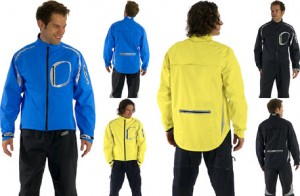
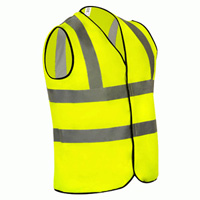
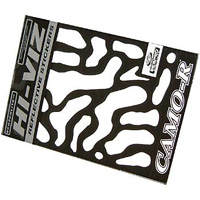
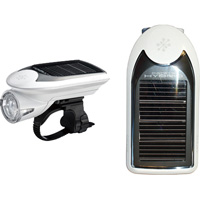
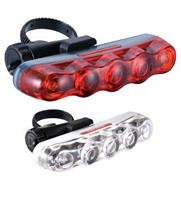
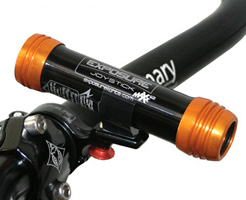
Be safe, be seen. Wear things that are bright and reflective, invest in some good lights, maybe a few lights that will help you see on a totally pitch black morning, but definitely some lights that will make people look at you and notice you. And make sure you have spare, fresh batteries for them.

Above is the Cateye Hybrid, which has a solar panel that claims to give you 6 hours of ride time (so that probably means 2 hours to you and me, in real practical terms) and batteries for up to 30 hours (claims like these usually fall short). I haven’t tried this one out, but I’d love to. I love the idea of anything that is solar-powered.

Above, you have the basic Cateye pair of lights for urban-noticeability. I like these because they have lots of blinking settings, they are a little bit bigger than other typical bike lights, and they can be set up either vertically or horizontally, which is kind of cool.

Another choice is the Exposure Joystick Maxx light, that comes with a helmet mount and handle-bar mount. I like the helmet mount because then I can use that light on any bike I ride (I have 3 right now) and don’t have to re-mount it on different handlebars if I use a different bike.

Stay warm and dry

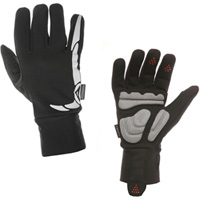
  • Gloves should be keeping your hands warm and dry, and have some padding specifically for cycling if you plan on being on the bike for a long ride.
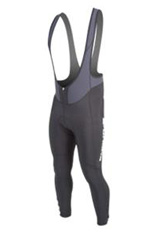
  • Tights should keep you warm and probably be bib tights like those shown above, so they don’t creep down while you are riding.
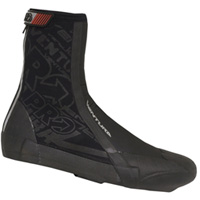
  • Overshoes should keep your feet warm and dry, too.

It’s also a good idea to have a helmet cap to keep your head warm.

On very cold days, I will go as far as the wear under-gloves or a second pair of gloves under my winter gloves, as well as a face mask (or just tie a bandana around my face) to protect the one part of my body that is still exposed.

I once forgot to bring my overshoes on a long ride, so I stopped in at a shop and asked for two plastic shopping bags. Then, I took my feet out of my cycling shoes, put the bags around my feet and then put the shoes back on. Presto! A cheap way to keep the feet warm. They got very sweaty, looked ridiculous, were not very comfortable, but my feet sure stayed warm.

Sometimes the hard work is its own reward

Join a club, find a friend with similar goals to yours, or just somehow find a way to make a promise to someone else that you will do the ride, and then you may find it’s so much more difficult to change your mind and back out at the last minute. Try something new. Get out there and ride when you can.

Make a list of things you like about riding in the Winter and put the list next to your bed. When the alarm goes off and it is still dark and cold and you feel like rolling over and going back to sleep, read the list first. My list of what I like about riding in the Winter looks like this:

  • I get to see the sun rise.
  • I get to ride the streets when they are pretty quiet.
  • I get to see things I normally wouldn’t get to see, like foxes, milkmen driving electric milk floats, and people wearing glittery party clothes as they stumble around the streets.
  • I get to drink as much hot chocolate as I like and never once worry about calories or fat or sugar.
  • I get to ride with some pretty cool people, chat with them for hours, and get to know them a little better. Sometimes I don’t feel like I am boring them to death with all my long-winded stories.
  • The journey is the destination. I love being out there on my bike, any time of the year, and it is always better to be out there than to not be out there wishing I had done it.

Posted by: Robert

Reading Time: 2 minutes

If you enjoy the outdoors all year long, even when it’s wet and cold, you have to prepare properly. When dressing for the winter leave the cotton at home – once wet it’s like a death blanket. Keep your head and neck covered and make sure you have adequate protection for your hands and feet (while allowing for proper blood flow). Make sure you bring a lot of carbs to stay fueled and don’t forget your body needs to stay hydrated – especially in winter.

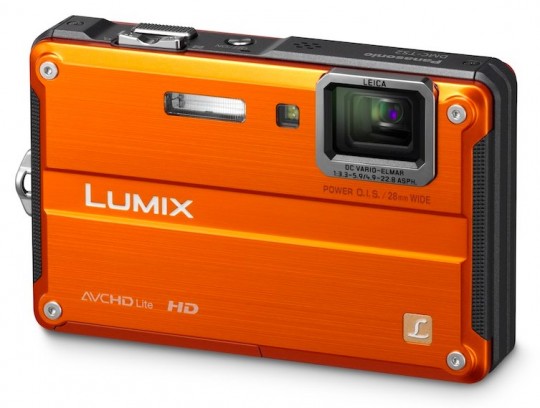
OK Nanook, so you’re ready for a good time in the outdoors with friends and you need a reliable camera to capture those moments where you’re huddled over a fire looking like a ragged group of post apocalyptic survivors. Enter the Panasonic LUMIX DMC-TS2, a waterproof, freeze-proof and shockproof 14.1-megapixel camera also capable of recording HD video.

The LUMIX TS2 is a camera built for action. It’s waterproof to 33 feet /10m (1 atmosphere for you divers), shockproof to 10 feet (2m), freeze-proof to 14° F (-10° C) and dust-proof. The airtight body protects it against water immersion, dust and sand and rubber padding, reinforced glass (protecting the 2.7-inch, 230,000-dot Intelligent LCD) and carbon construction inside the camera further ruggedize the LUMIX TS2 that is also as smart as it is tough.

The LUMIX TS2 is not only tough, it’s also full of features that make it an excellent choice for any occasion. Some features of the LUMIX TS2 include…

  • 28mm wide-angle LEICA DC VARIO ELMAR lens (4.6x optical zoom)
  • Built-in LED light for lighting-up dark areas (such as underwater)
  • Face detection (up to 15 faces)
  • iA (Intelligent Auto) features such as Intelligent auto Resolution,Zoom, AF Tracking, ISO Control and Exposure
  • Built-in Modes such as ‘Happy’ Mode (optimized color, saturation and brightness) for vivid photos or video and High Dynamic Mode for situations where a scene includes bright and dark areas
  • Compatible with SDXC Memory Cards up to 64GB
  • Rechargeable battery that takes up to 360 images on a single charge

Pricing and availability for the Panasonic LUMIX TS2 will be announced 30 days prior to shipping date (unannounced, but note that it’s predecessor, the LUMIX TS1 was priced around $380USD). The Panasonic LUMIX TS2 will be available in silver, blue, orange and yellow.

Posted by: Lawrence

Reading Time: < 1 minute

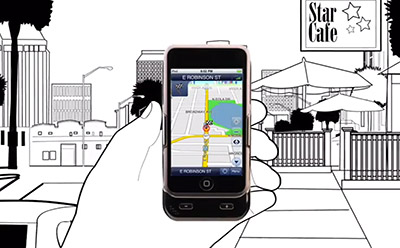
For all you lucky recipients of an iPod Touch this holiday season, there’s a cool and useful accessory coming out later this year to keep an eye on. The XGPS300 iPod Touch GPS Cradle from Dual Electronics turns your iPod Touch into a fully-enabled GPS device. The XGPS300 includes a free turn-by-turn Navigation app NavAtlas, 0-90degree windshield mount and charging cable.

The XGPS300 is more than a GPS navigator, it is also a battery cradle and has an amplified speaker for real-time voice guided navigation. Check-out the video below for a quick demonstration of features and if you’re interested, request to be kept updated as to it’s availability. Expected price is $179USD.

Posted by: Lawrence

Reading Time: 3 minutes

Every car I’ve owned has had a roof rack. Even my old pick-up truck had a bed rack to hold and lock my mountain bike (which cost more than the truck). For my latest rack I switched to a Yakima rack system and I’m happy I did.

landingpad

Assuming I’d need a few hours for installation on my SUV, I skimmed the directions and dove right in. To start, I had some kind of brainchild and pre-assembled the Landing Pads by loosely fitting the nuts before sliding them into position in the the factory rails. This saved me any potential difficulty trying to line-up the bolts.

Next, I snapped the Control Towers into the Landing Pads, installed the Crossbars and tightened it all down – simple! Finally, I inserted the SKS Lock Cores and had the whole thing installed in under 30 minutes! My wife thought I gave up when I went back inside, so suffice it to say it was far easier to install than I expected (I worked at a ski shop for years and installed numerous square bar systems).

Two friends of mine have square bar racks from a competing manufacturer and recently asked me to help install them. The first rack we couldn’t figure out at all (to be fair we didn’t have directions, but I feel with the Yakima I could have figured it out). Eventually we caved and had a local bike shop do the install for $50. The other rack took ages to install (in a frigid driveway), but it was essential we got it done since we were all staying at his ski house in Vermont!

Large Push Button

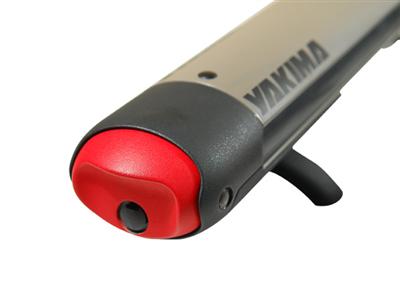
As far as attachments, I’ve been using the Yakima StrapThang for surfing and love it. This past holiday weekend we headed up North and I easily installed the FatCat 4 which comes with universal mounting hardware to fit most applications. I also liked the large button to open the rack – easy even in clunky mittens.

Unfortunately, I have to remove the StrapThang to accommodate the FatCat 4 (a combination of the shorter 48″ crossbar and to have room for a wider surfboard), but attachments install and remove easily so no biggie there. Yakima sells crossbars in 48″, 58″, 66″ and 78″ lengths and the general rule-of-thumb is a crossbar can go as wide as the side-view mirrors.

I had to forgo the cargo box I own for another rack system. I think newer cargo boxes can go on either system, but mine is old and cracking so it’s just as well. It was more than a little cramped in the SUV with the wife, kids and all the gear, but the skis and snowboard were up top, so only soft projectiles were possible!

If you’re looking for a rack system you’ll find two camps – round and square. Both are priced competitively, have long track records and offer a variety of options (fittings and attachments). I read somewhere round structures are stronger than square, but I’d recommend the Yakima system for ease-of-installation alone.

Posted by: Lawrence

Reading Time: 2 minutes

I’ve taken your standard hand-held Sony camcorder on many hell-runs down steeps or through glades and only broke one camera. This point of view (POV) filming let’s me relive snowboarding in the off season, reminding me of favorite lines… and the one camera I ruined. Was it a rock or a root I hit? I can’t remember, but I do recall that having both hands free when snowboarding is kind of important.

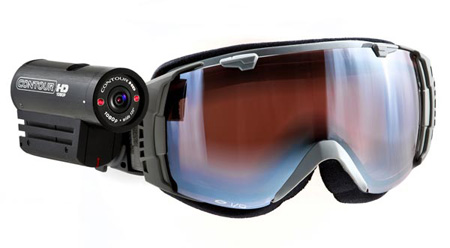
There are helmet and even surfboard-mounted cameras like the GoPro cameras; great, low-cost cameras that capture your personal Jeremy Jones moments in either video or pictures taken at set intervals. If you’re looking to step-up the recording quality and not give up much in the way of size and weight, the VholdR CountourHD1080p is worth looking at.

The ContourHD is easy to use, even with gloves on. Simply slide the record switch forward to record and slide it back to stop. Don’t like to hear your grunts or record your expletives (I’m still talking about snowboard filming here), the CoutourHD can record in silent mode. It uses two lasers to help you line-up your shots when mounting it on a helmet, goggles or handlebars and the battery lasts up to 3 hours.

The CountourHD is spartan when it comes to controls, but I feel this is a positive. The less small or moving parts on a device taken out in the wild, the better. If comes with Easy Edit software that allows you to adjust contrast, exposure, metering and audio gain. I would like to see Easy Edit ported to iPhone or Android, allowing you to make adjustments to changing conditions and light when you’re out-of-bounds and your office is the glade before you.

At just 4.3 ounces the ContourHD can be pre-ordered at vHoldR for $330, making it is as light in the wallet as it is in the hand. Get one and get outside to record your next adventure. VholdR has a good community of users posting their adventures on VholdR.com.

Posted by: Lawrence

Reading Time: 1 minute

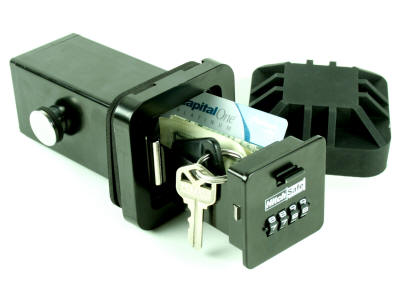
Surfing in the Summer is quick and easy; boardies, rash guard and off you go. The only problem is there’s nowhere to stash a key (which in wetsuit season goes behind my calf). Surfers, runners, bikers, anyone who drives somewhere to get a workout has to hide their keys in the wheel well or under a rock and hope both the key and the car are there when they return.

A product called HitchSafe is a 4 digit combination safe that goes in your trailer hitch. It has a drawer that slides out to put your key and other valuables. Some trucks, including those with sliding rear windows can be easy to break into and the HitchSafe provides a safe alternative. The HitchSafe is also a clever place to keep a spare key in the event you lock your keys in the car.

The HitchSafe fits standard 2″ hitch receivers, with the exception of the Toyota Tacoma 2005-07 and 2007 Tundra, both have an extra band of metal around the receiver and require longer bolts. Also some 2005 Toyota Forerunner’s have OEM factory hitches with rounded corners ans require filing off each corner on the HitchSafe for it to fit. A rubber cover goes over the end of the safe to provide a level of protection from the elements and also makes the trailer hitch looks like any other.

The HitchSafe is available on Amazon for $69.95.

Posted by: Lawrence

Reading Time: 3 minutes

In the run-up to the London Triathlon, I had a miserable couple of weeks doing some really crappy work (teaching photography to a bunch of aggressive, violent teenagers) for which I was completely unprepared, getting stressed out, losing sleep, not eating enough, not training much, and generally giving my buddy, Crohn’s Disease, several good reasons to flare up on me. So, dear reader, I must admit that I got to a point, 2 days before the race, where I was ready to drop out, cut my losses, and save my strength for a more important race in September.

But, then I got a good night’s sleep and woke up the next day feeling much better and decided to do the race, but … get this … just for the fun of it.  Yes, I woke up the day before the race and thought, “why don’t you throw away your gadgets and stop-watches and HRMs and forget about the times and Personal Bests – just do the race for the fun of it?”  I know it wasn’t very bitness of me, but deciding to go out there without my stop-watch/HRM and just race for fun lifted a load off my shoulders and turned a race that I had been dreading into a fun day out.

To add to the anti-technology spirit of the day, I realized at the end of the swim section that I had also forgotten to pick up a timing chip at registration (Doh! Major newbie mistake!) and so I wasn’t even going to be listed on the race results when they came out. This fuelled my desire just to go as fast and as hard as I could for as long as I possibly could, until I couldn’t go any more. I broke some rules – I drafted on the bike section (my unimpressive but wonderful TT bike kept up with a much blingier cousin and even gave another guy on a super-fast bike a chance to get on my back wheel for a while). And I rode much, much more aggressively than I had ever ridden in a triathlon before.

As I got back to the transition area for the bike-to-run transition, I had a moment of weakness and picked up my Garmin Forerunner 305 (a gift from an amazing client) and decided that maybe I could just take this wonderful little gadget on the run, just to … you know … gauge my progress, and see how things were going on the run.  I had used the 305 in my previous race and fell in love with the fact that it displayed up-to-the-minute pacing information that is really helpful (e.g. 4:30 per km means you are on target for a 45-minute 10k).  I felt that I had pushed myself so hard on the bike, I wasn’t sure if I would have anything left in my legs for a fast run, and so I turned to the GPS-enabled 305 for a little last-minute guidance in the darker moments of the bike-to-run transition.

Well, I ran my heart out. I just ran as fast and as hard as I thought I could maintain for the full 10k and then I ran a little bit harder than that, for good measure. I felt like I was flying, literally, with a fast cadence and light feet, no aches or pains. Admittedly, the 305 was not always helpful, as there were several parts of the run inside the Excel Centre where there was no satellite signal, but I did get my most transcendent moment of the race from the 305. After one lap, I passed the 5k marker and looked down at the stopwatch and it said 20:00. 20 minutes! I have never run a 20-minute 5k in my entire life and never thought that I would, but on Sunday, the 2nd of August 2009, I did!  And I was so buoyed, so enthused, so amazed, that I just kept on going like the wind and did the full 10k in 39 minutes and 49 seconds (nice little negative split there, too, see that?)!

So, I don’t know how well I did that day (I’m guessing I did better than previous PBs across all 3 disciplines), what my official time was (I’m guessing it was around 2 hours 20 minutes) or where I ranked in my age group. But, thanks to the 305, I know that I ran my best 10k ever, by at least 8 minutes.  And, now the Garmin Forerunner 305 is my favorite gadget.

Posted by: Robert