Running pure and simple.

Reading Time: 3 minutes

Last weekend I participated in the inaugural “Druid Challenge” ultramarathon, along the Ridgeway, a beautiful, tough trail, just to the northwest of London.  I did it because:

(a) I wanted to get motivated to do some long-distance running as I train to tackle my first Ironman this year

(b) I wanted do a small event that was likely to be filled with camaraderie and collegiality more than competitiveness and PBs

(c) It seemed like a really interesting, well organised event that was amazing value for money – £90 (around $150) for 3 days of running, transportation, food,  accommodation and support.

It satisfied on all 3 points. I learned a lot about long-distance running, my strengths, my weaknesses and how to be better prepare for similar challenges in the future.  I also learned some valuable lessons about running kit, such as:

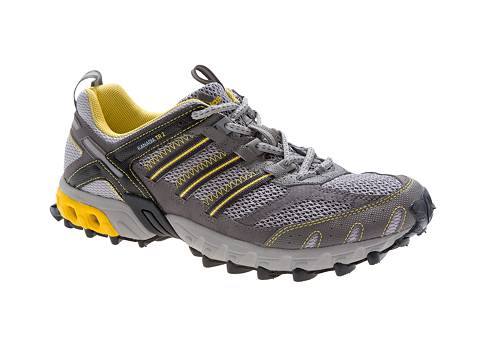
– Get the right shoes for the right conditions. I ran with Adidas Kanadia TR2 trail-running shoes and they were the right combination of lightweight shoes with some grip for the slippery trails.  And then wear them, train in them and get used to them. I probably should have gone more out of my way to run through puddles and clomp around the mud, running up and down hills than I did before the race.

– Get a good bag that fits you well and holds what you need. I ran with the Inov-8 Race Elite 15, which turned out to be just right for this event. I was tempted to go for a larger pack that could hold more, but it would have been too much for this race, which was well-supported with aid stations on average once every 8 miles. As it was, I probably carried way too much, but was also quite glad to have those extra Clif Shot Bloks and Torq gels to keep me going throughout the race.

Compeed blister patches are life-saving little packets of miraculous wonder. I couldn’t have finished the race without them, and without the generosity of Cyril, my motivator on Day 2 who gave me his large-sized ones when he saw the size of my blisters.

The camaraderie, the mutual support, the friendliness and general lack of ego of everyone I met was overwhelming. I mean, literally, overwhelming. I am still reeling from the kindness and inspiration of everyone I met. Examples:

– I had dinner on the second night with a guy in his late 50’s who has done over 200 marathons, more than half of which he does in around 3.5 hours. He’s at the point where he’s been doing an average of one marathon a week for the past 2 years (it took him about 15 years to reach his first 100, and then he just sort of decided to turn it up a notch).  He wasn’t bragging or boasting or saying any of this to impress me, but just because it came up in the conversation at dinner.

– Everyone, no matter how slow or fast, was totally ‘kin’ awesome. If faster people ran past you, they cheered you on for your efforts and got cheers from all of us slower folks. If you ran past slower people, then you did the same for them, cheering them on, joking about the weather or the mud or the hills or the rain or anything else you could think of.

– On the morning of the last day, a guy was hanging out in the breakfast area, asking a couple of us how we were doing and were we ready for the last big push today. He lamented that he wasn’t out there with us today as he had signed up to do this race, but he still wasn’t fully recovered from this year’s Marathon des Sables after he lost all the skin on his feet, but he wanted to be on support crew and cheer us on at the finish line. ‘Kin’ Awesome!

Indeed, it seemed like every other person at this event was either training for the next Marathon des Sables (or MDS as everyone shortened it to), had done one at some point, or was on the waiting list to do one.

It made me feel positively sloth-like. Training for an Ironman just doesn’t seem like such a big deal after this weekend.

Posted by: Robert
Reading Time: 1 minute

Surfing in the Summer is quick and easy; boardies, rash guard and off you go. The only problem is there’s nowhere to stash a key (which in wetsuit season goes behind my calf). Surfers, runners, bikers, anyone who drives somewhere to get a workout has to hide their keys in the wheel well or under a rock and hope both the key and the car are there when they return.

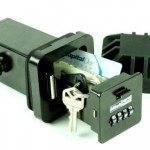
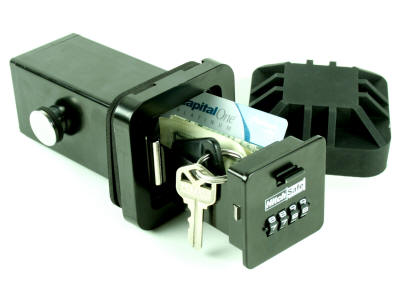
A product called HitchSafe is a 4 digit combination safe that goes in your trailer hitch. It has a drawer that slides out to put your key and other valuables. Some trucks, including those with sliding rear windows can be easy to break into and the HitchSafe provides a safe alternative. The HitchSafe is also a clever place to keep a spare key in the event you lock your keys in the car.

The HitchSafe fits standard 2″ hitch receivers, with the exception of the Toyota Tacoma 2005-07 and 2007 Tundra, both have an extra band of metal around the receiver and require longer bolts. Also some 2005 Toyota Forerunner’s have OEM factory hitches with rounded corners ans require filing off each corner on the HitchSafe for it to fit. A rubber cover goes over the end of the safe to provide a level of protection from the elements and also makes the trailer hitch looks like any other.

The HitchSafe is available on Amazon for $69.95.

Posted by: Lawrence

Reading Time: 3 minutes

In the run-up to the London Triathlon, I had a miserable couple of weeks doing some really crappy work (teaching photography to a bunch of aggressive, violent teenagers) for which I was completely unprepared, getting stressed out, losing sleep, not eating enough, not training much, and generally giving my buddy, Crohn’s Disease, several good reasons to flare up on me. So, dear reader, I must admit that I got to a point, 2 days before the race, where I was ready to drop out, cut my losses, and save my strength for a more important race in September.

But, then I got a good night’s sleep and woke up the next day feeling much better and decided to do the race, but … get this … just for the fun of it.  Yes, I woke up the day before the race and thought, “why don’t you throw away your gadgets and stop-watches and HRMs and forget about the times and Personal Bests – just do the race for the fun of it?”  I know it wasn’t very bitness of me, but deciding to go out there without my stop-watch/HRM and just race for fun lifted a load off my shoulders and turned a race that I had been dreading into a fun day out.

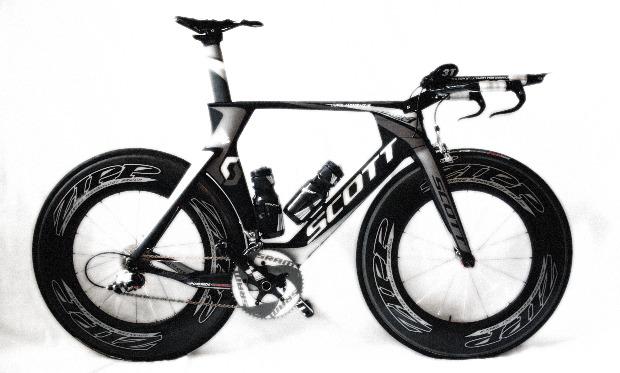
To add to the anti-technology spirit of the day, I realized at the end of the swim section that I had also forgotten to pick up a timing chip at registration (Doh! Major newbie mistake!) and so I wasn’t even going to be listed on the race results when they came out. This fuelled my desire just to go as fast and as hard as I could for as long as I possibly could, until I couldn’t go any more. I broke some rules – I drafted on the bike section (my unimpressive but wonderful TT bike kept up with a much blingier cousin and even gave another guy on a super-fast bike a chance to get on my back wheel for a while). And I rode much, much more aggressively than I had ever ridden in a triathlon before.

As I got back to the transition area for the bike-to-run transition, I had a moment of weakness and picked up my Garmin Forerunner 305 (a gift from an amazing client) and decided that maybe I could just take this wonderful little gadget on the run, just to … you know … gauge my progress, and see how things were going on the run.  I had used the 305 in my previous race and fell in love with the fact that it displayed up-to-the-minute pacing information that is really helpful (e.g. 4:30 per km means you are on target for a 45-minute 10k).  I felt that I had pushed myself so hard on the bike, I wasn’t sure if I would have anything left in my legs for a fast run, and so I turned to the GPS-enabled 305 for a little last-minute guidance in the darker moments of the bike-to-run transition.

Well, I ran my heart out. I just ran as fast and as hard as I thought I could maintain for the full 10k and then I ran a little bit harder than that, for good measure. I felt like I was flying, literally, with a fast cadence and light feet, no aches or pains. Admittedly, the 305 was not always helpful, as there were several parts of the run inside the Excel Centre where there was no satellite signal, but I did get my most transcendent moment of the race from the 305. After one lap, I passed the 5k marker and looked down at the stopwatch and it said 20:00. 20 minutes! I have never run a 20-minute 5k in my entire life and never thought that I would, but on Sunday, the 2nd of August 2009, I did!  And I was so buoyed, so enthused, so amazed, that I just kept on going like the wind and did the full 10k in 39 minutes and 49 seconds (nice little negative split there, too, see that?)!

So, I don’t know how well I did that day (I’m guessing I did better than previous PBs across all 3 disciplines), what my official time was (I’m guessing it was around 2 hours 20 minutes) or where I ranked in my age group. But, thanks to the 305, I know that I ran my best 10k ever, by at least 8 minutes.  And, now the Garmin Forerunner 305 is my favorite gadget.

Posted by: Robert

Reading Time: 2 minutes

For almost a quarter century, Kinetic watches have kept themselves wound by converting movement into energy. As of 2007, over eight million Kinetic watches have been sold and the notion of harvesting energy from movement is becoming even more popular today with a new generation of what are called Nanogenerator devices.

Nanogenerators have the ability to convert mechanical energy into electricity. Tiny nanowires capture and convert body movement into energy that researchers are using to power small electronic devices. The possibilities and applications are many, including “defense technology, environmental monitoring, biomedical sciences and even personal electronics,” says lead researcher Zhong Lin Wang, Regents’ Professor, School of Material Science and Engineering at the Georgia Institute of Technology. (source: ScienceDaily.com).

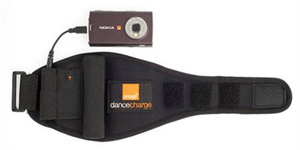
Several new concept devices and prototypes are being announced, including Tremont Electric’s nPower PEG, Dance Charge and the Cargador De Celular (fancy SPanish-talk for Mobile Charger). Here is a brief look at these three devices, which provide a glimpse of how we may all power our personal gadgets in the near future.

nPower PEG (Personal Energy Generator) harnesses personal kinetic energy as a person walks and transfers it into enough electricity to charge the average portable device up to 80 percent in about an hour. Measuring 9 by 1.5 inches and weighing about 9 ounces, the PEG doesn’t store energy and must be plugged into the device it’s charging. Plug the PEG into your cell phone or GPS, toss it in your backpack and hit the path; The PEG will keep the device constantly charged – essential in emergency situations. The PEG uses USB 2.0 and is compatible with 90 percent of portable electronic devices. Preorder yours now for your next trek into the wilderness.

Worn around your bicep and weighing just over 6 ounces, the Dance Charge uses a system of weights and magnets to produce electric current to store energy in an onboard battery which can later be used to charge small electronic devices. Of all the prototype devices, the Dance Charge seems, in my opinion, the most polished an unobtrusive. Boogie-down to charge-up!

Industrial designer Lola Mensa has an interesting concept device called the Cargador De Celular. The Cargador De Celular appears to slide right over the tongue of your running shoe (which might bother me – especially if only in one shoe). An embedded nanogenerator converts the kinetic energy you generate into power stored in embedded batteries. Flip down the top of the device and attach it to your cell phone, GPS or other gadgets post-run for charging.

Posted by: Lawrence

Reading Time: < 1 minute

In the past week I’ve had 4 people tell me how grateful they were that I turned them on to Steepandcheap.com. Steep and Cheap sells gear (I’d describe it as general outdoorsy gear) one item at a time until it’s either sold out or times-out, at which point it’s on to the next item.

Steep and Cheap mostly sells-out because the deals are good – usually in the 60% off or more range. Act fast if you see something you like! With back-to-back deals all day long it can get addicting and there’s a number of ways to stay tuned-in to deals that are poppin’ (RSS, sidebar gadgets, plug-ins, email, IM and soon an iPhone app).

I’ve been a Steep and Cheap customer since they started and have seen the concept grow wildly. Sister sites now include…

  • Chain Love for biking gear, including BMX and Mountain biking
  • Bonktown is more for the road cycling enthusiast
  • Tramdock for you two-plankers and especially good deals off-season
  • Brociety caters to snowboarders mostly, again… good off season loot to be had
  • Whiskey Militia is so aggro you probably already know they sell skate and surfing gear. Get some.

Check them out let me know what you think. I’ve only had great experiences with them, even returning gear I decided I didn’t need – they make it easy.

Posted by: Franz

Reading Time: 2 minutes

Growing up, I was always a fan of The Hulk cartoons and TV show. My cousin Joe Harnell wrote the theme song for the TV show (song title: ‘The Lonely Man‘) and was kind enough to send me an autographed picture of himself, as well as Bill Bixby and an enraged Lou Ferrigno as the Hulk right behind him.

In The Incredible Hulk movie, Bruce would try to keep his rage under control using breathing exercises and checking his Polar HRM to make sure he didn’t exceed the heart rate that would trigger the gamma reaction. Despite his best efforts, Bruce lost control and flew-off the handle more than once (the movie would have sucked if he didn’t right?) and after raging for untold hours, he’d wake-up somewhere unfamiliar, miraculously still wearing pants.

Had Bruce been wearing the relatively new Polar RS300X he’d benefit not only from a foot pod to know how far he’d strayed (in one scene I think he ended up in Guatemala), but also GPS to get all the essential information an inquisitive scientist yearns for (speed, distance, max heart rate, etc). The Polar RS300X is compatible with S1 foot pod™ and G1 GPS sensor and the data you collect can be transferred to polarpersonaltrainer.com with optional Polar FlowLink™

However, to equip the RS300X with both the GPS and foot pod options you’ll spend about $440 (RS300X – $170, G1 GPS – $140 and S1 Footpod – $130). This is more expensive than the $170 Garmin 305, which has GPS built-in and can be used with a $75 footpod. Not only does the Garmin offer the same functionality for about $200 less, but you’ll also have less gear strapped to your body.

Suunto also has solutions to consider, but for my money I like the Garmin. Let me know what you think, but don’t make me angry. You wouldn’t like me when I’m angry…

Posted by: Lawrence

Reading Time: 2 minutes

Triathlon Credit Crunch Series: Swimming | Cycling | Running

Running is a pretty inexpensive discipline anyway, once you get past the shoes. My advice: don’t skimp on the shoes. Find a good running shop that looks at your running stride (maybe even videos you for a few minutes) and makes recommendations based on what they see and discuss with you. Try on a few different pairs, and make sure you get the right shoes.

Elastic Running Laces
Available in a variety of bright, neon colors or some classic colors, put these on your shoes and you have just shaved 30 seconds or so off your next race time in T2 without having to know anything about Lactate Thresholds or heart rates! These are also ideal for doing brick sessions and practicing transitions in your training. And, elastic laces make it much easier for me to change my shoes quickly, for example, when I cycle to work with cycling shoes, but I don’t want to walk around in my cycling shoes and ruin my cleats when I get there.

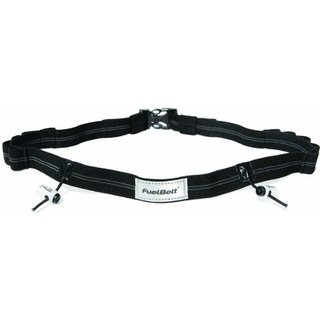
Race Belt
For classic black or a choice of red and pink (hey, Team TBB races in pink, so don’t tell me that pink isn’t tough or cool or hard-core).

It just makes life so much easier to be able to slide your number around to your back on the bike, and then slide it around to the front on the run, rather than pinning numbers to your top. And ease of use it what it’s all about on race day, thinking about setting new PBs and not the safety pins you’ll need for your race number.

Fuel Belt
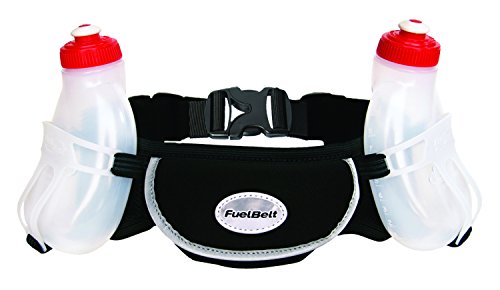
The Nathan Triangle Insulated Angled Holster Waist Pack is my favorite of the fuel belts for taking on longer runs. It has a good-sized water bottle holder (which is compatible with standard-sized water bottles for the bike), a zippered pocket to hold a house key or whatever you need to take with you, and is more adjustable than other products I have tried. Generally, Nathan seems to make a lot of different products that are well-thought out and comfortable.

Don’t neglect the importance of hydration and fueling on those longer sessions (for me, anything longer than 60 minutes) or higher intensity sessions, so get into the habit of carrying something with you on the run. You might even find yourself out on a race course where they don’t have any water stations, so you might want/need to wear a fuel belt in a race.

Final pointer on inexpensive ways to run better: run barefoot. It’s an area full of controversy and disagreement, and I for one am not advocating that you never put on running shoes again. But, find a nice grassy field (even better a not-very-steep grassy hill) or a beach, and run without any shoes on for a few sets of strides or short drills. You will use more of the small muscles in your feet and lower leg, and develop better sensitivity in your feet.

Posted by: Robert

Reading Time: < 1 minute

I’ve owned a Suunto Observer for years, a gift from the wife and I love it. With it I can tell which direction I’m headed, altitude, barometric pressure, temperature and of course the time. While somewhat bulky, it is still stylish IMHO and once configured performs well.

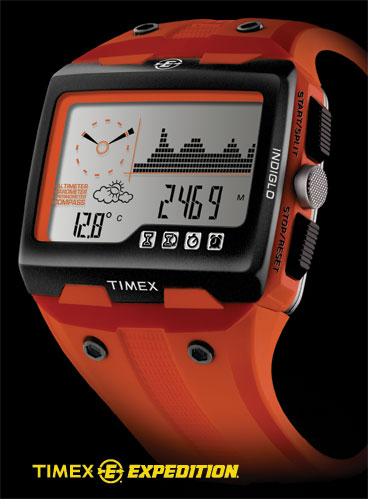
Timex will start shipping the Timex® Expedition® WS4™ on May 1, 2009. Similar in functionality to the Suunto, but no where close in looks, the gargantuan Expedition WS4 offers altitude, weather conditions, compass heading and time at a glance.

Unlike the Suunto, which has you spinning 360s to configure the compass, the Expedition WS4 can be used the moment it comes out of the box UPDATE: Both the Suunto and the Timex Expedition WS4 require manually calibrated. Timex also offers a fabric band to make wearing it over your gear easier, allowing for outside temperature readings, not your arm.

Dubbed a “wrist-top adventure instrument,” the Expedition WS4 has weather forecasts that look to be fairly simple to read. On my Suunto I need to be somewhat of a weatherman and figure it out for myself. Available in a half dozen colors, water resistant to 50 meters and lit by Indiglo, the Timex Expedition WS4 is expected to cost about $200.

Posted by: Jay

Reading Time: 2 minutes

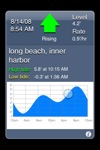
Tides don’t affect the breaks I surf all that much, but at my favorite spot, low slack tide (between low tide and when the incoming tide starts) is probably slightly better. That’s all the reason I needed to go out and plunk $95 on a new Quicksilver Moodak watch. Even though I carry my iPhone with me at all times and have the very capable and more informative TideGraph app.
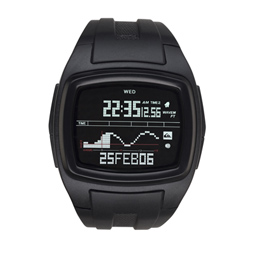
The Moondak version I have is all black – including the screen and maybe I sound like a curmudgeon, but I’ll be damned if I can read it unless I find myself in close proximity to a 1million candlepower halogen light source. Another annoyance with the watch is the number of times I go to glance at the time, only to be in tide mode. The convenience of quickly checking the time is a frustrating 5 mode clicks away.

The Moondak is a good-looking watch which an abundance of features. Features like the lap and heat timer functions which are appealing to runners and surfers alike. The Moondak is also stylish enough that it can be worn out at night.

Consider the Moondak with the lighter face (it comes in different version, some much easier to read than mine) and if you have an iPhone, then by all means get TideGraph, it’s really good and the upcoming 2.0 version promises to be even better (including a map button that shows a satellite view of port in Maps app).

Posted by: Lawrence

Reading Time: < 1 minute

When the Nike+ system came out a few years ago I had a hard time buying one for myself since I had just purchased my second Garmin Forerunner. But clever me, I magnanimously bought one for my wife, also a runner, for our 10th anniversary.

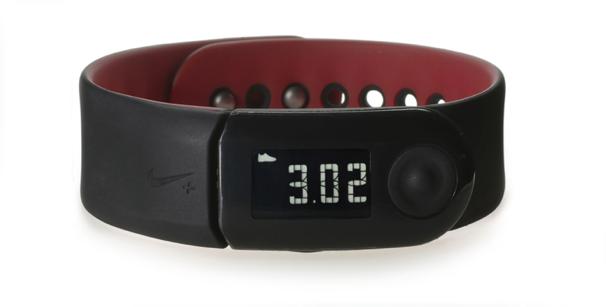
I like to run with music, but early-on Nike announced the Nike Speed+ which allows you to use the Nike+ system without the iPod and simply displays your run data. Expected sometime in April, the SportsBand will be available. This slimmed-down model has a rocker/runner look but also a practicality in it’s construction using materials that will hold-up well to sweat and grime.

SportsBand

The same Nike+ sensor in your shoe relays pace, distance, time and calories burned to the easy-to-read LCD on the SportsBand. A detachable USB built into the band’s face can store up to 16 hours of run data and be attached to your computer to upload data to Nike+.

Posted by: Lawrence

Reading Time: < 1 minute

For a company as secretive as Apple, it has to be frustrating for Apple that the Cindy Brady of the Web, the US Patent Office, makes it fairly simple to find and view patent filings online.

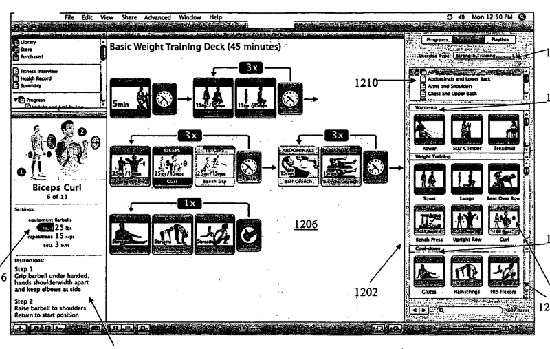
AppleInsider did a little digging and revealed Apple’s patent filings to develop a digital lifestyle fitness companion. Plans include four distinct components that comprise the system, ‘including an iTunes-like software application, hardware-based heart rate and physiological sensors, a rewards tracker, and a component to facilitate synchronous group activities.’

The system asks a series of lifestyle questions; what your fitness goals are, personal and family health history (HIPAA are you listening?). Once the data is collected a fitness regimen specific to the user is created. There are plans for one or more integrated physiological sensors. These could be built-into headphones or in a ‘sling’ which may not only read heart rate, but hold the iPod/iPhone during a workout.

There are a number of interesting screen shots on the AppleInsider Web site; a fitness model demonstrating proper technique, a tick list of exercises for a particular workout and others.

Source: Apple Insider

Reading Time: < 1 minute

With Spring around the corner and very little winter training under my Fuel Belt (I run some maintenance miles but I’m not a fan of the treadmill), it’s time to think about getting back into running shape.

As a long time Runner’s World reader, I’ve read numerous articles on training and performance that assume I know details about my pace (what my 5K race pace is, pace for a tempo run, easy run, etc). I run very few races a year and they vary from 5K to 10 miles. For a 5K I can turn-it-on and feel wiped-out, for a 10 miler I seem to always hold back (to ensure I can make the distance!) and finish regretting I didn’t go out harder.

In order to pace myself for each race I need to know how to train properly; when/how to run intervals, when to go easy or when to simply rest. McMillan Running offers a great calculator that lets the user enter a recent race time for popular running distances and calculate optimal training information.

Now when I read Runner’s World I can actually apply real numbers to the articles that refer to tempo runs, steady/long/easy/recovery pace and hopefully achieve real results!

Posted by: Lawrence

Reading Time: < 1 minute

I saw this a few months ago but still keep it bookmarked and watch it every-so-often. So why not share?

https://www.youtube.com/watch?v=tM8LZdDzs-8

Posted by: Frank

Reading Time: < 1 minute

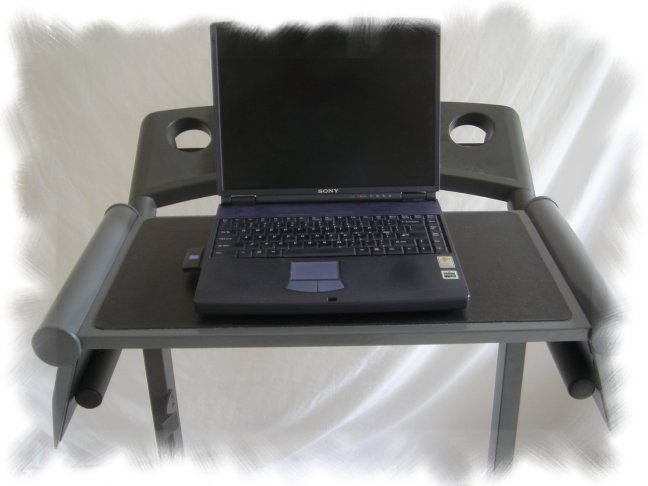
One of the main reasons I like to run is to shed the stress of work. But if you’re different and want to keep on working right through your workout, check out the StepDesk. Keep in mind you can only go 2 miles per hour (about 200 calories per hour) when using the StepDesk. For me this is conducive to NOT sweating and potentially compounds boredom with stress.

StepDeskThey have a whole ‘team’ working on this patent-pending brainchild that securely grips to a treadmill’s rails using adjustable arms. From the pictures it looks like the StepDesk is going to block any view of the treadmill’s display, so it’s probably time to get off when you’ve passed-out from boredom and hear the thump/bump of your face bouncing on the belt, shaving away your face like a nice Dill Havarti.

There’s a survey that suggests this may cost between $30-$70. Certainly more money than duct tape, a plank and an old mouse pad, but the StepDesk can be folded and taken with you (don’t feel bad, they have a team).

Posted by: Lawrence

Reading Time: < 1 minute

A few of us at Bitness HQ have been told that someone learned of a product on Bitness and bought it as a result of our recommendation. So here we are in phase 3 of operation money grab (or didn’t you notice the Gadget Funds Generator?) to announce the arrival of the Bitness Gear Barn, a collection of Bitness-minded items for sale through Amazon. Note the somewhat obnoxious box on top of the right-side navigation, click it often!

The way it works is you search for a product through the Bitness Gear Barn – buy lots of stuff and we get paid a little. So next time you’re thinking of picking up new gear for yourself, the wife, a friend, your dog or you know of someone else in the market for new gear then by all means send them through the Gear Barn!

If there is a product you can not locate in the Barn please let us know and we will make it available quickly. Happy Shopping!

Posted by: Lawrence